• Fri frakt över 249 kr
  • •
  • Snabba leveranser
  • •
  • Billiga böcker
Kundservice

Du är på sajten för privatpersoner.

Företag, bibliotek eller offentlig verksamhet?

Du handlar på classic.bokus.com, där alla dina funktioner finns intakta.
Till classic.bokus.com
Bokus logotyp. Gå till startsidan.
  • Erbjudanden
  • Nyheter
  • Student
  • Topplistor
  • Barn & ungdom
  • Bokus Play
  • E-böcker
  • Pocketböcker
  • Spel & pussel

10% rabatt på allt med kod: NYSTART10 →

Sidfot

Mina sidor

    Hjälp

    • Kundservice
    • Vanliga frågor och svar
    • Frakt och leverans
    • Retur vid ångerrätt
    • Reklamera vara
    • Betalning
    • Köpvillkor
    • Allmänna villkor
    • Information om webbplatsens tillgänglighet

    Om Bokus

    • Om oss
    • Pressrum
    • För studenter
    • För företag
    • För bibliotek och offentlig verksamhet
    • För leverantörer
    • Hållbarhet

    Populärt

    • Aktuella erbjudanden
    • Presentkort
    • Studentlitteratur
    • Nya böcker
    • Topplistor
    • Signerade böcker
    • Engelska böcker

    Inspiration

    • Boktips
    • BookTok
    • Populära bokserier
    • Barnbokskaraktärer
    • Populära författare
    Logotyp för Bokus
    Följ oss på Facebook (extern länk)Följ oss på Instagram (extern länk)Följ oss på YouTube (extern länk)Följ oss på TikTok (extern länk)
    bokus @ CookiesAnpassa cookiesIntegritetspolicyKöpvillkor
    Till Citymail hemsida (extern länk)Till Budbee hemsida (extern länk)Till Postnord hemsida (extern länk)Till Schenker hemsida (extern länk)Till Early Bird hemsida (extern länk)Till Walleys hemsida (extern länk)
    1. Samhälle och politik
    2. Sociologi och antropologi
    3. Antropologi

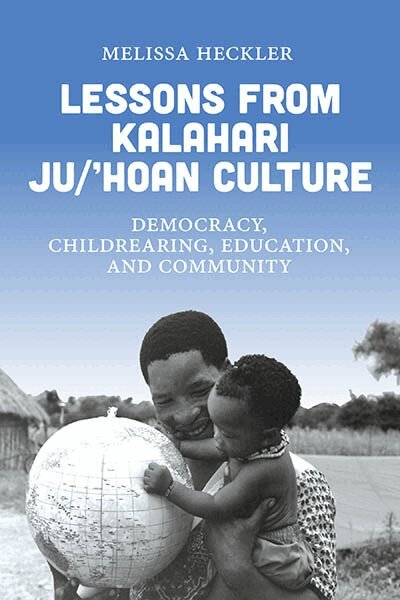
    Lessons from Kalahari Ju/’hoan Culture

    Democracy, Childrearing, Education, and Community

    AvMelissa Heckler

    Inbunden, Engelska, 2025

    1 910 kr

    Beställningsvara. Skickas inom 3-6 vardagar. Fri frakt över 249 kr.

    Beskrivning

    Juǀ’hoansi have occupied the Kalahari Desert in Namibia, Africa for at least 35,000 years and possess the oldest human DNA. Their traditional educational practices are the oldest curricula human beings have. Juǀ’hoan collective decision-making processes epitomize direct, participatory democracy: one person/one vote, enhanced by in-depth negotiations that lead to consensus. These practices are the basis for their education and culture. For Juǀ’hoansi, child autonomy is paramount and for democracy to thrive, children require independence to make decisions through play-exploration to experience multiple possible outcomes. This book explores how this egalitarian culture became the foundation of an enduring democracy.

    Produktinformation

    • Utgivningsdatum:2025-08-01
    • Mått:152 x 229 x 17 mm
    • Vikt:501 g
    • Format:Inbunden
    • Språk:Engelska
    • Antal sidor:220
    • Förlag:Berghahn Books
    • ISBN:9781836950974

    Utforska kategorier

    • Antropologi inom Samhälle och politik
    • Skolväsen och utbildningssystem inom Psykologi och pedagogik
    • Etnicitet inom Samhälle och politik

    Mer om författaren

    Melissa Heckler is a retired public school librarian from the United States. She serves on the NGO Committee on Children's Rights, NY and is an educational consultant and activist for the Kalahari Peoples' Fund since 1990.

    Recensioner i media

    “The conceptual goal of this book is very strong. It offers critical insights from an author with a completely unique personal and professional perspective.” • Ashley Hazel, University of California

    Innehållsförteckning

    • List of IllustrationsIntroductionChapter 1. The Earth is Not FlatChapter 2. The Hunter-Gatherer’s Old Clothes and the Emperor’s New ClothesChapter 3. Beginnings. In 1999, !Xoma N!a’an, from Botswana said: “Da’abi ge a g/a’a n!ang ko e /a’asi ko ta e !kasi” (Our Children are the First Things in our Eyes and Hearts)Chapter 4. Learning TrustChapter 5. Many Children, Many Baobabs, and “It Will Taste Sweet”Chapter 6.The Whole Life Picnic and other Botanical Lessons.Chapter 7. Beyond Competition: Building a Community of LearnersChapter 8. “Oh Place Where We Have Played: Stay Well” ǀKunta ǀUiChapter 9. The Pitfalls of PraiseChapter 10. The Roots of Innovation, Individuation & The Hidden Nature of PlayChapter 11. Play-Exploration: The Ultimate Democratic Teaching/Learning ToolChapter 12. Something New Under the Sun: PlayChapter 13. Learning about Juǀ’hoan Ancestors through Rock Art, Storytelling, and DrawingChapter 14. The Explosive Power of Pretend. Looking for UharosiChapter 15. Class Picnic at the Baobab and the Hidden Power of PlayChapter 16. The Origins of Writing, and NumeracyChapter 17. Where has the Trickster Gone?Chapter 18. Teaching and Learning in a High Accumulation SocietyChapter 19. Teacher as StudentChapter 20. The Nyae Nyae Peace Talks, 1990Chapter 21. “Different People Just Have Different Minds”Chapter 22. Democracy in Practice. Nyae Nyae Namibia,1991-2016Chapter 23. “ǀǀXaǀHoba Wellcome Dancing Articfacts”Chapter 24. 1991 Land Rights Conference and Beginning Lessons in Literacy and DemocracyChapter 25. The Whole Village Learning EnvironmentChapter26. Juǀ’hoan Education ValuesChapter 27. ǀǀXaǀoba Curriculum GatheringChapter 28. Hidden in the VillagesChapter 29. “Two Packages of Tobacco” & Dancing Artifacts Or “Who do these People Think They Are?”Chapter 30. Ehe! A last Lesson in Literacy and HumilityChapter 31. Family Based SchoolsChapter 32. Embers from the Old Fire. Democracy, Childrearing and Forms of GovernmentChapter 33. Ju nǀe’e.’ We are OneChapter 34. The World of the SpiritChapter 35. Healers and a Dance. More Experience in the World of the Spirit. Journal Entry, Nǂaqmjoha 2002Chapter 36. The Hierarchy of Modern ReligionsChapter 37. Solutions from Old, Old Juǀ’hoan FiresChapter 38. Namibia & Botswana, 1992-1999. “Our children are the First Things in our Eyes and Hearts.”!Xoma Na!an, Botswana, 1999Chapter 39. A Return to Nyae Nyae in 2002. Lessons in ProgressChapter 40. Nǂaqmtjoha: The VillageChapter 41. The Black Mamba TreeChapter 42. Hidden in the Villages IIChapter 43. ǀAsa or How to Start School in NǂaqmtjohaChapter 44. ReconnectingChapter 45. Learning and Democracy: From the Ground UpChapter 46. Anthropology, Juǀ’hoan StyleChapter 47. Arc of Sorrow: Leaving AgainChapter 48. Return to ǀǀXaǀhoba Village and School. Journal Entry, July 13, 2012Chapter 49. The Grinding Edge of CultureChapter 50. Healing Dance 2018. N!um: Healing for All. (From my Journal)Conclusion: A Conclusion in Two PartsReferencesIndex