• Fri frakt över 249 kr
  • •
  • Snabba leveranser
  • •
  • Billiga böcker
Kundservice

Du är på sajten för privatpersoner.

Företag, bibliotek eller offentlig verksamhet?

Du handlar på classic.bokus.com, där alla dina funktioner finns intakta.
Till classic.bokus.com
Bokus logotyp. Gå till startsidan.
  • Erbjudanden
  • Nyheter
  • Student
  • Topplistor
  • Barn & ungdom
  • Bokus Play
  • E-böcker
  • Pocketböcker
  • Spel & pussel

10% rabatt på allt med kod: NYSTART10 →

Sidfot

Mina sidor

    Hjälp

    • Kundservice
    • Vanliga frågor och svar
    • Frakt och leverans
    • Retur vid ångerrätt
    • Reklamera vara
    • Betalning
    • Köpvillkor
    • Allmänna villkor
    • Information om webbplatsens tillgänglighet

    Om Bokus

    • Om oss
    • Pressrum
    • För studenter
    • För företag
    • För bibliotek och offentlig verksamhet
    • För leverantörer
    • Hållbarhet

    Populärt

    • Aktuella erbjudanden
    • Presentkort
    • Studentlitteratur
    • Nya böcker
    • Topplistor
    • Signerade böcker
    • Engelska böcker

    Inspiration

    • Boktips
    • BookTok
    • Populära bokserier
    • Barnbokskaraktärer
    • Populära författare
    Logotyp för Bokus
    Följ oss på Facebook (extern länk)Följ oss på Instagram (extern länk)Följ oss på YouTube (extern länk)Följ oss på TikTok (extern länk)
    bokus @ CookiesAnpassa cookiesIntegritetspolicyKöpvillkor
    Till Citymail hemsida (extern länk)Till Budbee hemsida (extern länk)Till Postnord hemsida (extern länk)Till Schenker hemsida (extern länk)Till Early Bird hemsida (extern länk)Till Walleys hemsida (extern länk)
    1. Naturvetenskap och teknik
    2. Teknik och industri
    3. Transportteknik
    4. Flyg- och rymdteknik

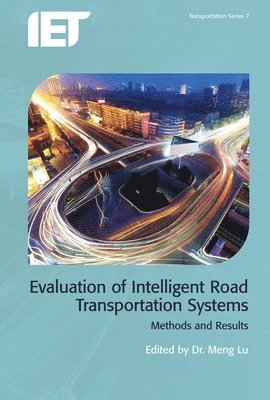
    Cooperative Intelligent Transport Systems

    Towards high-level automated driving

    AvMeng, Lu,Meng Lu

    Inbunden, Engelska, 2019

    Del i serien Transportation

    1 983 kr

    Beställningsvara. Skickas inom 3-6 vardagar. Fri frakt över 249 kr.

    Beskrivning

    Intelligent Transport Systems (ITS) have been a domain of substantial development for more than thirty years, enhancing safety, (energy and fuel) efficiency, comfort, and economic growth. Cooperative Intelligent Transport Systems (C-ITS), also referred to as Connected Vehicles, are a prelude to, and pave the way towards road transport automation. Vehicle connectivity and information exchange will be an important asset for future highly-automated driving. The book provides a comprehensive insight in the state of the art of C-ITS and automated driving, especially addresses the important role of ICT (Information and Communication Technologies) infrastructure, and presents the main achievements (both theory and practice), as well as the challenges in the domain in Europe, the US and Asia/Pacific.
    Produktinformation

    • Utgivningsdatum:2019-12-10
    • Mått:156 x 234 x 36 mm
    • Vikt:1 216 g
    • Format:Inbunden
    • Språk:Engelska
    • Serie:Transportation
    • Antal sidor:648
    • Förlag:Institution of Engineering and Technology
    • ISBN:9781839530128

    Utforska kategorier

    • Flyg- och rymdteknik inom Naturvetenskap och teknik

    Mer om författaren

    Dr. Meng Lu is Strategic Innovation Manager at Dynniq, NL. She has previously served as Program Manager International at Dutch Institute for Advanced Logistics, Visiting Professor at the National Laboratory for Automotive Safety and Energy, Tsinghua University, and Coordinator and Work Package Leader for EU-funded projects. Her positions and board memberships include: VP IEEE ITSS; Steering Committee Member, IEEE Future Networks - Enabling 5G and Beyond; VP IBEC (ITS Benefits Evaluation Community); and Editorial Board Member of IET ITS.

    Innehållsförteckning

    • Part I: IntroductionChapter 1: ICT-based cooperative ITS: towards automated road transport Part II: General aspects of connected, cooperative and automated road transportChapter 2: Deployment of C-ITS: a review of global initiativesChapter 3: Architecture of cooperative intelligent transport systemsChapter 4: Business-model innovation in the smart mobility domainChapter 5: Driving automation and its effects on drivers - a human factor perspectiveChapter 6: Legal frameworks and strategies of regulatory authorities Part III: V2X communication for cooperative and automated drivingChapter 7: Vehicular communication - a technical reviewChapter 8: Connectivity for automated driving - an overview on corresponding R&D activities in EuropeChapter 9: Standardisation and V2X implementationChapter 10: Assessment of C-ITS network performance scalability and transferabilityChapter 11: 5G for road safety services Part IV: ICT infrastructure for automated driving and future traffic managementChapter 12: Cooperative system integrationChapter 13: ICT infrastructure for automated drivingChapter 14: Road infrastructure taxonomy for connected and automated drivingChapter 15: Infrastructure-assisted automated driving in transition areasChapter 16: Connected and automated road transport from the perspective of cities Part V: Automated driving: market, impacts, roadmap, data quality and driver aspectsChapter 17: The evolution towards automated driving - Insights from market penetration surveys in GermanyChapter 18: Impact assessment of cooperative and automated vehiclesChapter 19: Deployment of highly automated driving up to 2040 - case FinlandChapter 20: A practical approach for defining and assessing data quality in automated drivingChapter 21: Dynamic Bayesian networks for driver-intention recognition based on the traffic situation Part VI: R&D and applications of connected, cooperative and automated driving outside EuropeChapter 22: Recent advances in cooperative and automated driving in Japan and how we approach these technologiesChapter 23: Promoting connected and automated vehicles with cooperative sensing and control technologyChapter 24: Connected and automated vehicle research and development in the United StatesChapter 25: Mobility-on-demand using autonomous vehicles: systems, solutions and challenges Part VII: Discussion and conclusionsChapter 26: Cooperative and automated road transport: ambitions, challenges and key findings