• Fri frakt över 249 kr
  • •
  • Snabba leveranser
  • •
  • Billiga böcker
Kundservice

Du är på sajten för privatpersoner.

Företag, bibliotek eller offentlig verksamhet?

Du handlar på classic.bokus.com, där alla dina funktioner finns intakta.
Till classic.bokus.com
Bokus logotyp. Gå till startsidan.
  • Erbjudanden
  • Nyheter
  • Student
  • Topplistor
  • Barn & ungdom
  • Bokus Play
  • E-böcker
  • Pocketböcker
  • Spel & pussel

10% rabatt på allt med kod: NYSTART10 →

Sidfot

Mina sidor

    Hjälp

    • Kundservice
    • Vanliga frågor och svar
    • Frakt och leverans
    • Retur vid ångerrätt
    • Reklamera vara
    • Betalning
    • Köpvillkor
    • Allmänna villkor
    • Information om webbplatsens tillgänglighet

    Om Bokus

    • Om oss
    • Pressrum
    • För studenter
    • För företag
    • För bibliotek och offentlig verksamhet
    • För leverantörer
    • Hållbarhet

    Populärt

    • Aktuella erbjudanden
    • Presentkort
    • Studentlitteratur
    • Nya böcker
    • Topplistor
    • Signerade böcker
    • Engelska böcker

    Inspiration

    • Boktips
    • BookTok
    • Populära bokserier
    • Barnbokskaraktärer
    • Populära författare
    Logotyp för Bokus
    Följ oss på Facebook (extern länk)Följ oss på Instagram (extern länk)Följ oss på YouTube (extern länk)Följ oss på TikTok (extern länk)
    bokus @ CookiesAnpassa cookiesIntegritetspolicyKöpvillkor
    Till Citymail hemsida (extern länk)Till Budbee hemsida (extern länk)Till Postnord hemsida (extern länk)Till Schenker hemsida (extern länk)Till Early Bird hemsida (extern länk)Till Walleys hemsida (extern länk)
    1. Naturvetenskap och teknik
    2. Teknik och industri
    3. Tillverkningsteknik

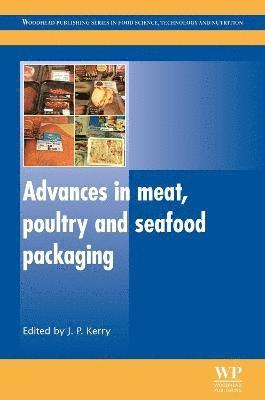
    Advances in Meat, Poultry and Seafood Packaging

    AvJoseph P. Kerry

    Inbunden, Engelska, 2012

    Del i serien Woodhead Publishing Series in Food Science, Technology and Nutrition

    2 803 kr

    Beställningsvara. Skickas inom 10-15 vardagar. Fri frakt över 249 kr.

    Beskrivning

    Packaging plays an essential role in limiting undesired microbial growth and sensory deterioration. Advances in meat, poultry and seafood packaging provides a comprehensive review of both current and emerging technologies for the effective packaging of muscle foods.Part one provides a comprehensive overview of key issues concerning the safety and quality of packaged meat, poultry and seafood. Part two goes on to investigate developments in vacuum and modified atmosphere packaging for both fresh and processed muscle foods, including advances in bulk packaging and soluble carbon dioxide use. Other packaging methods are the focus of part three, with the packaging of processed, frozen, ready-to-serve and retail-ready meat, seafood and poultry products all reviewed, alongside advances in sausage casings and in-package pasteurization. Finally, part four explores emerging labelling and packaging techniques. Environmentally-compatible, antimicrobial and antioxidant active packaging for meat and poultry are investigated, along with edible films, smart packaging systems, and issues regarding traceability and regulation.With its distinguished editor and international team of expert contributors, Advances in meat, poultry and seafood packaging is a key text for those involved with the research, development and production of packaged meat, poultry and seafood products. It also provides an essential overview for post-graduate students and academic researchers with an interest in the packaging of muscle foods.

    • Provides a comprehensive review of current and emerging technologies for the effective and safe packaging of muscle foods
    • Investigates developments in vacuum and modified atmosphere packaging for fresh and processed muscle foods, including advances in bulk packaging and soluble carbon dioxide use
    • Explores environmentally-compatible, antimicrobial and antioxidant active packaging for meat and poultry, along with edible films, smart packaging systems, and issues regarding traceability and regulation

    Produktinformation

    • Utgivningsdatum:2012-06-22
    • Mått:156 x 234 x undefined mm
    • Vikt:1 220 g
    • Format:Inbunden
    • Språk:Engelska
    • Serie:Woodhead Publishing Series in Food Science, Technology and Nutrition
    • Antal sidor:720
    • Förlag:Elsevier Science
    • ISBN:9781845697518

    Utforska kategorier

    • Tillverkningsteknik inom Naturvetenskap och teknik

    Mer om författaren

    Prof. Joe P. Kerry is a senior college lecturer and head of the food packaging and material sciences group in the School of Food and Nutritional Sciences at University College Cork (UCC). He received his Doctorate in Microbiology at University College Galway in 1995. He then moved to the Department of Food Technology in UCC where he held several postdoctoral positions before being appointed as a College lecturer in 1999. Professor Kerry is a qualified member of the Institute of Packaging and a research member of AMBER. He is, and has been, very involved in national and international research projects both at fundamental and applied levels. Primary research interests address various aspects of general food processing and formulation, food packaging, shelf-life stability, food composition and numerous aspects of food quality, particularly in relation to muscle foods (meat, poultry and seafood) or plant-based analog products representing same. He also has very strong links with industry and his research team assists companies in relation to many aspects of new food product development. He has over 450 publications in peer-reviewed international journals, over 400 presentations at major international conferences, along with several other significant publications by way of edited books, book chapters and national reports. His expertise includes use and manipulation of packaging materials and systems for use with foods, use of extrusion technology for the manufacture of food products/packaging materials, applications and new technology developments within the area of food packaging throughout the distribution chain, especially in the field of smart packaging (active and intelligent systems) and the material sciences of packaging. Prof. Kerry is an editor for Food Packaging and Shelf-life, Packaging Technology and Science and an associate editor for Meat Science. He has served on boards and committees, both within and externally to UCC. Prof Kerry serves as the academic director for the Blás na hEireann - National Food Awards. He has served on the organizing and scientific committees for numerous scientific conferences.

    Innehållsförteckning

    • Contributor contact detailsWoodhead Publishing Series in Food Science, Technology and NutritionPrefacePart I: Safety and quality of packaged meat, poultry and seafoodChapter 1: Major microbiological hazards associated with packaged fresh and processed meat and poultryAbstract:1.1 Introduction: survival and growth of microorganisms in meat and poultry products1.2 Vacuum packaging (VP) and modified atmosphere packaging (MAP) to control microbial populations associated with meat and poultry products1.3 Notable foodborne outbreaks related to packaged fresh and further processed meat and poultry1.4 The future of food packaging for controlling pathogens associated with fresh and further processed meat and poultryChapter 2: Major microbial hazards associated with packaged seafoodAbstract:2.1 Introduction2.2 Seafood spoilage2.3 Major microbiological hazards associated with fresh seafood2.4 Live animals2.5 Major hazards associated with processed and packaged seafood2.6 Future trendsChapter 3: Sensory and quality properties of packaged fresh and processed meatsAbstract:3.1 Introduction3.2 Packaging of fresh and processed meats3.3 Colour development in fresh and processed meats3.4 Flavour of fresh and processed meat products3.5 Texture of fresh and processed meat3.6 Future trends3.7 AcknowledgementsChapter 4: Sensory properties of packaged fresh and processed poultry meatAbstract:4.1 Introduction4.2 Color changes in packaged fresh and processed poultry meat4.3 Lipid oxidation in packaged fresh and processed poultry meat4.4 Tenderness and packaged fresh and processed poultry meat4.5 Other sensory and quality issues associated with packaged fresh and processed poultry meat4.6 Future trendsChapter 5: Sensory and quality properties of packaged seafoodAbstract:5.1 Introduction5.2 Fish composition5.3 Initial biochemical and microbiological deterioration of fish5.4 Lipid oxidation5.5 Sensory quality changes in stored and packaged fish products5.6 Case studies of sensory quality changes in stored and packaged fish products5.7 Shrimps5.8 Future trendsPart II: Developments in vacuum and modified atmosphere packaging of meat, poultry and seafoodChapter 6: Advances in the packaging of fresh and processed meat productsAbstract:6.1 Introduction6.2 Current technologies and use of packaging for fresh and processed meat6.3 Advances in overwrap, vacuum packaging (VP) and modified atmosphere packaging (MAP) for fresh and processed meat6.4 Effective application of packaging to improve the quality of fresh and processed meat6.5 Future trends6.6 Sources of further information and adviceChapter 7: Advances in vacuum and modified atmosphere packaging of poultry productsAbstract:7.1 Introduction7.2 Role of packaging and conventional packaging systems7.3 Shelf life of fresh and processed poultry products in conventional packaging systems7.4 Extension of shelf life and future trends in packaging systems7.5 Chemical indicators for assessing the quality of fresh and processed poultryChapter 8: Advances in bulk packaging for the transport of fresh fishAbstract:8.1 Introduction8.2 Status and challenges8.3 Advances in bulk packaging for the transportation of processed fish8.4 Effective application of bulk packaging for transportation of raw fish products8.5 Future trends in seafood packaging and distributionChapter 9: Advances in vacuum and modified atmosphere packaging of fish and crustaceansAbstract:9.1 Introduction9.2 Innovations in packaging technology9.3 Advances in understanding spoilage processes in packaged fish9.4 Advances in understanding food safety implications of packaging9.5 Applying and modelling different gas configurations for different fish9.6 Applying packaging technologies to products other than fresh fillets9.7 Combining packaging technologies with other treatments9.8 ConclusionsChapter 10: Advances in vacuum and modified atmosphere packaging of shellfishAbstract:10.1 Introduction10.2 Combination of modified atmosphere packaging (MAP) and vacuum packaging (VP) with other treatments10.3 Effective application of traditional, VP and MAP to improve shellfish quality10.4 Future trends10.5 Sources of further information and advice10.6 AcknowledgmentChapter 11: Solubility of carbon dioxide in muscle foods and its use to extend the shelf life of packaged productsAbstract:11.1 Introduction11.2 The principle of modified atmosphere packaging (MAP)11.3 Effect of CO2 on microorganisms11.4 Alternatives to MAPPart III: Other packaging methods for meat, poultry and seafood productsChapter 12: Packaging of retort-processed seafood, meat and poultryAbstract:12.1 Introduction12.2 Rigid containers for retort-processed seafood, meat and poultry12.3 Semi-rigid and flexible containers12.4 Methods to test the suitability of packaging materials for retorting12.5 Changes in the quality of seafood, meat and poultry due to retort processing12.6 Future trends in processing and packagingChapter 13: Packaging for frozen meat, seafood and poultry productsAbstract:13.1 Introduction13.2 Quality improvement through frozen packaging13.3 Recent advances in frozen packaging13.4 Future trendsChapter 14: Advances in the manufacture of sausage casingsAbstract:14.1 Introduction14.2 Definition and types of sausage casings14.3 Advances in sausage casings14.4 Effective selection and use of sausage casings for optimum product quality: possible meat product defects due to incorrect selection of casing types14.5 Meat industry requirements for new casing types14.6 Future trends14.7 Sources of further information and adviceChapter 15: Packaging of ready-to-serve and retail-ready meat, poultry and seafood productsAbstract:15.1 Introduction15.2 Key drivers15.3 Packaging requirements15.4 Microwave reheating15.5 Packaging materials15.6 Packaging techniques15.7 Active packaging applications15.8 Future trendsChapter 16: In-package pasteurization of ready-to-eat meat and poultry productsAbstract:16.1 Introduction16.2 In-package pasteurization16.3 Time-temperature for in-package pasteurization16.4 Equipment16.5 Practical considerationsPart IV: Emerging packaging techniques and labellingChapter 17: Environmentally compatible packaging of muscle foodsAbstract:17.1 Introduction17.2 Types of meat packaging materials17.3 Source reduction17.4 Recyclable materials17.5 Biobased materials17.6 Future trendsChapter 18: Antimicrobial and antioxidant active packaging for meat and poultryAbstract:18.1 Introduction18.2 Meat safety and quality concerns18.3 Active packaging based on biopolymers and natural bioactives18.4 Antimicrobial bioactive biopackaging18.5 Antioxidant bioactive biopackaging18.6 Future trends18.7 ConclusionChapter 19: Edible films for meat, poultry and seafoodAbstract:19.1 Introduction19.2 Edible film materials19.3 Antimicrobial edible films19.4 Edible films containing antioxidants and other nutrients19.5 ConclusionChapter 20: Application of smart packaging systems for conventionally packaged muscle-based food productsAbstract:20.1 Introduction20.2 Packaging technologies for gas and moisture control20.3 Antimicrobial packaging20.4 Other applications of smart/active technologies20.5 Sensors for smart packaging20.6 Indicators for smart packaging20.7 Radio frequency identification tags (RFID) and potential future applications of other smart/intelligent technologies20.8 ConclusionsChapter 21: Traceability in the meat, poultry and seafood industriesAbstract:21.1 Introduction21.2 Current technologies available for muscle food industry tracing systems21.3 Traceability in livestock production21.4 Traceability in poultry production21.5 Traceability of seafood21.6 Traceability of meat, poultry and seafood products21.7 Electronic identification (EID)21.8 Future trends21.9 Sources of further information and adviceChapter 22: Labelling of meat, poultry, seafood and their products in the EUAbstract:22.1 Introduction22.2 General (horizontal) food labelling requirements22.3 Origin, assurance and ‘eco-labelling’ schemes22.4 Specific (vertical) requirements for raw meat and minced meat labelling22.5 Specific (vertical) requirements for poultry meat labelling22.6 Specific (vertical) labelling of meat and poultry products22.7 Specific (vertical) labelling of fish and shellfish22.8 Specific (vertical) labelling of fish and shellfish products22.9 Future trends22.10 Acknowledgements22.11 Sources of further information and adviceChapter 23: Food packaging laws and regulation with particular emphasis on meat, poultry and fishAbstract:23.1 Introduction to food contact material legislation23.2 The regulation of food contact materials in the European Union (EU)23.3 EU legislation on specific materials23.4 Other specific measures of importance23.5 The regulation of food contact materials in the United States23.6 Exemptions to the regulations23.7 The food contact notification system23.8 Implications of regulations for packaging and product development23.9 Future trends in legislation23.10 Sources of further information and adviceIndex