• Fri frakt över 249 kr
  • •
  • Snabba leveranser
  • •
  • Billiga böcker
Kundservice

Du är på sajten för privatpersoner.

Företag, bibliotek eller offentlig verksamhet?

Du handlar på classic.bokus.com, där alla dina funktioner finns intakta.
Till classic.bokus.com
Bokus logotyp. Gå till startsidan.
  • Erbjudanden
  • Nyheter
  • Student
  • Topplistor
  • Barn & ungdom
  • Bokus Play
  • E-böcker
  • Pocketböcker
  • Spel & pussel

10% rabatt på allt med kod NYSTART10 →

Sidfot

Mina sidor

    Hjälp

    • Kundservice
    • Vanliga frågor och svar
    • Frakt och leverans
    • Retur vid ångerrätt
    • Reklamera vara
    • Betalning
    • Köpvillkor
    • Allmänna villkor
    • Information om webbplatsens tillgänglighet

    Om Bokus

    • Om oss
    • Pressrum
    • För studenter
    • För företag
    • För bibliotek och offentlig verksamhet
    • För leverantörer
    • Hållbarhet

    Populärt

    • Aktuella erbjudanden
    • Presentkort
    • Studentlitteratur
    • Nya böcker
    • Topplistor
    • Signerade böcker
    • Engelska böcker

    Inspiration

    • Boktips
    • BookTok
    • Populära bokserier
    • Barnbokskaraktärer
    • Populära författare
    Logotyp för Bokus
    Följ oss på Facebook (extern länk)Följ oss på Instagram (extern länk)Följ oss på YouTube (extern länk)Följ oss på TikTok (extern länk)
    bokus @ CookiesAnpassa cookiesIntegritetspolicyKöpvillkor
    Till Citymail hemsida (extern länk)Till Budbee hemsida (extern länk)Till Postnord hemsida (extern länk)Till Schenker hemsida (extern länk)Till Early Bird hemsida (extern länk)Till Walleys hemsida (extern länk)
    1. Samhälle och politik
    2. Samhälle och kultur
    3. Sociala grupper och identitet

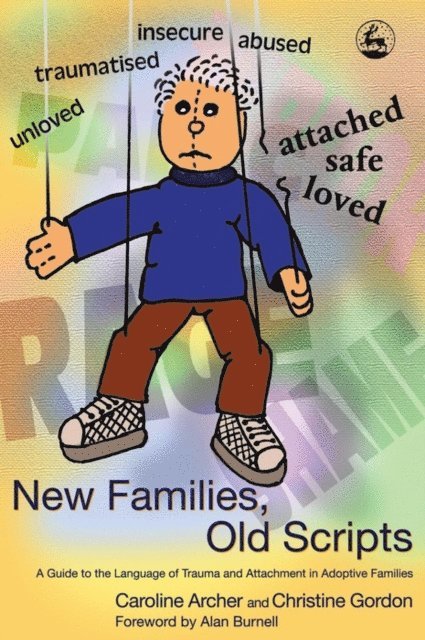
    New Families, Old Scripts

    A Guide to the Language of Trauma and Attachment in Adoptive Families

    AvCaroline Archer

    E-bok
    Engelska, 2006

    384 kr

    Läs direkt i Bokus Reader – eller ladda ned till din enhet

    Fler format och utgåvor

    Häftad

    436 kr

    Beskrivning

    Most adopted children and their families will, sooner or later, encounter the challenges of dealing with unresolved attachment issues or early traumatic experiences.New Families, Old Scripts is an accessible introduction to understanding these challenges and helping children and their families to develop a shared language and understanding of one another. Steeped in the experience of the authors, the book offers a wealth of practical guidance and intervention in a no-nonsense style that will be readily understandable to both families and the professionals who work with them. Case examples bring the issues to life, while sample letters addressed to the parent offer sensitive, jargon-free advice on the issues they are likely to encounter - whether it be dealing with anger and aggression, understanding sibling issues or how to react to sexualised behaviour. The authors also explain some of the theoretical background to trauma to encourage a better understanding of the relationship between trauma, attachment and development.The accessible combination of theoretical approaches and practical advice makes New Families, Old Scripts an ideal resource for social workers and adoptive or foster parents.Family Futures Consortium provides services for parents and professionals working with adopted and fostered children, including training and consultation for statutory and voluntary agencies nationwide. In their therapeutic work with families, they have evolved a unique intensive, multi-disciplinary approach to supporting children with attachment and trauma-related difficulties.

    Produktinformation

    • Utgivningsdatum:2006-02-08
    • Språk:Engelska
    • Filformat:EPUB
    • Kopieringsskydd:LCP
    • ISBN:9781846424823
    • Förlag:Jessica Kingsley Publishers

    Utforska kategorier

    • Sociala grupper och identitet inom Samhälle och politik
    • Socialt arbete och välfärd inom Samhälle och politik
    • Barnpsykologi och utvecklingspsykologi inom Psykologi och pedagogik

    Mer om författaren

    Caroline Archer is an adoptive parent, an independent consultant in post-adoption support and a therapeutic parent mentor. She is also the bestselling author of Reparenting the Child who Hurts: A Guide to Healing Developmental Trauma and Attachments, First Steps in Parenting a Child who Hurts: Tiddlers and Toddlers 2nd Edition, and Next Steps in Parenting a Child who Hurts: Tykes and Teens (with Christine Gordon). Christine Gordon was an adoptive parent with many years' experience of working with adoptive and foster families. She was a co-founder of Family Futures Consortium, London. Alongside her 'hands on' supportive role to parents, she was active in training and promoting the professional role of parent mentor as an integral part of the therapeutic team.

    Recensioner i media

    This book is designed for direct use with children and their adoptive parents, as well as a resource for working with wider family members, social workers and other professionals involved with adoptive children and families. The authors are both well known for their work in this field and bring credibility and knowledge to their writing.Practitioners in the after adoption field will find this book valuable in a number of ways, as will those working with adopters at any stage in the process, or indeed anyone coming new to this area of work. The authors convey a strong sense of what it feels like to parent a child who has been traumatised and had difficult and poor attachment experiences.I would encourage everyone to approach this as a helpful and thought provoking addition to their toolkit and to reflect on where it challenges and where it adds insight and practical tools.

    Innehållsförteckning

    • Foreword by Alan Burnell, Family Futures. Introduction. Thumbnail sketches. Alphabet of Issues. 1. Accent on change. 2. Aggressive and angry behaviour. 3. Attention seeking/ needing. 4. Basic building blocks of the brain. 5. Bedtime and sleep. 6. Cracking the code. 7. Control issues. 8. Cradling for closeness and comfort. 9. Critical connections. 10. Dealing with danger. 11. Dissociative connections. 12. Dissociative states. 13. Eating and food issues. 14. Emotional outbursts. 15. F is for feelings. 16. F1 kids. 17. Games to encourage attachment. 18. Good child (am I being good enough?) 19. Impact on parents. 20. Looking after yourself. 21. Managing separations. 22. `NO'. 23. Nutrition. 24. Putting it all behind us. 25. Puzzling pain responses. 26. Reassurance or validation. 27. Rivalry between siblings. 28. Rudeness and swearing. 29. Self-regulation. 30. Sensory issues. 31. Sexualised behaviour. 32. Taking, borrowing or stealing. 33. Terrible shame. 34. Think toddler think (T3). 35. What not to do! 36. Your way forward - final reflections. 37. References. Resources and related reading. Index.