• Fri frakt över 249 kr
  • •
  • Snabba leveranser
  • •
  • Billiga böcker
Kundservice

Du är på sajten för privatpersoner.

Företag, bibliotek eller offentlig verksamhet?

Du handlar på classic.bokus.com, där alla dina funktioner finns intakta.
Till classic.bokus.com
Bokus logotyp. Gå till startsidan.
  • Erbjudanden
  • Nyheter
  • Student
  • Topplistor
  • Barn & ungdom
  • Bokus Play
  • E-böcker
  • Pocketböcker
  • Spel & pussel

Må bättre, för mindre! Upp till 50% rabatt på hälsoböcker

Sidfot

Mina sidor

    Hjälp

    • Kundservice
    • Vanliga frågor och svar
    • Frakt och leverans
    • Retur vid ångerrätt
    • Reklamera vara
    • Betalning
    • Köpvillkor
    • Allmänna villkor
    • Information om webbplatsens tillgänglighet

    Om Bokus

    • Om oss
    • Pressrum
    • För studenter
    • För företag
    • För bibliotek och offentlig verksamhet
    • För leverantörer
    • Hållbarhet

    Populärt

    • Aktuella erbjudanden
    • Presentkort
    • Studentlitteratur
    • Nya böcker
    • Topplistor
    • Signerade böcker
    • Engelska böcker

    Inspiration

    • Boktips
    • BookTok
    • Populära bokserier
    • Barnbokskaraktärer
    • Populära författare
    Logotyp för Bokus
    Följ oss på Facebook (extern länk)Följ oss på Instagram (extern länk)Följ oss på YouTube (extern länk)Följ oss på TikTok (extern länk)
    bokus @ CookiesAnpassa cookiesIntegritetspolicyKöpvillkor
    Till Citymail hemsida (extern länk)Till Budbee hemsida (extern länk)Till Postnord hemsida (extern länk)Till Schenker hemsida (extern länk)Till Early Bird hemsida (extern länk)Till Walleys hemsida (extern länk)
    1. Samhälle och politik
    2. Politik och statsskick
    3. Politiska ideologier och rörelser
    4. Nationalism

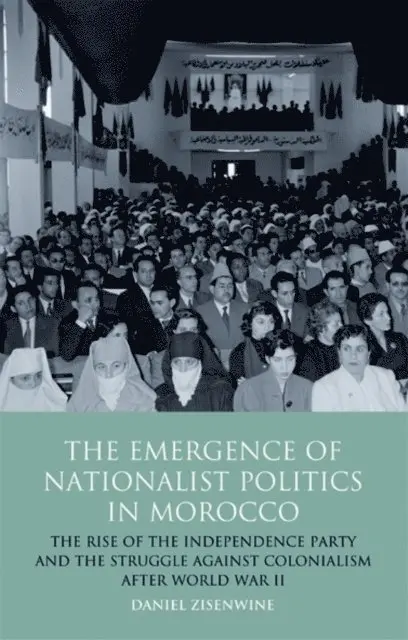
    Emergence of Nationalist Politics in Morocco

    The Rise of the Independence Party and the Struggle Against Colonialism After World War II

    AvDaniel Zisenwine

    Inbunden, Engelska, 2010

    1 865 kr

    Beställningsvara. Skickas inom 10-15 vardagar. Fri frakt över 249 kr.

    Fler format och utgåvor

    E-bok

    2 020 kr

    Beskrivning

    The end of World War II intensified Morocco's nationalist struggle against French colonial rule, with the establishment of the Istiqlal ('independence') party and the Moroccan Sultan's emergence as a national leader. In this book, Daniel Zisenwine charts the rise of Morocco's leading nationalist party, and illustrates the weakness of Moroccan political parties at the outset of the anti-colonial struggle. While Morocco today faces formidable challenges, its political system remains profoundly influenced by the events charted in this book. Drawing from a wide range of previously unpublished sources, Daniel Zisenwine presents the background to the Istiqlal's establishment, its initial actions and demands, and an extensive discussion of its social activities aimed at mobilizing the Moroccan public during the anti-colonial struggle.
    Produktinformation

    • Utgivningsdatum:2010-09-30
    • Mått:138 x 216 x 18 mm
    • Vikt:480 g
    • Format:Inbunden
    • Språk:Engelska
    • Antal sidor:272
    • Förlag:Bloomsbury Publishing PLC
    • ISBN:9781848853232

    Utforska kategorier

    • Nationalism inom Samhälle och politik
    • Politiska partier inom Samhälle och politik
    • Nationell befrielse och självständighet inom Historia och arkeologi

    Mer om författaren

    Daniel Zisenwine is Research Fellow at The Moshe Dayan Center for Middle Eastern and African Studies, Tel Aviv University.

    Recensioner i media

    'This is a solidly-researched study of an important dimension of Moroccan political history that deserves renewed attention given the emergence of a more liberalized and pluralistic political order under King Mohammed VI. The book's focus on the French protectorate and the forces that eventually led to the creation of the country's first modern political party, the Istiqlal party, around which the nation's independence movement was organized, is both timely and informative. The Istiqlal has demonstrated a remarkable resiliency over these last six decades as it has reemerged as a leading political force in legislative life. While questions remain on the long-term importance of Moroccan political parties in their contest for democratic supremacy in a system still overwhelmingly dominated by monarchical authority, a re-evaluation of the Istiqlal's role in raising Morocco's nationalist consciousness and, indirectly, giving legitimacy to the country's status as a constitutional monarchy, deserves the attention of all those interested in Moroccan political history and, more broadly, the nature of party formation and participation in non-democratic systems. The use of numerous archival sources and primary documentary materials including original correspondence adds to this study's value to both scholars and students alike.' - John Entelis, Professor of Political Science and Director of the Middle East Studies Program, Department of Political Science, Fordham University, New York, and Editor-in-Chief of the Journal of North African Studies; 'With this book, Daniel Zisenwine has offered a thoughtful, engaged analysis of the nationalist movement. It is a careful treatment, enriched by a close analysis of archival material, including official communiques, as well as journalistic accounts. Most importantly, this book does a superb job of making clear the ways in which decades old history remains salient to this day. It will be a valuable contribution to the literature.' - Gregory White, Professor of Government, Smith College, and Associate Editor of the Journal of North African Studies

    Innehållsförteckning

    • IntroductionChapter 1: The Nationalist Movement in French Morocco during World War II1.1: Moroccan Nationalism in the 1930s1.2: Moroccan Nationalism during World War II1.3: Moroccan Nationalism at the End of World WarChapter 2: The Establishment of the Istiqlal Party and the 1944 Riots2.1: Moroccan Nationalism's Renewed Vitality and the Istiqlal's Establishment2.2: The Party Platform and its Publication2.3: The 1944 RiotsChapter 3: The Istiqlal in the Aftermath of the 1944 Riots3.1: Coping with the Riots' Outcome3.2: The French Reform Initiative and the Resumption of Party ActivityChapter 4: The Istiqlal's Social Initiatives4.1: Towards New Activities4.2: The Party's Social Activities and their MeaningChapter 5: The Istiqlal's Ties with the Sultan: The Rise of a National Leader 5.1: The Relations between the Sultan and the French5.2: The Relations between the Sultan Sidi Muhammad and his Subjects 5.3: The Sultan's Relations with the Nationalist Movement and the IstiqlalChapter 6: Attempts to Revise French Policies: Eirik Labonne's Reform Efforts6.1: Background and Reactions to Labonne's Appointment6.2: Labonne's Policies upon Assuming Office: The Release of Imprisoned Nationalist Leaders6.3: Labonne's Reform Plans and their ImpactChapter 7: A New Stage in Nationalist Politics: The Sultan's Visit to Tangier7.1: Tangier in Modern Moroccan History7.2: The Sultan's Visit7.3: The Visit's Impact on French Policy and the IstiqlalChapter 8: An Intensified Nationalist Struggle: The Crises of 1950-518.1: The Istiqlal and the Moroccan Working Class8.2: New Faces among the Istiqlal's Leadership: The Rise of Mehdi Ben8.3: The Sultan's Deteriorating Relations with the ResidencyChapter 9: The Nationalist Struggle's Turning Point: The Sultan's Deposition9.1 Increased Tension between the Residency, the Monarchy, and the Istiqlal9.2 The Sultan's Deposition9.3 The Istiqlal and the CrisisConclusion