• Fri frakt över 249 kr
  • •
  • Snabba leveranser
  • •
  • Billiga böcker
Kundservice

Du är på sajten för privatpersoner.

Företag, bibliotek eller offentlig verksamhet?

Du handlar på classic.bokus.com, där alla dina funktioner finns intakta.
Till classic.bokus.com
Bokus logotyp. Gå till startsidan.
  • Erbjudanden
  • Nyheter
  • Student
  • Topplistor
  • Barn & ungdom
  • Bokus Play
  • E-böcker
  • Pocketböcker
  • Spel & pussel

10% rabatt på allt med kod: NYSTART10 →

Sidfot

Mina sidor

    Hjälp

    • Kundservice
    • Vanliga frågor och svar
    • Frakt och leverans
    • Retur vid ångerrätt
    • Reklamera vara
    • Betalning
    • Köpvillkor
    • Allmänna villkor
    • Information om webbplatsens tillgänglighet

    Om Bokus

    • Om oss
    • Pressrum
    • För studenter
    • För företag
    • För bibliotek och offentlig verksamhet
    • För leverantörer
    • Hållbarhet

    Populärt

    • Aktuella erbjudanden
    • Presentkort
    • Studentlitteratur
    • Nya böcker
    • Topplistor
    • Signerade böcker
    • Engelska böcker

    Inspiration

    • Boktips
    • BookTok
    • Populära bokserier
    • Barnbokskaraktärer
    • Populära författare
    Logotyp för Bokus
    Följ oss på Facebook (extern länk)Följ oss på Instagram (extern länk)Följ oss på YouTube (extern länk)Följ oss på TikTok (extern länk)
    bokus @ CookiesAnpassa cookiesIntegritetspolicyKöpvillkor
    Till Citymail hemsida (extern länk)Till Budbee hemsida (extern länk)Till Postnord hemsida (extern länk)Till Schenker hemsida (extern länk)Till Early Bird hemsida (extern länk)Till Walleys hemsida (extern länk)
    1. Naturvetenskap och teknik
    2. Matematik och naturvetenskap
    3. Biologi
    4. Biokemi

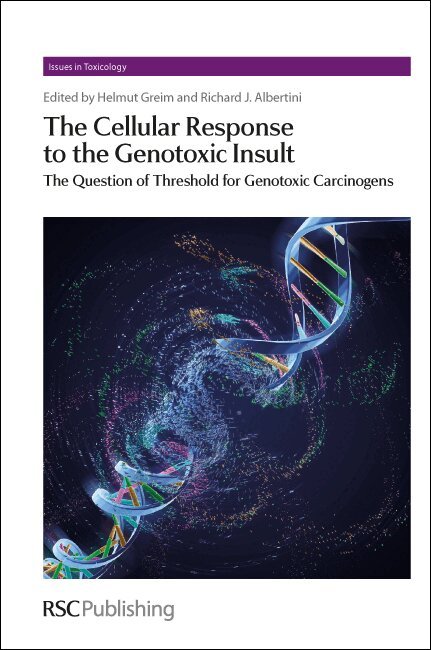
    Cellular Response to the Genotoxic Insult

    The Question of Threshold for Genotoxic Carcinogens

    AvHelmut Greim,Richard Albertini

    Inbunden, Engelska, 2012

    Del i serien Issues in Toxicology

    2 488 kr

    Tillfälligt slut

    Beskrivning

    Genotoxic carcinogens can lead to DNA mutations with the potential to cause cancer. Typically, a series of mutation events are needed before malignancy occurs so a single, small exposure may not result in disease. Also, cells have an armoury of defence mechanisms which, to a degree, counter the effects of mutagens. Distinguishing the point at which exposure to a carcinogen increases mutation rates beyond the background level is challenging. In fact, there is now general agreement that, for genotoxic carcinogens, no specific threshold can be identified. However, NOAELs (No Observed Adverse Effect Levels) may be used in the process of establishing a dose-response relationship. These denote the level of exposure at which there is no significant increase in adverse effects in the exposed population when compared to an appropriate control. Such a scientifically defendable threshold allows us to propose health based exposure limits for genotoxic carcinogens. This book describes the various cellular defence mechanisms individually and explains how they are regulated. The processes covered include metabolic inactivation, epigenetic regulation, scavenging mechanisms, DNA-repair and apoptosis. It also considers dose-dependent threshold mechanisms of carcinogenesis and the rate limiting parameters. Aimed at graduate level and above, the book discusses the consequences of genotoxic evaluation and urges readers to question the idea that even low exposures present a cancer risk.

    Produktinformation

    • Utgivningsdatum:2012-05-04
    • Mått:156 x 234 x 23 mm
    • Vikt:643 g
    • Format:Inbunden
    • Språk:Engelska
    • Serie:Issues in Toxicology
    • Antal sidor:334
    • Förlag:Royal Society of Chemistry
    • ISBN:9781849731775

    Utforska kategorier

    • Biokemi inom Naturvetenskap och teknik
    • Cellbiologi inom Naturvetenskap och teknik

    Mer om författaren

    Helmut Greim is a toxicologist and former chair of the Institute of Toxicology and Environmental Hygiene at the Technical University of Munich, Germany. His research experience is drug metabolism, toxicokinetics, mechanisms of carcinogenic agents, in vitro test systems. He has been member or chair of numerous national and international scientific committees. In 1996 he received the Arnold Lehman Award of SOT and in 2001 the Herbert Stockinger Award of the American Conference of Governmental Industrial Hygienists. At present he chairs the Scientific Committee on Health and Environmental Risks of the DG SANCO, Brussels, is member of the Scientific Committee on Occupational Exposure Limits of DG EMPLOYMENT, Luxembourg and member of the Risk Assessment Committee of the European Chemicals Agency in Helsinki, Finland. Dr. Albertini is currently Research Professor of Pathology at the University of Vermont (USA). He retired from the Department of Medicine at that University in 2000 and is now an Emeritus Professor of Medicine. He received the M.D. degree in 1963 and a Ph.D. in Medical Genetics in 1972, both from the University of Wisconsin, Madison (USA). Dr. Albertini joined the Department of Medicine at the University of Vermont that same year, becoming full Professor in 1979. He was clinically active in the areas of oncology, hematology and AIDS for many years and served as Director of the Vermont Cancer Center from 1993 to 1995. Dr. Albertini's fundamental research has been and remains in the area of mutagenesis and the relationship of somatic mutations to cancer. In the past, Dr. Albertini served as President of the Environmental Mutagen Society and as editor-in-chief of Environmental and Molecular Mutagenesis.

    Recensioner i media

    "This book will, therefore, make excellent and stimula ting reading for all toxicologists (from the student to the most senior toxicologist} in academia, industry and government as well as scienlists responsible for health risk assessment. It urges readers to accept scientifically based thresholds not only for non-genotoxic (epigenetic) carcinogens but also - and more importantly - for genotoxic carcinogens. It is highly recommended!"

    Innehållsförteckning

    • Introduction: The rationale for thresholds for genotoxic carcinogens;Part 1. Threshold effects observed in experimental studies: Mechanisms responsible for the chromosome and gene mutations driving carcinogenesis: implications for dose-response characteristics of mutagenic carcinogens;Dose-effect relationships of DANN-reactive liver carcinogens;DNA alkylation and repair after EEMS exposure: Where do the thresholds for mutagenic/clastogenic effects arise? Part 2. Metabolic inactivation of genotoxic reactants: Enzymatic detoxification of endogenously produced mutagenic carcinogens maintaining cellular homeostasis;Phase 2 detoxifying enzymes and anti-oxygen defense mechanisms in the inactivation of genotoxic carcinogens;Part 3. DNA repair: Consequences and Repair of oxidative DNA damage;The plasticity of DNA damage response during cell differentiation: pathways and consequences;Tumor suppressor protein-mediated regulation of base excision repair in response to DNA damage;Part 4. Apoptosis: Survival and death strategies in cells exposed to genotoxin;Different modes of cell death induced by DNA damage;Transcriptional inhibition by DNA damage as a trigger of cell death;Part 5. Epigenetic mechanisms: The interplay between epigenetics and Gap junctionional intercellular communication;Index