• Fri frakt över 249 kr
  • •
  • Snabba leveranser
  • •
  • Billiga böcker
Kundservice

Du är på sajten för privatpersoner.

Företag, bibliotek eller offentlig verksamhet?

Du handlar på classic.bokus.com, där alla dina funktioner finns intakta.
Till classic.bokus.com
Bokus logotyp. Gå till startsidan.
  • Erbjudanden
  • Nyheter
  • Student
  • Topplistor
  • Barn & ungdom
  • Bokus Play
  • E-böcker
  • Pocketböcker
  • Spel & pussel

10% rabatt på allt med kod NYSTART10 →

Sidfot

Mina sidor

    Hjälp

    • Kundservice
    • Vanliga frågor och svar
    • Frakt och leverans
    • Retur vid ångerrätt
    • Reklamera vara
    • Betalning
    • Köpvillkor
    • Allmänna villkor
    • Information om webbplatsens tillgänglighet

    Om Bokus

    • Om oss
    • Pressrum
    • För studenter
    • För företag
    • För bibliotek och offentlig verksamhet
    • För leverantörer
    • Hållbarhet

    Populärt

    • Aktuella erbjudanden
    • Presentkort
    • Studentlitteratur
    • Nya böcker
    • Topplistor
    • Signerade böcker
    • Engelska böcker

    Inspiration

    • Boktips
    • BookTok
    • Populära bokserier
    • Barnbokskaraktärer
    • Populära författare
    Logotyp för Bokus
    Följ oss på Facebook (extern länk)Följ oss på Instagram (extern länk)Följ oss på YouTube (extern länk)Följ oss på TikTok (extern länk)
    bokus @ CookiesAnpassa cookiesIntegritetspolicyKöpvillkor
    Till Citymail hemsida (extern länk)Till Budbee hemsida (extern länk)Till Postnord hemsida (extern länk)Till Schenker hemsida (extern länk)Till Early Bird hemsida (extern länk)Till Walleys hemsida (extern länk)
    1. Psykologi och pedagogik
    2. Pedagogik
    3. Högskola och universitet

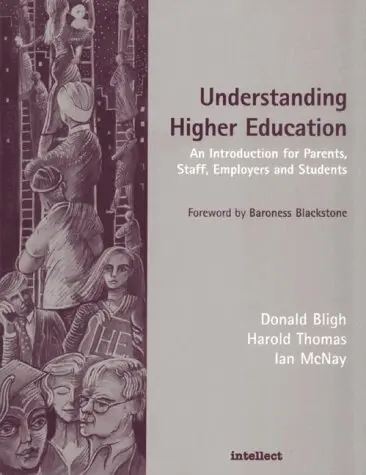
    Understanding Higher Education

    AvDonald Bligh,Harold Thomas

    Häftad, Engelska, 1999

    279 kr

    Tillfälligt slut

    Beskrivning

    The development of Higher Education is taking place at a phenomenal pace, and this book is set to be a guide for ALL the different groups of people who need to understand the consequences of the changes in the years to come.With the expansion of Higher Education and changes following the Dearing Report, a very large number of parents have no experience of HE. Their children are about to enter university, employers are unaware of the changes, and new lecturers have a light grasp of the history and ideals of university education. This book is set to appeal to the needs of these groups, and will be of special interest to every (school) careers officer.Chapters consider both the historical development of the system of Higher Education as well as the scope and nature of its institutional manifestation as we recognize it today. Far from being another Which-style guide for intending applicants, it is written in a straightforward style by the three authors, each known internationally as Higher Education specialists.

    Produktinformation

    • Utgivningsdatum:1999-03-01
    • Mått:178 x 229 x undefined mm
    • Vikt:333 g
    • Format:Häftad
    • Språk:Engelska
    • Antal sidor:150
    • Förlag:Intellect
    • ISBN:9781871516746

    Utforska kategorier

    • Högskola och universitet inom Psykologi och pedagogik
    • Utbildningsstrategier och utbildningspolitik inom Psykologi och pedagogik

    Mer om författaren

    Donald Bligh is an Honorary Research Fellow at the University of Exeter, and formerly Director and Professor of Continuing Education at the University of Dundee. He has been Chairman of the Society for Research into Higher Education and maintains several consultancies on staff appraisal, training and professional development at University level.

    Innehållsförteckning

    • Foreword          [v]Preface          [vii]Glossary          [ix]CHAPTER 1     Some Misconceptions          [1]I You get long holidaysII You've one job, not twoIII Higher education is like schoolIV Students are irresponsible libertinesV It's all theory, not practicalVI Higher education sponges on the taxpayerVII Only students and their parents benefit from higher educationVIII So what's higher education really like? CHAPTER 2     What is Higher Education for?          [7]I To develop attitudes and emotional integrityII To cultivate the intellect III EmploymentIV To develop culture and standards of citizenshipV Knowledge and research as a national resourceVI To provide an adaptable workforce with a broad range of skillsVII Aims from other perspectives CHAPTER 3     How the System Developed          [16]I The principles of higher education come from ancient AthensII Medieval knowledge came from authorities and contested discussionIII The growing freedoms of expression, opinion, observation and criticismIV The struggle to establish science, technology and practical subjectsV Government responsibility for finance and the "buffer principle"VI The age of expansionVII The age of equalityVIII The age of efficiencyIX The age of excellence CHAPTER 4     Understanding the New Higher Education System          [33]I Oxbridge II Other collegiate universitiesIII Older civic universitiesIV Newer civic universitiesV Post-war universitiesVI Post 1992 universities VII Other institutions CHAPTER 5     Is it Worth Entering Higher Education?          [39]I What does it cost?II What is the case for loans?III What are the benefits? CHAPTER 6     Students in the System: access and participation          [46]I How many students are there?II Getting inIII A closer look at a varied picture IV The benefits from accepting foreign studentsV Are there too many students?VI What are students like?VII Local differencesVIII The admissions procedure  CHAPTER 7     Ways of Learning          [61]I Understanding why students behave as they doII Planning the use of timeIII Effective readingIV Learning from lecturesV Note-takingVI The importance of discussionVII Personal learningVIII Where to get helpIX Conclusion CHAPTER 8     Assessment of Students          [78]I There's a fundamental problem when assessing studentsII The purposes of assessmentIII Problems of validityIV The unreliability of assessmentsV Some factors related to examination performanceVI The need to diversify assessments VII ImplicationsVIII Conclusion CHAPTER 9     Projects and Research          [90]I We should all be researchers nowII Twelve typical stages in researchIII The lonely life of the postgraduate research studentIV The funding of academic researchV Conclusion CHAPTER 10     What Academic Freedom is, Why It Matters          [104]I The general and special argumentsII Some assumptionsIII Distinguishing various freedoms that are claimedIV Which of these claims are justified?V Why does academic freedoms matter? CHAPTER 11     Pressures for Accountability          [110]I Who are the stakeholders and how have they affected higher education?II How has the demand for greater accountability been met in practice? CHAPTER 12     The Government and Finance of Institutions          [117]I The general character of academic managementII Academic departmentsIII FacultiesIV Senates and academic boardsV How the money comes and goes CHAPTER 12 What are Academics Really Like?          [126]I Some misleading impressionsII The changing composition of British academe III Understanding how academics thinkIV Academic life - what is it like?V Staff development in higher educationVI Conclusion CHAPTER 14     The Shape of Things to Come          [138]I The inevitability of changeII The wider worldIII The higher education world - policies and tendenciesIV Conclusions and choices INDEX          [148]