• Fri frakt över 249 kr
  • •
  • Snabba leveranser
  • •
  • Billiga böcker
Kundservice

Du är på sajten för privatpersoner.

Företag, bibliotek eller offentlig verksamhet?

Du handlar på classic.bokus.com, där alla dina funktioner finns intakta.
Till classic.bokus.com
Bokus logotyp. Gå till startsidan.
  • Erbjudanden
  • Nyheter
  • Student
  • Topplistor
  • Barn & ungdom
  • Bokus Play
  • E-böcker
  • Pocketböcker
  • Spel & pussel

Må bättre, för mindre! Upp till 50% rabatt på hälsoböcker

Sidfot

Mina sidor

    Hjälp

    • Kundservice
    • Vanliga frågor och svar
    • Frakt och leverans
    • Retur vid ångerrätt
    • Reklamera vara
    • Betalning
    • Köpvillkor
    • Allmänna villkor
    • Information om webbplatsens tillgänglighet

    Om Bokus

    • Om oss
    • Pressrum
    • För studenter
    • För företag
    • För bibliotek och offentlig verksamhet
    • För leverantörer
    • Hållbarhet

    Populärt

    • Aktuella erbjudanden
    • Presentkort
    • Studentlitteratur
    • Nya böcker
    • Topplistor
    • Signerade böcker
    • Engelska böcker

    Inspiration

    • Boktips
    • BookTok
    • Populära bokserier
    • Barnbokskaraktärer
    • Populära författare
    Logotyp för Bokus
    Följ oss på Facebook (extern länk)Följ oss på Instagram (extern länk)Följ oss på YouTube (extern länk)Följ oss på TikTok (extern länk)
    bokus @ CookiesAnpassa cookiesIntegritetspolicyKöpvillkor
    Till Citymail hemsida (extern länk)Till Budbee hemsida (extern länk)Till Postnord hemsida (extern länk)Till Schenker hemsida (extern länk)Till Early Bird hemsida (extern länk)Till Walleys hemsida (extern länk)
    1. Medicin
    2. Andra medicinska specialiteter
    3. Pediatrik

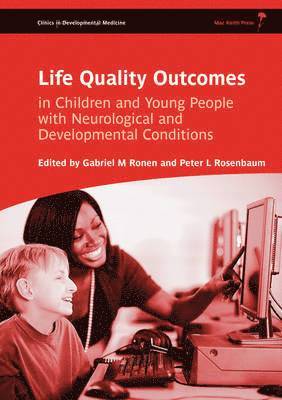
    Life Quality Outcomes in Children and Young People with Neurological and Developmental Conditions

    Concepts, Evidence and Practice

    AvGabriel M. Ronen,Peter L. Rosenbaum

    Inbunden, Engelska, 2013

    Del i serien Clinics in Developmental Medicine

    1 350 kr

    Beställningsvara. Skickas inom 5-8 vardagar. Fri frakt över 249 kr.

    Beskrivning

    Clinics in Developmental Medicine Health care professionals need to understand their patients’ views of their condition and its effects on their health and well-being. This book builds on the World Health Organization's concepts of 'health', 'functioning' and 'quality of life' for young people with neurodisabilities: it emphasises the importance of engaging with patients in the identification of both treatment goals and their evaluation. Uniquely, it enables health care professionals to find critically reviewed outcomes-related information. The authors are leaders in their respective research fields and discuss theory, concepts, and evidence, and how these are applied in clinical settings and research applications.Readership: Health care professionals working with children and youth with neurological and developmental conditions, wanting to expand their clinical or research horizons.Frontline service providers, health services and social science researchers, clinical program managers and policy makers concerned with ensuring that their clinical or programmatic services are addressing contemporary issues as effectively as possible.Students in the health professions and others in related fields (such as social work).

    Produktinformation

    • Utgivningsdatum:2013-04-12
    • Mått:178 x 241 x 25 mm
    • Vikt:1 066 g
    • Format:Inbunden
    • Språk:Engelska
    • Serie:Clinics in Developmental Medicine
    • Antal sidor:412
    • Förlag:Mac Keith Press
    • ISBN:9781908316585

    Utforska kategorier

    • Pediatrik inom Medicin
    • Neurologi och klinisk neurofysiologi inom Medicin

    Mer om författaren

    Gabriel M Ronen, MD, MSc (health research methodology), FRCP(C) (paediatric neurology) Professor of Paediatrics, McMaster University, Hamilton, Ontario, CanadaAs a paediatric neurologist he has a wide range of experience with children and youth with neurological conditions. He has been an active clinician, researcher, teacher and mentor with a particular interest in children with epilepsy.Peter L Rosenbaum, MD, CM, FRCP(C) Professor of Paediatrics, CanChild Centre for Childhood Disability Research, IAHS Building Room 408, McMaster University, 1400 Main Street West, Hamilton ON L8S 1C7 CanadaResearch Chair in Childhood Disability Research, Mentoring and Dissemination As a Developmental Paediatrician he has had a wide-ranging experience of childhood disability, with a particular interest in cerebral palsy. For the past 40 years he has been an active clinician, researcher, teacher, mentor, author and editor. In 1989 he co-founded CanChild Centre for Childhood Disability Research and in 2000 he was recognized with the Canadian Paediatric Society's highest award, the Ross Award. Honorary degree Doctor of Science from Universite Laval (2005). In 2007 he was awarded the AACPDM's first Mentorship Award. He is the North American Editor for Developmental Medicine and Child Neurology journal from Mac Keith Press.

    Innehållsförteckning

    • Chapter 1: Setting the Stage: Introduction and general overview. Gabriel Ronen and Peter Rosenbaum, McMaster UniversitySection A: Concepts and perspectives of outcomes(i) Contemporary Concepts in Health, Disability and Life QualityChapter 2: Concepts and perspectives on ‘health’ and ‘outcomes’. Gabriel Ronen and Peter Rosenbaum, McMaster UniversityChapter 3: ‘Quality of life’ and ‘health-related quality of life’.Rebecca Renwick, University of TorontoChapter 4: ‘Health status’ and the usefulness of the ICF framework: clinical and program perspectivesOlaf Kraus de Camargo & Nora Fayed, McMaster UniversityChapter 5: The role of ‘participation’ in the lives of children and youth with neurodevelopmental conditions.Dana Anaby McGill University & Mary Law, McMaster University(ii) Life Issues in Children and Young People with neurodevelopmental conditions.Chapter 6: A developmental perspective on childhood neurological conditions. Peter Rosenbaum and Gabriel Ronen, McMaster UniversityChapter 7: Psychological impact of living with a neurodevelopmental condition. David Dunn & Michelle Thorne Indiana UniversityChapter 8: The characteristics of peer relations among children with neurological and developmental conditions. Tracy Vaillancourt,Jennifer Hepditch, Irene Vitoroulis, Amanda Krygsman, Christine Blain-Arcaro, University of Ottawa & Patricia McDougall, St. Thomas More College, University of SaskatchewanChapter 9: Romantic relationships and sexual experiences. Diana Wiegerink & Marij Roebroeck Erasmus University Rotterdam(iii) Contextual Factors in the Lives of Children and Young People with neurodevelopmental conditions.Chapter 10: Contextual facilitators: Resilience, Coping and Sense of Coherence. Kim Schonert-Reichl University of British Columbia & Veronica Smith University of AlbertaChapter 11: The family does matter! Lucyna Lach, McGill UniversityChapter 12: Stigma: A pervasive contextual barrier. Ann Jacoby, University of Liverpool & Joan Austin Indiana UniversityChapter 13: Advancing the rights of children with neurodevelopmental conditions. Sheila Jennings York University, TorontoSection B: Quality of life outcomes: Methods and measurementsChapter 14: Measurement concepts, standards and perspectives of patient-reported outcomes. Aileen Davis, University of TorontoChapter 15: Practical considerations in choosing Health, Quality of life and health-related quality of life Scales for Children.  Nora Fayed, McMaster UniversityChapter 16: Complexity in the lives of children and young people with neurological and developmental conditions: The role of qualitative research. Debra Stewart McMaster UniversityChapter 17: Understanding self and proxy ratings. Gabriel Ronen & Davis Streiner, McMaster UniversityChapter 18: Ethics of patient reported outcome measures. David Streiner, McMaster UniversitySection C: Opportunities to improve quality life outcomes (i) Education and DisabilityChapter 19: Knowledge translation: Accessing and using the best evidence to improve child and family outcome. Iona Novak University of Notre Dame Sydney, Australia, Dianne Russell McMaster University, and Marjolijn Ketelaar University Medical Center Utrecht and Rehabilitation Center De Hoogstraat Utrecht, the NetherlandsChapter 20: Interprofessional Education and Collaboration: Key Approaches for Improving Care. Scott Reeves University of California, San FranciscoChapter 21: A specialized learning environment can enhance the outcomes of children with cognitive impairment. Elizabeth Kerr Hospital for Sick Children Toronto & Miriam Riches OISE-University of Toronto(ii) Growing into Adulthood with a Childhood Neurodevelopmental Condition.Chapter 22: Transition to adulthood: enhancing health and quality of life. Jan Willem Gorter McMaster University, and Marij Roebroeck Erasmus UniversityChapter 23: Why we need adult specialists for people with childhood onset neurodevelopmental conditions. Bernard Dan, Free University of Brussels  Chapter 24: Longitudinal approaches to populations with childhood onset neurodevelopmental conditions: Australian experience with Rett syndrome. Jenny Downs &Helen Leonard, University of Western Australia(iii) Youth, Disability and Society. Chapter 25: Policies, Programs and Practices: The tensions about life quality outcomes. Gina Glidden, McGill University; & Rachel Birnbaum University of Western Ontario Chapter 26: What is the emerging role of parent and community organizations in health promotion? Primarily a UK experience. Chris Morris & Val Shilling, Medical School Exeter UKSection D: Conclusions and future developmentsChapter 27: The ICF and Life Quality Outcomes. Peter Rosenbaum and Gabriel Ronen, McMaster University