• Fri frakt över 249 kr
  • •
  • Snabba leveranser
  • •
  • Billiga böcker
Kundservice

Du är på sajten för privatpersoner.

Företag, bibliotek eller offentlig verksamhet?

Du handlar på classic.bokus.com, där alla dina funktioner finns intakta.
Till classic.bokus.com
Bokus logotyp. Gå till startsidan.
  • Erbjudanden
  • Nyheter
  • Student
  • Topplistor
  • Barn & ungdom
  • Bokus Play
  • E-böcker
  • Pocketböcker
  • Spel & pussel

10% rabatt på allt med kod: NYSTART10 →

Sidfot

Mina sidor

    Hjälp

    • Kundservice
    • Vanliga frågor och svar
    • Frakt och leverans
    • Retur vid ångerrätt
    • Reklamera vara
    • Betalning
    • Köpvillkor
    • Allmänna villkor
    • Information om webbplatsens tillgänglighet

    Om Bokus

    • Om oss
    • Pressrum
    • För studenter
    • För företag
    • För bibliotek och offentlig verksamhet
    • För leverantörer
    • Hållbarhet

    Populärt

    • Aktuella erbjudanden
    • Presentkort
    • Studentlitteratur
    • Nya böcker
    • Topplistor
    • Signerade böcker
    • Engelska böcker

    Inspiration

    • Boktips
    • BookTok
    • Populära bokserier
    • Barnbokskaraktärer
    • Populära författare
    Logotyp för Bokus
    Följ oss på Facebook (extern länk)Följ oss på Instagram (extern länk)Följ oss på YouTube (extern länk)Följ oss på TikTok (extern länk)
    bokus @ CookiesAnpassa cookiesIntegritetspolicyKöpvillkor
    Till Citymail hemsida (extern länk)Till Budbee hemsida (extern länk)Till Postnord hemsida (extern länk)Till Schenker hemsida (extern länk)Till Early Bird hemsida (extern länk)Till Walleys hemsida (extern länk)
    1. Samhälle och politik
    2. Samhälle och kultur
    3. Sociala grupper och identitet
    4. Etnicitet

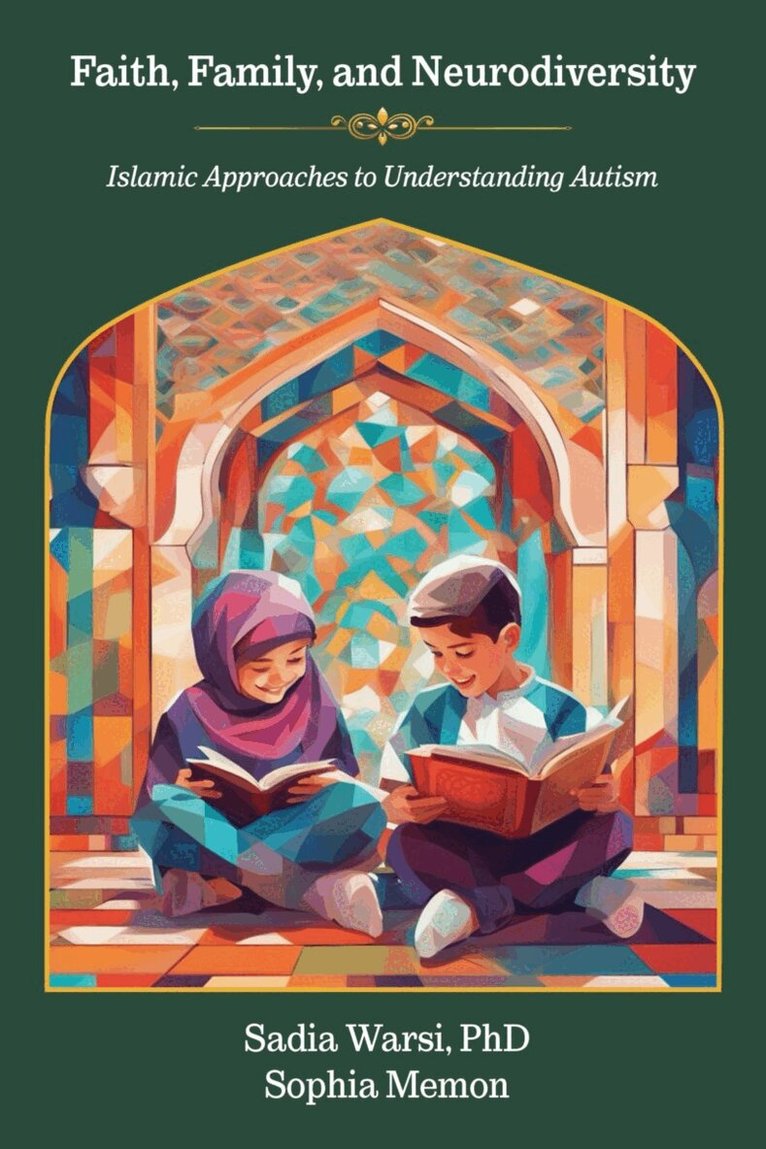
    Faith, Family, and Neurodiversity

    Islamic Approaches to Understanding Autism

    AvSadia Warsi,Sophia Memon

    Häftad, Engelska, 2026

    Del i serien From Disability to ABILITY

    459 kr

    Beställningsvara. Skickas inom 5-8 vardagar. Fri frakt över 249 kr.

    Beskrivning

    Muslim families raising children with autism navigate complex intersections of faith, culture, and disability services that remain largely unexamined in special education literature. In a first for that academic literature, Faith, Family, and Neurodiversity: Islamic Approaches to Understanding Autism addresses this critical gap by centering the voices and expertise of Muslim families who have developed sophisticated strategies for supporting their children while maintaining religious identity and cultural values within American educational systems. Drawing on extensive community engagement and research, Dr. Sadia Warsi and Ms. Sophia Memon document how Islamic principles provide conceptual frameworks for understanding autism that align with contemporary special education values while offering additional resources for family resilience. Through composite narratives that protect participant confidentiality, this volume examines how families successfully integrate Islamic wisdom with evidence-based interventions to create comprehensive support programs. The analysis reveals systematic gaps in how educational institutions serve culturally diverse families, while each chapter integrates young adult literature featuring characters with exceptionalities, including autism, as pedagogical tools for building cultural competence. This volume challenges prevailing assumptions about cultural values and evidence-based practice, offering a strengths-based perspective on cultural diversity in special education. Faith, Family, and Neurodiversity provides essential content for special educators, school psychologists, administrators, teacher preparation faculty, and educational researchers committed to creating truly inclusive educational systems. The goal of the book is to become a foundational document in the study of this unique but important phenomenon. It can be adopted in a variety of neurodiversity or cultural studies classes, and it is essential reading for special education teachers, especially those dealing with issues of health in diverse cultures. Perfect for courses such as: Introduction to Special Education; Culturally Responsive Teaching in Special Education; Family Engagement in Special Education; Foundations of Inclusive Education; Autism Spectrum Disorders: Theory and Practice; Multicultural Education; Diversity in Early Childhood Special Education; Critical Perspectives in Disability Studies; Educational Equity and Social Justice; Collaboration with Families and Communities.

    Produktinformation

    • Utgivningsdatum:2026-05-04
    • Mått:152 x 229 x 17 mm
    • Vikt:313 g
    • Format:Häftad
    • Språk:Engelska
    • Serie:From Disability to ABILITY
    • Antal sidor:175
    • Förlag:Myers Education Press
    • ISBN:9781975509712

    Utforska kategorier

    • Etnicitet inom Samhälle och politik
    • Utbildningsstrategier och utbildningspolitik inom Psykologi och pedagogik
    • Specialundervisning inom Psykologi och pedagogik

    Mer om författaren

    Dr. Sadia Warsi brings extensive expertise in special education and culturally responsive pedagogy to this collaborative work. Her expertise in inclusive education, minority parent involvement in special education and emergent literacy development began during her early teaching years in Chicago Public Schools, where she worked with students in both inclusion and self-contained special education classrooms. As a dedicated educator and researcher, Dr. Warsi has developed comprehensive approaches to supporting diverse learners, particularly those facing significant challenges.Dr. Warsi's research focuses on children who face significant challenges: those experiencing homelessness, refugee students with disabilities, and families navigating both poverty and special education systems. Her work explores how these children and their families develop resilience and maintain hope through literacy. This research foundation directly informs the culturally sensitive and strength-based approaches presented throughout this current work on autism and Islamic perspectives.Dr. Warsi has published extensively on refugee students with disabilities, Muslim representation in children's literature, trauma-informed instruction, and family engagement in special education. Her book Beyond Labels: Understanding Refugee Students with Disabilities in Educational Contexts was published by Myers Education Press in 2025. She presents nationally and internationally on inclusive classroom design and cultural responsiveness in education. She is also the author of The Little Shelter That Could: Literacy Resilience of Mothers and Children Facing Homelessness (Myers Education Press, 2026), and Faith, Family, and Neurodiversity: Islamic Approaches to Understanding Autism (Myers Education Press, 2026).Dr. Warsi's teaching portfolio encompasses a comprehensive range of courses that directly inform the culturally responsive educational frameworks presented in this book. These include Frameworks, Perspectives and Collaboration in Special Education, Methods of Social/Emotional Support, and Literacy Across the Curriculum for Students with Disabilities offered in both online and face-to-face formats. Additional courses focus on Literacy Instruction for Diverse Learners and Differentiated and Individualized Curriculum and Instruction, providing essential foundations for inclusive educational practices. She has received the Excellence in Teaching Award from National Louis University, recognizing her commitment to preparing future educators with culturally responsive pedagogical approaches.Sophia Memon is a student at Northwestern University's Medill School of Journalism, pursuing a double major in journalism and psychology with a minor in creative writing. Her interdisciplinary background combines rigorous journalistic training with deep understanding of psychological research and creative storytelling, skills that proved essential in transforming complex family interviews into authentic, compassionate narratives for Faith, Family, and Neurodiversity: Islamic Approaches to Understanding Autism.As co-author, Sophia brought both personal connection to the Muslim community and professional expertise in narrative construction to the project. Her journalistic training provided the methodological framework for creating composite stories that honor truth while protecting family privacy. Her psychology coursework offered crucial insights into the emotional and developmental complexities that characterize the autism experiences documented throughout these case studies.Sophia has demonstrated leadership as editor-in-chief of Northwestern University's Al Bayan, Social Chair of her residential college, a peer advisor and orientation leader, and the founder and head essay coach of her college consulting business.As a reporter for The Daily Northwestern, Spoon Magazine, and nuAZN, she fosters inclusive environments for creative expression. Her previous involvement with mental health advocacy through Your Mind Matters Club and cultural engagement through Islamic Culture Club reflects the same commitment to building bridges between communities that characterizes this book's approach to culturally responsive education.Currently serving as a marketing and outreach intern at a therapy practice, Sophia demonstrates her ongoing passion for supporting others through transitions and challenges. Her work as a writer and reporter continues to hone her skills in creating compelling narratives that serve diverse audiences while maintaining journalistic integrity.

    Recensioner i media

    "Faith, Family, and Neurodiversity: Islamic Approaches to Understanding Autism offers a compassionate and scholarly exploration of autism through an Islamic lens. It thoughtfully connects faith, family life, and modern understandings of neurodiversity, providing practical guidance, emotional support, and spiritual insight. The book reframes autism not as a deficit but as a divine gift that enriches humanity. Inclusive and reflective, it serves as a valuable resource for parents, educators, and communities seeking acceptance, understanding, and holistic well-being grounded in Islamic values." - Dr. Uche Obialor, EdD, Learning Behavior Specialist, Adjunct Professor in Special Education, National Louis University Chicago Public Schools Special Educator, Chicago, Illinois"As a therapist, I see every day how deeply the need for belonging shapes the well-being of children and families. Faith, Family, and Neurodiversity offers a compassionate, human exploration of autism through the voices of Muslim families, highlighting both shared experiences and important cultural differences. This book gently shows how faith, family, and community can be sources of strength rather than barriers. It helps readers understand how misunderstanding and exclusion impact families, and why being truly seen matters. Clear, thoughtful, and respectful, this book expands empathy and understanding, and reminds us that meaningful support begins with belonging, dignity, and connection." - Sheema Khan, Registered Psychotherapist, Master of Arts in Counselling Psychology & MBA, Ontario, Canada"This book offers a compassionate and human look at autism through the voices of Muslim families living this journey every day. It reflects the early confusion, fear, and grief many families experience, and the quiet strength that grows with acceptance and understanding. What makes this book especially meaningful is how faith is woven naturally into each story, showing how patience, trust in Allah, and hope sustain families over time. These voices highlight resilience, advocacy, and love while navigating systems that often misunderstand both autism and culture. An important, thoughtful read for families, professionals, and anyone seeking empathy, awareness, and understanding." - Mehreen Khan Warsi, Bachelor of Arts in Sociology and Industrial Relations, Minor in Professional Writing, Parent and Autism Advocate, Ontario, Canada"Faith, Family, and Neurodiversity: Islamic Approaches to Understanding Autism is a must read for all educators especially those who advocate for students with neurodiversity. Dr. Warsi is compelling as she navigates complex themes at the intersection of Islam, family, and autism. The case studies are presented compassionately and tell how family roots and cultural identity interplay to support diverse learners. It also acknowledges struggles within the American educational system and suggests transformational practices to include and prioritize to best meet the needs of many enrolled underrepresented student populations." - Dr. Abisola Bakare, PhD, Clinical Assistant Professor, Chicago State University, Former District Representative & Chicago Public Schools Special Educator, Chicago, Illinois"Faith, Family, and Neurodiversity: Islamic Approaches to Understanding Autism is a must-read for special educators, general educators, Muslim parents, and community leaders. Written by Dr. Sadia Warsi and Ms. Sophia Memon, this dynamic book offers compelling case studies exploring autism through Islamic perspectives. The authors address family experiences, school expectations, and spiritual approaches with relevance and authority. As the Muslim community increasingly embraces inclusion, this book provides essential guidance for families navigating autism. Dr. Warsi and Ms. Memon capture complex realities, cultural perspectives, and evidence-based practices beautifully. This book captured my heart. Being a special educator, teacher educator, mother, grandmother, and Islamic education leader, I found it profound and essential. I cannot wait to promote it everywhere." - Dr. Seema A. Imam, EdD, Board Member of the Islamic Schools League of America, Professor in Elementary Education, National Louis University, National College of Education, Chicago, Illinois

    Innehållsförteckning

    • Acknowledgments Preface Introduction: Understanding Muslim Families Chapter 1: Advocating for Students with Complex Needs Ismail's Story Family Dynamics, Islamic Foundation, and Cultural Integration Islamic Identity and Educational Growth Educational Journey, Assessment, and Advocacy Community Education and System Navigation Fatima's Perspective and Identity Development Building Understanding Through Literature Building Effective Partnerships Discussion Questions for Professional Learning and Reflection References Chapter 2: Teaching Students Navigating Multiple Cultures Karim's Story Hassan's Cultural Evolution and Family Dynamics Islamic Frameworks, Cultural Bridge-Building, and Educational Programming Current Educational Programming and Crisis Response Building Understanding Through Literature Building Effective Partnerships Discussion Questions for Professional Learning and Reflection References Chapter 3: Teaching Students with Alternative Communication Needs Jamal's Story Family Dynamics, Cultural Integration, and Islamic Meaning-Making Spiritual Aspirations, Cultural Celebrations, and Educational Collaboration Current Programming, Daily Life Integration, and Future Planning Building Understanding Through Literature Building Effective Partnerships Discussion Questions for Professional Learning and Reflection References Chapter 4: Recognizing High-Functioning Autism in the Classroom Zena's Story Family Complexity, Cultural Navigation, and Educational Experiences Islamic Education, Cultural Identity Challenges, and Community Support Educational Programming, Advocacy, and Professional Identity Building Understanding Through Literature Building Effective Partnerships Discussion Questions for Professional Learning and Reflection References Chapter 5: Partnering with Homeschooling Families Khalid's Story Family Partnership, Cultural Integration, and Educational Collaboration Confronting Mental Health Stigma and Professional Bias The Isolation of Homeschooling Protection Navigating Public Understanding and Community Acceptance Balancing Protection and Socialization Needs Islamic Education and Community Advocacy Building Understanding Through Literature Building Effective Partnerships Discussion Questions for Professional Learning and Reflection References Chapter 6: Serving Twice-Exceptional Learners Umair's Story Family Background and Cultural Dynamics Educational Planning and Medical Coordination Community Expectations and Cultural Navigation Managing Safety Concerns and Vulnerability Questioning Goals and Evolving Understanding Building Understanding Through Literature Building Effective Partnerships Discussion Questions for Professional Learning and Reflection References Conclusion Quick Reference Guide About the Authors Index NOTE: Table of Contents subject to change up until publication date.