• Fri frakt över 249 kr
  • •
  • Snabba leveranser
  • •
  • Billiga böcker
Kundservice

Du är på sajten för privatpersoner.

Företag, bibliotek eller offentlig verksamhet?

Du handlar på classic.bokus.com, där alla dina funktioner finns intakta.
Till classic.bokus.com
Bokus logotyp. Gå till startsidan.
  • Erbjudanden
  • Student
  • Topplistor
  • Barn & ungdom
  • Bokus Play
  • E-böcker
  • Ljudböcker
  • Pocketböcker
  • Spel och pussel

Pocketfynda! Hundratals böcker för 49 kr/st →

Sidfot

Mina sidor

    Hjälp

    • Kundservice
    • Vanliga frågor och svar
    • Frakt och leverans
    • Retur vid ångerrätt
    • Reklamera vara
    • Betalning
    • Köpvillkor
    • Allmänna villkor
    • Information om webbplatsens tillgänglighet

    Om Bokus

    • Om oss
    • Pressrum
    • För studenter
    • För företag
    • För bibliotek och offentlig verksamhet
    • För leverantörer
    • Hållbarhet

    Populärt

    • Aktuella erbjudanden
    • Presentkort
    • Studentlitteratur
    • Nya böcker
    • Topplistor
    • Signerade böcker
    • Engelska böcker

    Inspiration

    • Boktips
    • BookTok
    • Barnbokskaraktärer
    • Populära författare
    Logotyp för Bokus
    Följ oss på Facebook (extern länk)Följ oss på Instagram (extern länk)Följ oss på YouTube (extern länk)Följ oss på TikTok (extern länk)
    bokus @ CookiesAnpassa cookiesIntegritetspolicyKöpvillkor
    Till Citymail hemsida (extern länk)Till Budbee hemsida (extern länk)Till Postnord hemsida (extern länk)Till Schenker hemsida (extern länk)Till Early Bird hemsida (extern länk)Till Walleys hemsida (extern länk)
    1. Samhälle och politik
    2. Sociologi och antropologi
    3. Antropologi

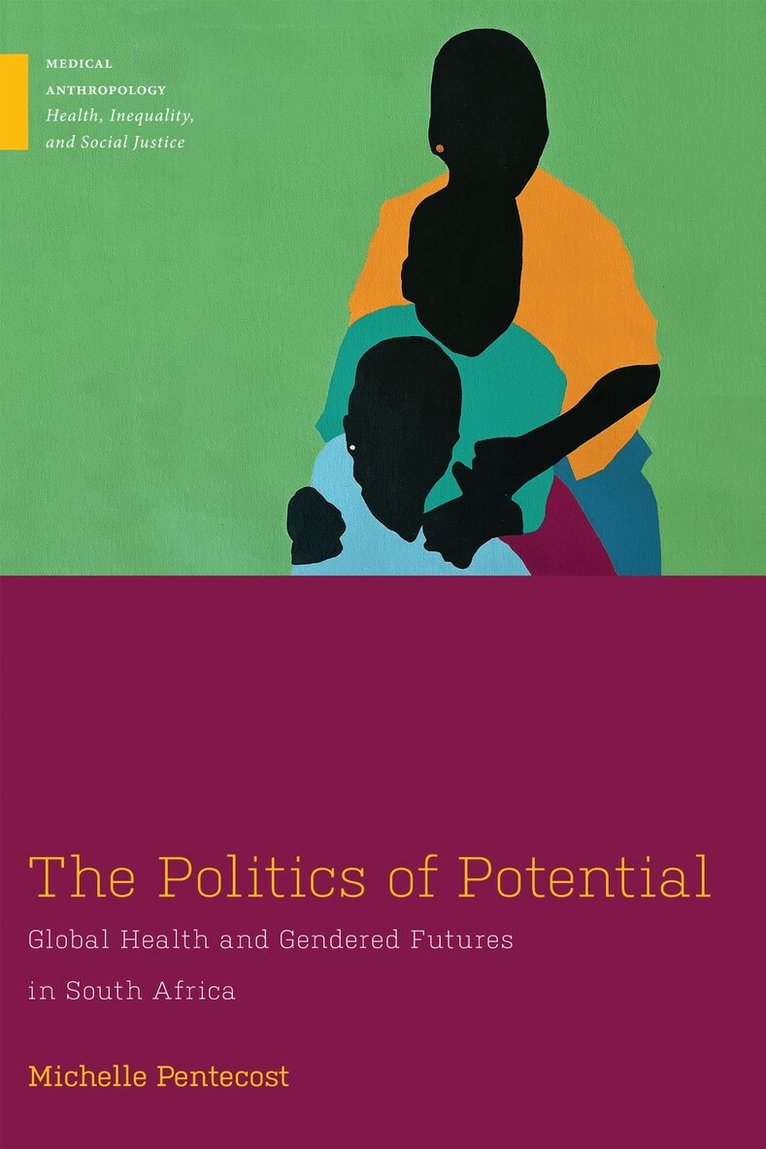
    Politics of Potential

    Global Health and Gendered Futures in South Africa

    AvMichelle Pentecost

    Häftad, Engelska, 2024

    Del i serien Medical Anthropology

    336 kr

    Skickas . Fri frakt över 249 kr.

    Fler format och utgåvor

    Inbunden

    1 747 kr

    Beskrivning

    The first one thousand days of human life, or the period between conception and age two, is one of the most pivotal periods of human development. Optimizing nutrition during this time not only prevents childhood malnutrition but also determines future health and potential. The Politics of Potential examines early life interventions in the first one thousand days of life in South Africa, drawing on fieldwork from international conferences, government offices, health-care facilities, and the everyday lives of fifteen women and their families in Cape Town. Michelle Pentecost explores various aspects of a politics of potential, a term that underlines the first one thousand days concept and its effects on clinical care and the lives of childbearing women in South Africa. Why was the First One Thousand Days project so readily adopted by South Africa and many other countries? Pentecost not only explores this question but also discusses the science of intergenerational transmissions of health, disease, and human capital and how this constitutes new forms of intergenerational responsibility. The women who are the target of first one thousdand days interventions are cast as both vulnerable and responsible for the health of future generations, such that, despite its history, intergenerational responsibility in South Africa remains entrenched in powerfully gendered and racialized ways.

    Produktinformation

    • Utgivningsdatum:2024-01-12
    • Mått:152 x 229 x 15 mm
    • Vikt:45 g
    • Format:Häftad
    • Språk:Engelska
    • Serie:Medical Anthropology
    • Antal sidor:236
    • Förlag:Rutgers University Press
    • ISBN:9781978837478

    Utforska kategorier

    • Antropologi inom Samhälle och politik
    • Sociala och etiska frågor inom Samhälle och politik
    • Sociala grupper och identitet inom Samhälle och politik

    Mer om författaren

    MICHELLE PENTECOST is a physician-anthropologist and senior lecturer in global health and social medicine at King's College London.

    Recensioner i media

    "The Politics of Potential examines a powerful new intervention that seeks to alter the future by tinkering with the present conditions of the unborn. Pentecost provides a riveting and at times dystopian account of how epigenetic interventions layer on to other global health interventions in disadvantaged communities in post-apartheid South Africa. From this laboratory of poverty, will it indeed be possible to finally break the cycle of violence and deprivation into which such communities seem locked?"- Vinh-Kim Nguyen (author of The Republic of Therapy: Triage and Sovereignty in West Africa's Time of AIDS) "This nuanced ethnography of South Africa’s First 1000 Days program offers brilliant insights about how global health’s long-standing obsession with maternal-child health is being reinvented under new scientific demands for epigenetic modeling and their temporal gymnastics in a place with a particularly fraught history of social injustice. Pentecost troubles the simplistic assessment of intervention success and failure by reminding readers of how recognition of a responsibility toward historic injury unveils the individualizing, situated, and justice-effacing effects of such programs."- Vincanne Adams (editor of Metrics: What Counts in Global Health)

    Innehållsförteckning

    • Foreword by Lenore MandersonIntroduction1    The First 1000 Days: Origin Stories2    Situated Biologies: The View from Khayelitsha3    The Traveling Technology of Mother and Child4    Life Between Protocols5    Intergenerational Transmissions: The Work of Time6    Ambivalent Kin: On Gender and ViolenceConclusion: The Politics of PotentialAcknowledgments NotesBibliography     Index