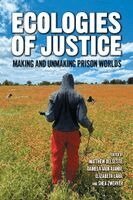
"An imaginative montage of cutting-edge research, poetry, history, social criticism, and timely storytelling, this inspiring text puts the voices of incarcerated people, survivors of crime, horticultural educators, correctional reformers, and prison abolitionists in conversation with each other and with the wider ecology of nature to which we belong."— Stephen Pfohl, professor of sociology at Boston College"An amazing visual of how both style and topic can interplay to create collaboration. This volume brings together a multitude and range of issues to this collection. The authors, and editors, of this volume highlight how interlinked and interrelated topics of environmental justice, incarceration, reentry, multi-species ecologies, and beyond are to both understanding and moving away from traditional punitive and short-sided markers of justice. Further, this volume seeks to build bridges between reform and abolition to create broader efforts for a wider goal of a world beyond prisons." - Calvin John Smiley, author of Purgatory Citizenship: Reentry, Race, and Abolition"Ecologies of Justice is so rich and multidimensional; I applaud the public sociology orientation of the book and how it is written by multiple people from multiple perspectives at the intersection of carceral issues and ecology. The person-centered language also illustrates some of the disconnects between academic discourse and how people describe their own experiences of oppression." - Meghan Kallman, coauthor of The Conceivable Future: Planning Families and Taking Action in the Age of Climate Change"With forceful clarity, Ecologies of Justice asks us all to witness human and environmental 'healing as social practice' and 'position personal healing and transformation as a product of life-giving social and ecological relationships.' For all of us who tend to plants and place, and hope to tend to people with equal care and dignity, this compilation of brave, heartfelt research and results is just what our world needs now." - Jennifer Jewell, founder and host of Cultivating Place: Conversations on Natural History and the Human Impulse to Garden"Ecologies of Justice is a compelling exploration of the intersection between environmental justice and the carceral system. The voices of incarcerated individuals, survivors of crime, and institutional stakeholders highlight the transformative potential of ecological practices, from prison gardens to community-based environmental education. Poetry and reflections enhance the book's emotional resonance, illustrating justice and healing through connection to nature. More than academic discourse, it is a testament to resilience and innovation in creating a more just, sustainable world." - Christine Lynn Norton, professor of social work at Texas State University"This profound volume weaves a remarkable and informative tapestry from voices that raise awareness and pose solutions for two of our most urgent societal concerns: carceral and environmental. The editors have taken time and care to include expressions from diverse people and multiple genres—from poetry to expository—to ensure that the full range of textures and meanings has been included." - Nalini Nadkarni, professor and director of the Initiative to bring Science Programs to the Incarcerated (INSPIRE) at the University of Utah"Ecologies of Justice opens up a dynamic space of dialogue between fields of study and practice too often treated separately: environmental resilience and sustainability on the one hand and mass incarceration and the carceral state on the other. It firmly situates justice debates at the crossroads of environmental degradation and social exclusion." - Paul Draus, faculty director at the University of Michigan Detroit Center and professor of sociology at the University of Michigan-Dearborn"Ecologies of Justice offers an important reflection on the intersection between environmental justice, ecology, crime, and prison. The authorship is unique, comprised of practitioners, academics, community representatives, and the incarcerated community. This combination is rare but necessary, ensuring a well-rounded discussion of the ecologies of justice that places those most directly impacted at the center of the conversation." - Omi Hodwitz, associate professor at the Prison Education Initiative and the Department of Culture, Society, and Justice"We rarely think of prisons as places where new ideas take root. Given the brutality and degradation that define so much of American incarceration, that's understandable. Yet Ecologies of Justice reveals how prisons can become sites of creativity, renewal, and transformation. Inspiring and deeply thought-provoking, it offers a compelling vision for shrinking the carceral system while healing the environment." - James Forman, Jr., Pulitzer Prize-winning author of Locking Up Our Own: Crime and Punishment in Black America