Canon et écrits de femmes en France et en Espagne dans l'actualité (2011-2016)
Ángeles Ciprés Palacín, Isabelle Marc
Häftad, 2020
1 000 kr
AvSalhia Ben-Messahel,Vanessa Castejon
Del 36 i serien Comparatisme et Societe/Comparatism and Society
1 001 kr
Beställningsvara. Skickas inom 3-6 vardagar. Fri frakt över 249 kr.
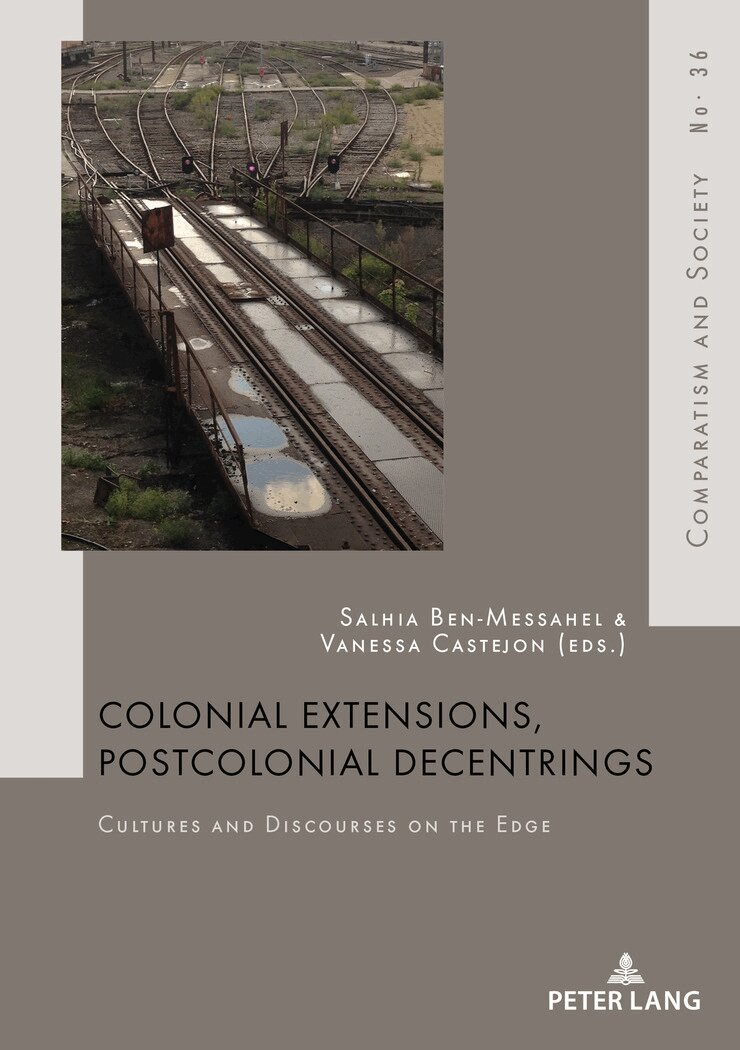
The essays assembled in this volume explore the meaning of the term "postcolonial" through various theoretical perspectives and disciplinary fields of expertise. They address issues ranging from culture, politics and history to literature and the arts, with particular emphasis on colonialist discourses within a postmodern and globalised world. Identity-formation, cultural space, indigeneity, colonial perspectives and anti-colonial struggles suggest that former imperial (and often marginalized) colonies/territories operate as decentring spaces, becoming dynamic postcolonial centres. The consequences of colonial history in postcolonial environments in the Americas, the Caribbean, the Middle East and the South Pacific regions are being analysed. This shows that postcolonial subjectivities call for a reconceptualization of the nation as political agency. The essays interrogate the social and psychological effects of colonialism, the political subjugation and instrumentalisation of colonial pasts and the perception of the self through the colonizer’s eyes, that may still surface in discourse on identity and belonging. The "postcolonial" is then a floating concept in a global environment where some individuals still experience a neo-colonial condition while others dismiss the colonial past but may yet re-enact colonial practices. The volume shows that the extension of a colonial centre, often raised in postcolonial criticism, is synonymous with the decentring of identity, and that the re-conceptualization of a Diasporic condition initiates a new postcolonial moment based in translation and on a new modernity.
AvSalhia Ben-Messahel,Vanessa Castejon
Del 36 i serien Comparatisme et Societe/Comparatism and Society
1 001 kr
Beställningsvara. Skickas inom 3-6 vardagar. Fri frakt över 249 kr.
The essays assembled in this volume explore the meaning of the term "postcolonial" through various theoretical perspectives and disciplinary fields of expertise. They address issues ranging from culture, politics and history to literature and the arts, with particular emphasis on colonialist discourses within a postmodern and globalised world. Identity-formation, cultural space, indigeneity, colonial perspectives and anti-colonial struggles suggest that former imperial (and often marginalized) colonies/territories operate as decentring spaces, becoming dynamic postcolonial centres. The consequences of colonial history in postcolonial environments in the Americas, the Caribbean, the Middle East and the South Pacific regions are being analysed. This shows that postcolonial subjectivities call for a reconceptualization of the nation as political agency. The essays interrogate the social and psychological effects of colonialism, the political subjugation and instrumentalisation of colonial pasts and the perception of the self through the colonizer’s eyes, that may still surface in discourse on identity and belonging. The "postcolonial" is then a floating concept in a global environment where some individuals still experience a neo-colonial condition while others dismiss the colonial past but may yet re-enact colonial practices. The volume shows that the extension of a colonial centre, often raised in postcolonial criticism, is synonymous with the decentring of identity, and that the re-conceptualization of a Diasporic condition initiates a new postcolonial moment based in translation and on a new modernity.
AvSalhia Ben-Messahel,Vanessa Castejon
Del 36 i serien Comparatisme et Societe/Comparatism and Society
1 001 kr
Beställningsvara. Skickas inom 3-6 vardagar. Fri frakt över 249 kr.
The essays assembled in this volume explore the meaning of the term "postcolonial" through various theoretical perspectives and disciplinary fields of expertise. They address issues ranging from culture, politics and history to literature and the arts, with particular emphasis on colonialist discourses within a postmodern and globalised world. Identity-formation, cultural space, indigeneity, colonial perspectives and anti-colonial struggles suggest that former imperial (and often marginalized) colonies/territories operate as decentring spaces, becoming dynamic postcolonial centres. The consequences of colonial history in postcolonial environments in the Americas, the Caribbean, the Middle East and the South Pacific regions are being analysed. This shows that postcolonial subjectivities call for a reconceptualization of the nation as political agency. The essays interrogate the social and psychological effects of colonialism, the political subjugation and instrumentalisation of colonial pasts and the perception of the self through the colonizer’s eyes, that may still surface in discourse on identity and belonging. The "postcolonial" is then a floating concept in a global environment where some individuals still experience a neo-colonial condition while others dismiss the colonial past but may yet re-enact colonial practices. The volume shows that the extension of a colonial centre, often raised in postcolonial criticism, is synonymous with the decentring of identity, and that the re-conceptualization of a Diasporic condition initiates a new postcolonial moment based in translation and on a new modernity.