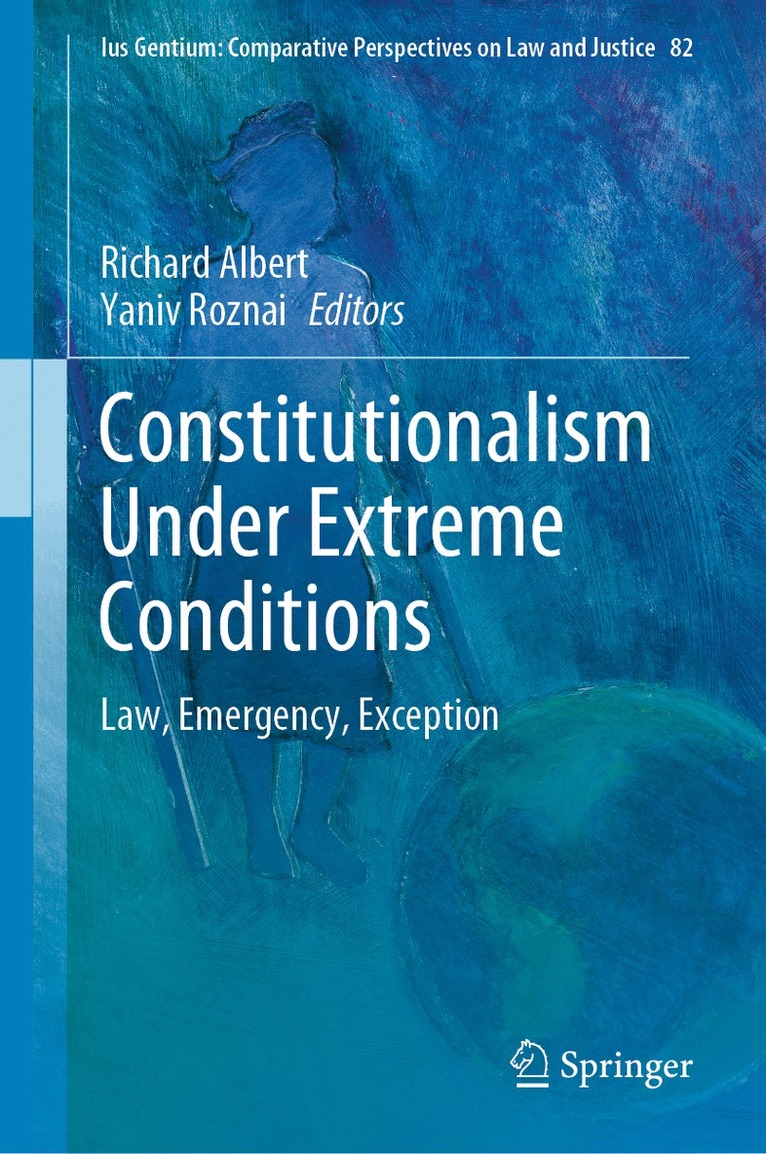
Inbunden, Engelska, 2020
Constitutionalism Under Extreme Conditions
Av Richard Albert, Yaniv Roznai
1616 kr
Beställningsvara. Skickas inom 10-15 vardagar. Fri frakt över 249 kr.
Beskrivning
This book examines the problem of constitutional change in times of crisis. Divided into five main parts, it both explores and interrogates how public law manages change in periods of extraordinary pressure on the constitution. In Part I, “Emergency, Exception and Normalcy,” the contributors discuss the practices and methods that could be used to help legitimize the use of emergency powers without compromising the constitutional principles that were created during a period of normalcy. In Part II, “Terrorism and Warfare,” the contributors assess how constitutions are interpreted during times of war, focusing on the tension between individual rights and safety. Part III, “Public Health, Financial and Economic Crises,” considers how constitutions change in response to crises that are neither political in the conventional sense nor violent, which also complicates how we evaluate constitutional resilience in times of stress. Part IV, “Constitutionalism for Divided Societies,” then investigates the pressure on constitutions designed to govern diverse, multi-national populations, and how constitutional structures can facilitate stability and balance in these states. Part V, titled “Constitution-Making and Constitutional Change,” highlights how constitutions are transformed or created anew during periods of tension. The book concludes with a rich contextual discussion of the pressing challenges facing constitutions in moments of extreme pressure. Chapter “Public Health Emergencies and Constitutionalism Before COVID-19: Between the National and the International” is available open access under a Creative Commons Attribution 4.0 International License via link.springer.com.
Produktinformation
- Utgivningsdatum: 2020-09-25
- Mått: 155 x 235 x 30 mm
- Vikt: 812 g
- Format: Inbunden
- Språk: Engelska
- Serie: Ius Gentium: Comparative Perspectives on Law and Justice
- Antal sidor: 452
- Förlag: Springer Nature Switzerland AG
- ISBN: 9783030489991
Utforska kategorier
Betyg & recensioner
0 recensioner
Inga recensioner tillgängliga.