• Fri frakt över 249 kr
  • •
  • Snabba leveranser
  • •
  • Billiga böcker
Kundservice

Du är på sajten för privatpersoner.

Företag, bibliotek eller offentlig verksamhet?

Du handlar på classic.bokus.com, där alla dina funktioner finns intakta.
Till classic.bokus.com
Bokus logotyp. Gå till startsidan.
  • Erbjudanden
  • Nyheter
  • Student
  • Topplistor
  • Barn & ungdom
  • Bokus Play
  • E-böcker
  • Pocketböcker
  • Spel & pussel

Må bättre, för mindre! Upp till 50% rabatt på hälsoböcker

Sidfot

Mina sidor

    Hjälp

    • Kundservice
    • Vanliga frågor och svar
    • Frakt och leverans
    • Retur vid ångerrätt
    • Reklamera vara
    • Betalning
    • Köpvillkor
    • Allmänna villkor
    • Information om webbplatsens tillgänglighet

    Om Bokus

    • Om oss
    • Pressrum
    • För studenter
    • För företag
    • För bibliotek och offentlig verksamhet
    • För leverantörer
    • Hållbarhet

    Populärt

    • Aktuella erbjudanden
    • Presentkort
    • Studentlitteratur
    • Nya böcker
    • Topplistor
    • Signerade böcker
    • Engelska böcker

    Inspiration

    • Boktips
    • BookTok
    • Populära bokserier
    • Barnbokskaraktärer
    • Populära författare
    Logotyp för Bokus
    Följ oss på Facebook (extern länk)Följ oss på Instagram (extern länk)Följ oss på YouTube (extern länk)Följ oss på TikTok (extern länk)
    bokus @ CookiesAnpassa cookiesIntegritetspolicyKöpvillkor
    Till Citymail hemsida (extern länk)Till Budbee hemsida (extern länk)Till Postnord hemsida (extern länk)Till Schenker hemsida (extern länk)Till Early Bird hemsida (extern länk)Till Walleys hemsida (extern länk)
    1. Samhälle och politik
    2. Samhälle och kultur
    3. Kultur och medier
    4. Kulturvetenskap

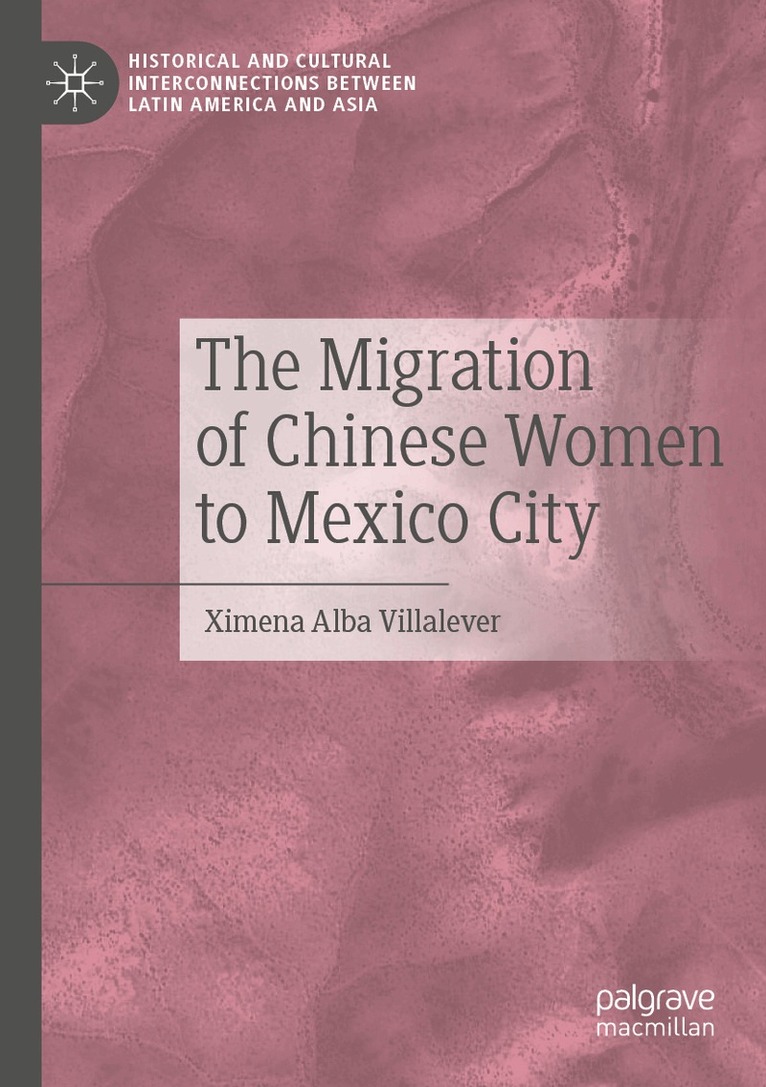
    Migration of Chinese Women to Mexico City

    AvXimena Alba Villalever

    Häftad, Engelska, 2021

    Del i serien Historical and Cultural Interconnections between Latin America and Asia

    1 302 kr

    Beställningsvara. Skickas inom 10-15 vardagar. Fri frakt över 249 kr.

    Fler format och utgåvor

    Inbunden

    1 302 kr

    E-bok

    1 733 kr

    Beskrivning

    ​This book focuses on the migration strategies of Chinese women who travel to Mexico City in search of opportunities and survival. Specifically, it explores the experiences and contributions of women who have placed themselves within the local and conflictive networks of Mexico City´s downtown street markets (particularly in Tepito), where they work as suppliers and petty vendors of inexpensive products made in China (specifically in Yiwu). Street markets are the vital nodes of Mexican “popular” economy (economía popular), but the people that work and live among them have a long history of marginalization in relation to formal economic networks in Mexico City. Despite the difficult conditions of these spaces, in the last three decades they have become a new source of economic opportunities and labor market access for Chinese migrants, particularly for women. Through their commerce, these migrants have introduced new commodities and new trade dynamics into these markets, which are thereby transformed into alternative spaces of globalization.

    Produktinformation

    • Utgivningsdatum:2021-11-11
    • Mått:148 x 210 x 17 mm
    • Vikt:391 g
    • Format:Häftad
    • Språk:Engelska
    • Serie:Historical and Cultural Interconnections between Latin America and Asia
    • Antal sidor:281
    • Förlag:Springer Nature Switzerland AG
    • ISBN:9783030533465

    Utforska kategorier

    • Kulturvetenskap inom Samhälle och politik
    • Antropologi inom Samhälle och politik
    • Migration inom Samhälle och politik

    Mer om författaren

    Ximena Alba Villalever earned her PhD in Anthropology from the Institute for Latin American Studies of the Free University of Berlin, Germany. Her research interests revolve around gender, migration, inequality and globalization. She has researched Chinese migration to Mexico for more than a decade. More recently, she has turned her sight to processes of forced migration and organized violence in Mexico. She is currently working as a Postdoctoral Fellow in a project founded by the Deutsche Forschungsgemeinschaft in the Institute for Latin American Studies of the Free University of Berlin.

    Innehållsförteckning

    • Part One: Chinese women in Mexican popular markets, starting with small scale processes of globalization.- 1 The networking components of street markets and ‘popular’ economy.- 1.1 Locating Tepito and its ramifications, deconstructing the ‘centre’.- 1.2 Tepiteñes and spaces of opportunities, intersectional spectrums.- 1.3 Blended spaces: migration and commerce in Tepito.- 2 Made in Yiwu, to Tepito.- 2.1 Of bullet trains and hair garments, experiencing Yiwu.- 2.2 Blended spaces: migration, commerce and gender in Yiwu.- Conclusions.- Part Two: Herstories of migration, building spaces of opportunities.- 3 Building subjectivities in systematic inequality.- 3.1 The feminization of Chinese migration patterns, causes and effects.- 3.2 Growing up in a Chinese jia. What is the place of women?.- 3.3 Defying social constructions of gender. Migration, marriage and work.- 4 Mexico, land of opportunities? Migration as a search for survival and social mobility.- 4.1 The paradoxes of development. Education, employment and origin, indicators of inequality.- 4.2 Building networks between Mexico and China, strategies of migration and work.- 4.3 Constructing spaces of opportunities: transversal articulations between commerce and migration.- Conclusions.-Part Three: Drafting alternative spaces of globalization.- 5 From transnational urban formations to global cities.- 5.1 What are alternative spaces of globalization?.- 5.2 Constructing cities through belonging: bringing gender in.- 5.3 Vulnerabilities and resistances in the city, building networks of trust between guanxi and comadrazgo.- 6 The place of women as actors of transnational formations.- 6.1 Transnational motherhoods.- 6.2 Building transnational family businesses.- 6.3 Building bridges from space to place: ambivalent constructions of otherness, migration and discrimination.- 6.4 Building alternatives to survival and growth.- Conclusions.