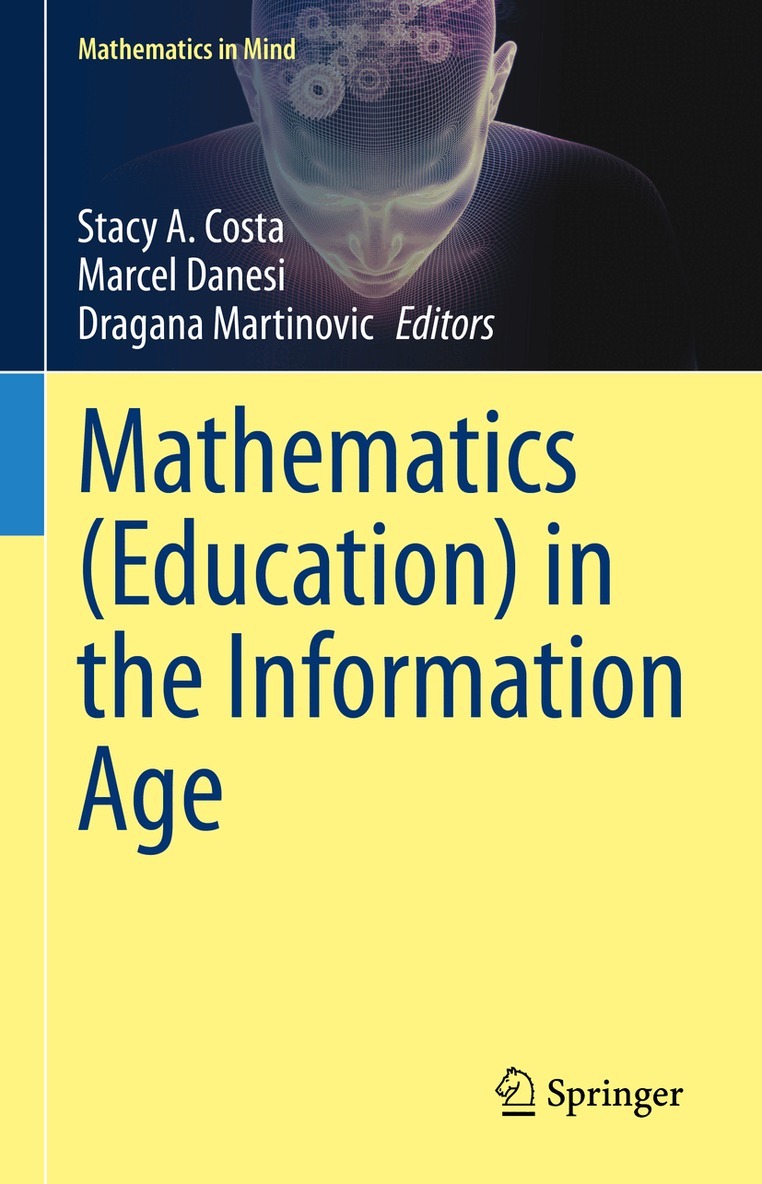
Inbunden, Engelska, 2020
Mathematics (Education) in the Information Age
Av Stacy A. Costa, Marcel Danesi, Dragana Martinovic
552 kr
Beställningsvara. Skickas inom 10-15 vardagar. Fri frakt över 249 kr.
Beskrivning
This book brings together ideas from experts in cognitive science, mathematics, and mathematics education to discuss these issues and to present research on how mathematics and its learning and teaching are evolving in the Information Age. Given the ever-broadening trends in Artificial Intelligence and the processing of information generally, the aim is to assess their implications for how math is evolving and how math should now be taught to a generation that has been reared in the Information Age. It will also look at the ever-spreading assumption that human intelligence may not be unique—an idea that dovetails with current philosophies of mind such as posthumanism and transhumanism. The role of technology in human evolution has become critical in the contemporary world. Therefore, a subgoal of this book is to illuminate how humans now use their sophisticated technologies to chart cognitive and social progress.Given the interdisciplinary nature of the chapters, this will be of interest to all kinds of readers, from mathematicians themselves working increasingly with computer scientists, to cognitive scientists who carry out research on mathematics cognition and teachers of mathematics in a classroom.
Produktinformation
- Utgivningsdatum: 2020-12-11
- Mått: 155 x 235 x 19 mm
- Vikt: 472 g
- Format: Inbunden
- Språk: Engelska
- Serie: Mathematics in Mind
- Antal sidor: 226
- Upplaga: 20001
- Förlag: Springer Nature Switzerland AG
- ISBN: 9783030591762
Utforska kategorier
Betyg & recensioner
0 recensioner
Inga recensioner tillgängliga.