• Fri frakt över 249 kr
  • •
  • Snabba leveranser
  • •
  • Billiga böcker
Kundservice

Du är på sajten för privatpersoner.

Företag, bibliotek eller offentlig verksamhet?

Du handlar på classic.bokus.com, där alla dina funktioner finns intakta.
Till classic.bokus.com
Bokus logotyp. Gå till startsidan.
  • Erbjudanden
  • Nyheter
  • Student
  • Topplistor
  • Barn & ungdom
  • Bokus Play
  • E-böcker
  • Pocketböcker
  • Spel & pussel

10% rabatt på allt med kod NYSTART10 →

Sidfot

Mina sidor

    Hjälp

    • Kundservice
    • Vanliga frågor och svar
    • Frakt och leverans
    • Retur vid ångerrätt
    • Reklamera vara
    • Betalning
    • Köpvillkor
    • Allmänna villkor
    • Information om webbplatsens tillgänglighet

    Om Bokus

    • Om oss
    • Pressrum
    • För studenter
    • För företag
    • För bibliotek och offentlig verksamhet
    • För leverantörer
    • Hållbarhet

    Populärt

    • Aktuella erbjudanden
    • Presentkort
    • Studentlitteratur
    • Nya böcker
    • Topplistor
    • Signerade böcker
    • Engelska böcker

    Inspiration

    • Boktips
    • BookTok
    • Populära bokserier
    • Barnbokskaraktärer
    • Populära författare
    Logotyp för Bokus
    Följ oss på Facebook (extern länk)Följ oss på Instagram (extern länk)Följ oss på YouTube (extern länk)Följ oss på TikTok (extern länk)
    bokus @ CookiesAnpassa cookiesIntegritetspolicyKöpvillkor
    Till Citymail hemsida (extern länk)Till Budbee hemsida (extern länk)Till Postnord hemsida (extern länk)Till Schenker hemsida (extern länk)Till Early Bird hemsida (extern länk)Till Walleys hemsida (extern länk)
    1. Psykologi och pedagogik
    2. Pedagogik
    3. Högskola och universitet
    4. Lärarutbildning

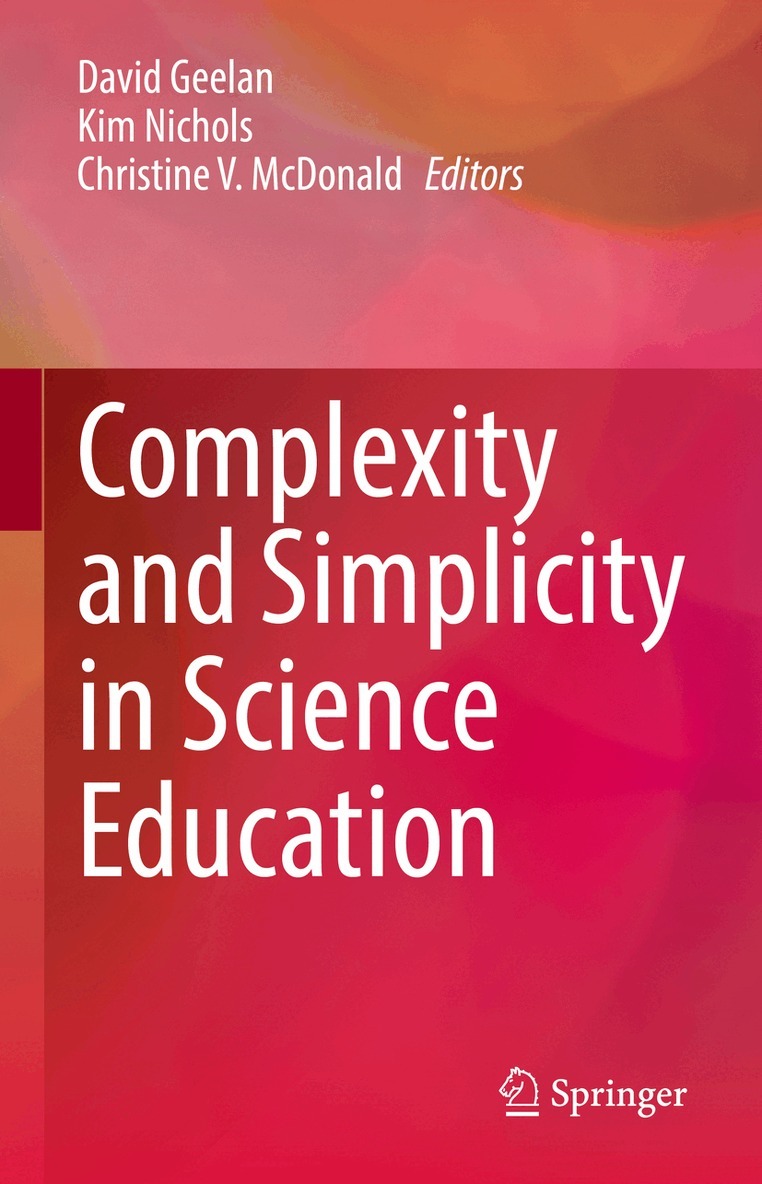
    Complexity and Simplicity in Science Education

    AvDavid Geelan,Kim Nichols

    Inbunden, Engelska, 2022

    1 516 kr

    Beställningsvara. Skickas inom 10-15 vardagar. Fri frakt över 249 kr.

    Beskrivning

    This edited volume brings together a broad range of international science education studies, focusing on the interplay of teaching and learning science. It recognizes the complexity present in today’s education, associated with major science related issues faced by society, such as climate change, diseases and pandemics, global conflicts over energy, food and water.The studies discussed in this volume are focused on presenting different opportunities to teach these convoluted matters in order to find simplicity within the complexity and make it accessible to learners. They bring together the challenges of preparing the students of today to become scientifically informed citizens of tomorrow.

    Produktinformation

    • Utgivningsdatum:2022-01-26
    • Mått:155 x 235 x 18 mm
    • Vikt:512 g
    • Format:Inbunden
    • Språk:Engelska
    • Antal sidor:218
    • Förlag:Springer Nature Switzerland AG
    • ISBN:9783030790837

    Utforska kategorier

    • Lärarutbildning inom Psykologi och pedagogik
    • Undervisning i specifika ämnen inom Psykologi och pedagogik
    • Miljövetenskap och miljöpolitik inom Naturvetenskap och teknik

    Mer om författaren

    David Geelan has taught secondary school science in several Australian states and been a science teacher educator in Papua New Guinea, Canada and Australia. He is President of the Australasian Science Education Research Association (ASERA) and a former Editor of Research In Science Education (RISE). David's research interests include qualitative research methods in education, educational technology and the ways in which teachers explain scientific concepts to students.Kim Nichols is currently an Associate Professor of science education at the University of Queensland School of Education and co-editor of Research in Science Education. Drawing on her past experiences as a National Health and Medical Research Centre funded scientist at Flinders University Centre for Neurosciences and Adelaide University Medical School, her research focuses on making the complexities of science accessible to learners through inquiry-based representational practices and collaborative reasoning. Kim’s expertise has been commissioned by the Queensland Department of Education to develop online learning modules for teachers on inquiry and representational practices in science and to work with schools in their Advancing Science Technology Engineering and Mathematics (STEM) in Primary Schools initiative. Kim currently leads an Australian Research Council funded collaborative project in partnership with the Queensland Department of Education, Queensland Museum Network, Shell QGC and Queensland regional schools to develop a multi-systemically resilient model of community-based STEM professional learning for teachers.Christine McDonald’s research primarily focuses on how the nature of science is conceptualised by teachers and students, and represented in science education curriculum materials. She has also recently led the Australian leg of a large-scale, international study investigating students’ views of scientific inquiry, and her commissioned review of best practice in Science, Technology, Engineering and Mathematics (STEM) education underpinned the development of the Queensland Department of Education STEM Strategy. She is a past Director of the Australasian Science Education Research Association, and is currently an Associate Editor of the Journal of Research in Science Teaching (USA).

    Innehållsförteckning

    • Introduction (David Geelan and Kim Nichols).- Part I: Learning About Wicked Problems.- Chapter 1. Climate change education: Simple or complex? The impact of culture on students’ willingness to reduce global warming (Keith Skamp, Edward Boyes and Martin Stanisstreet).- Chapter 2. Investigating students’ self-efficacy and self-concept in science through collaborative inquiry: Unpacking the ‘hidden’ complexity within data (Debra Panizzon, Bruce White, Katrina Elliott and Alex Semmens).- Chapter 3. Using Socioscientific Issues to Promote the Critical Thinking Skills of Year 10 Science Students in Diverse School Contexts (Vaille Dawson And Grady Venville).- Part II: Teacher Preparation and Retention: Supporting Early-Career Science Teachers.- Chapter 4. Chicken wings and a deflated football: Metaphors of the complexity of learning to teach science and mathematics out-of-field (Linda Hobbs and Frances Quinn).- Chapter 5. Teacher Retention: Supporting Early-Career Science Teachers (MerrynDawborn-Gundlach).- Chapter 6. Exploring the Nature, and Teachers’ Understanding, of the National Curriculum Statement (NCS, Grades R – 12): Navigating the Changing Landscape of Science Education through the Curriculum Assessment and Policy Statement (CAPS) in Post-Apartheid South Africa (Julius Ajayi Eyitayo).- Part III: Making the Complexities of Physical Sciences Accessible.- Chapter 7. Teaching electricity to Year 6 primary students using representational pedagogies: from simple circuits to complex ideas (Peter Hubber and Christine Preston).- Chapter 8. Complexity in primary children’s representations of Science and Mathematics concepts (Christine Preston, Jennifer Way and Eleni Smyrnis).- Chapter 9. Making the complex history of chemistry accessible: Edgar Fahs Smith (1854-1928), chemical researcher, administrator, educator, and student of chemistry’s history(William P. Palmer).- Chapter 10. Can the complexities of developing students’ literacy skills around physical science concepts benefit from a singular approach to teaching academic vocabulary? (Chris Nielsen).- Index.