• Fri frakt över 249 kr
  • •
  • Snabba leveranser
  • •
  • Billiga böcker
Kundservice

Du är på sajten för privatpersoner.

Företag, bibliotek eller offentlig verksamhet?

Du handlar på classic.bokus.com, där alla dina funktioner finns intakta.
Till classic.bokus.com
Bokus logotyp. Gå till startsidan.
  • Erbjudanden
  • Nyheter
  • Student
  • Topplistor
  • Barn & ungdom
  • Bokus Play
  • E-böcker
  • Pocketböcker
  • Spel & pussel

10% rabatt på allt med kod NYSTART10 →

Sidfot

Mina sidor

    Hjälp

    • Kundservice
    • Vanliga frågor och svar
    • Frakt och leverans
    • Retur vid ångerrätt
    • Reklamera vara
    • Betalning
    • Köpvillkor
    • Allmänna villkor
    • Information om webbplatsens tillgänglighet

    Om Bokus

    • Om oss
    • Pressrum
    • För studenter
    • För företag
    • För bibliotek och offentlig verksamhet
    • För leverantörer
    • Hållbarhet

    Populärt

    • Aktuella erbjudanden
    • Presentkort
    • Studentlitteratur
    • Nya böcker
    • Topplistor
    • Signerade böcker
    • Engelska böcker

    Inspiration

    • Boktips
    • BookTok
    • Populära bokserier
    • Barnbokskaraktärer
    • Populära författare
    Logotyp för Bokus
    Följ oss på Facebook (extern länk)Följ oss på Instagram (extern länk)Följ oss på YouTube (extern länk)Följ oss på TikTok (extern länk)
    bokus @ CookiesAnpassa cookiesIntegritetspolicyKöpvillkor
    Till Citymail hemsida (extern länk)Till Budbee hemsida (extern länk)Till Postnord hemsida (extern länk)Till Schenker hemsida (extern länk)Till Early Bird hemsida (extern länk)Till Walleys hemsida (extern länk)
    1. Psykologi och pedagogik
    2. Pedagogik
    3. Högskola och universitet
    4. Lärarutbildning

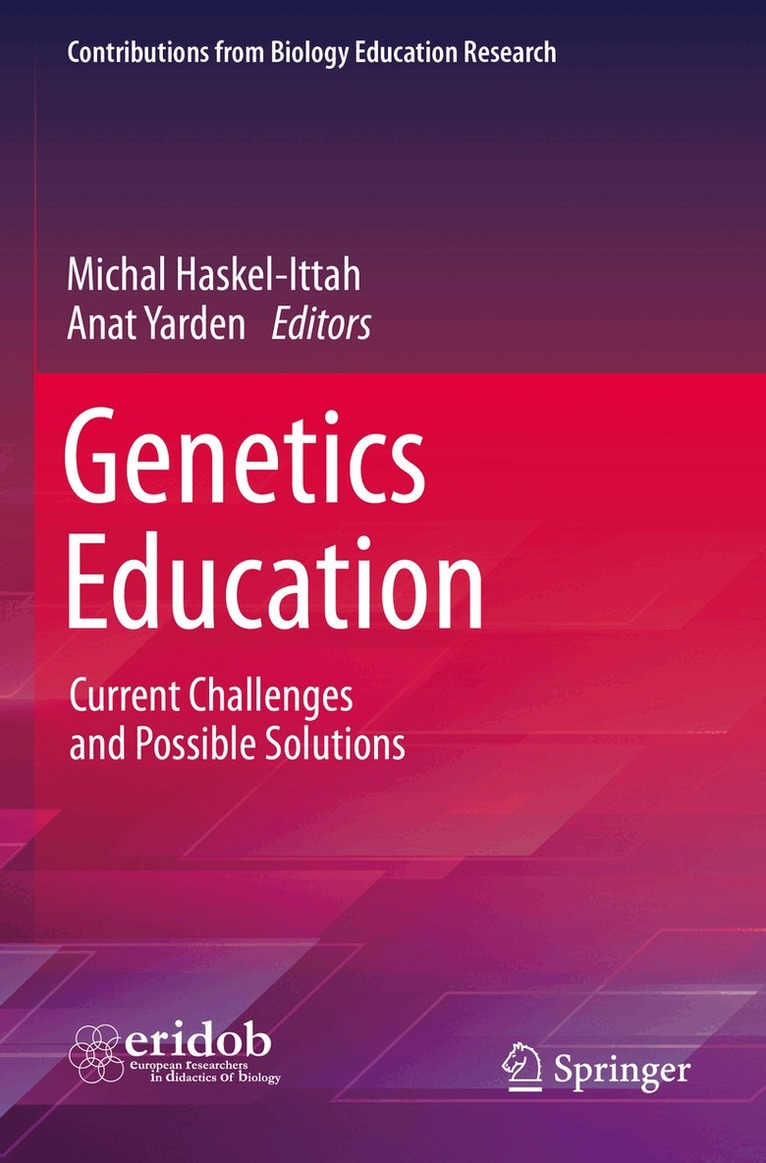
    Genetics Education

    Current Challenges and Possible Solutions

    AvMichal Haskel-Ittah,Anat Yarden

    Häftad, Engelska, 2023

    Del i serien Contributions from Biology Education Research

    1 473 kr

    Beställningsvara. Skickas inom 10-15 vardagar. Fri frakt över 249 kr.

    Beskrivning

    This edited volume presents the current state of the art of genetics education and the challenges it holds for teaching as well as for learning. It addresses topics such as how genetics should be taught in order to provide students with a wide and connected view of the field. It gives in-depth aspects that should be considered for teaching genetics and the effect on the student’s understanding. This book provides novel ideas for biology teachers, curriculum developers and researchers on how to confront the presented challenges in a way that may enable them to advance genetics education in the 21st century. It reviews the complexity of teaching and learning genetics, largely overlooked by biology textbooks and classroom instruction. It composes a crucial component of scientific literacy.

    Produktinformation

    • Utgivningsdatum:2023-01-19
    • Mått:155 x 235 x 11 mm
    • Vikt:295 g
    • Format:Häftad
    • Språk:Engelska
    • Serie:Contributions from Biology Education Research
    • Antal sidor:177
    • Förlag:Springer Nature Switzerland AG
    • ISBN:9783030860530

    Utforska kategorier

    • Lärarutbildning inom Psykologi och pedagogik
    • Pedagogisk metodik inom Psykologi och pedagogik
    • Undervisning i specifika ämnen inom Psykologi och pedagogik

    Mer om författaren

    Professor Anat Yarden is Head of the Department of Science Teaching at the Weizmann Institute of Science, and Head of the Biology Group at this Department. She holds an undergraduate degree in Agricultural Sciences (from the Hebrew University of Jerusalem), a master’s degree and a PhD in molecular biology (from the Weizmann Institute of Science), and has carried out postdoctoral training in Genetics (at Stanford University). The primary theme in all of her academic activities has been adapting practices employed by scientists to the processes by which students and teachers accumulate and advance their knowledge within the discipline of biology. Dr. Michal Haskel-Ittah is a senior scientist at the Department of Science Teaching at the Weizmann Institute of Science. She holds an undergraduate degree in Life Sciences (from Ben-Gurion University), a master’s degree and a PhD in molecular biology (from the Weizmann Institute of Science), and has carried out postdoctoral training in Science Teaching (the Weizmann-Abroad combined program – Rutgers University and the Weizmann Institute of Science). Her research group studies the learning and teaching of biological mechanisms and the development of mechanistic reasoning.

    Innehållsförteckning

    • Part I: Reflecting upon the content of genetic curriculum.- Chapter 1. Should we give peas a chance? An argument for a Mendel-free biology curriculum (Kampourakis).- Chapter 2. How can epigenetics be used to integrate nature and nurture in genetics education? (Gericke).- Chapter 3. How can we teach genetics for social justice? (Reiss).- Part II. Reflecting upon processes for constructing students’ understanding in genetics.- Chapter 4. How can learning progressions support the development of genetic literacy? (Duncan).- Chapter 5. How can we help students reason about the mechanisms by which genes affect traits? (Haskel-Ittah).- Chapter 6. How might authentic scientific experiences promote an understanding of genetics in high school? (Yarden).- Part III: Reflecting upon the relationship between genetics learning and related conceptions and beliefs.- Chapter 7. Is Belief in Genetic Determinism Similar Across Countries and Traits? (Gericke).- Chapter 8. Why does multiple and interactive causation render comprehension of genetics phenomena difficult and what could genetics educators do about it? (Hammann).- Chapter 9. How are high-school students' teleological and essentialist conceptions expressed in the context of genetics and what can teachers do to address them? (Stern).- Chapter 10. How can we make genetics education more humane? (Donovan).