• Fri frakt över 249 kr
  • •
  • Snabba leveranser
  • •
  • Billiga böcker
Kundservice

Du är på sajten för privatpersoner.

Företag, bibliotek eller offentlig verksamhet?

Du handlar på classic.bokus.com, där alla dina funktioner finns intakta.
Till classic.bokus.com
Bokus logotyp. Gå till startsidan.
  • Erbjudanden
  • Nyheter
  • Student
  • Topplistor
  • Barn & ungdom
  • Bokus Play
  • E-böcker
  • Pocketböcker
  • Spel & pussel

10% rabatt på allt med kod: NYSTART10 →

Sidfot

Mina sidor

    Hjälp

    • Kundservice
    • Vanliga frågor och svar
    • Frakt och leverans
    • Retur vid ångerrätt
    • Reklamera vara
    • Betalning
    • Köpvillkor
    • Allmänna villkor
    • Information om webbplatsens tillgänglighet

    Om Bokus

    • Om oss
    • Pressrum
    • För studenter
    • För företag
    • För bibliotek och offentlig verksamhet
    • För leverantörer
    • Hållbarhet

    Populärt

    • Aktuella erbjudanden
    • Presentkort
    • Studentlitteratur
    • Nya böcker
    • Topplistor
    • Signerade böcker
    • Engelska böcker

    Inspiration

    • Boktips
    • BookTok
    • Populära bokserier
    • Barnbokskaraktärer
    • Populära författare
    Logotyp för Bokus
    Följ oss på Facebook (extern länk)Följ oss på Instagram (extern länk)Följ oss på YouTube (extern länk)Följ oss på TikTok (extern länk)
    bokus @ CookiesAnpassa cookiesIntegritetspolicyKöpvillkor
    Till Citymail hemsida (extern länk)Till Budbee hemsida (extern länk)Till Postnord hemsida (extern länk)Till Schenker hemsida (extern länk)Till Early Bird hemsida (extern länk)Till Walleys hemsida (extern länk)
    1. Ekonomi och Ledarskap
    2. Industrier och branscher
    3. Servicesektorn

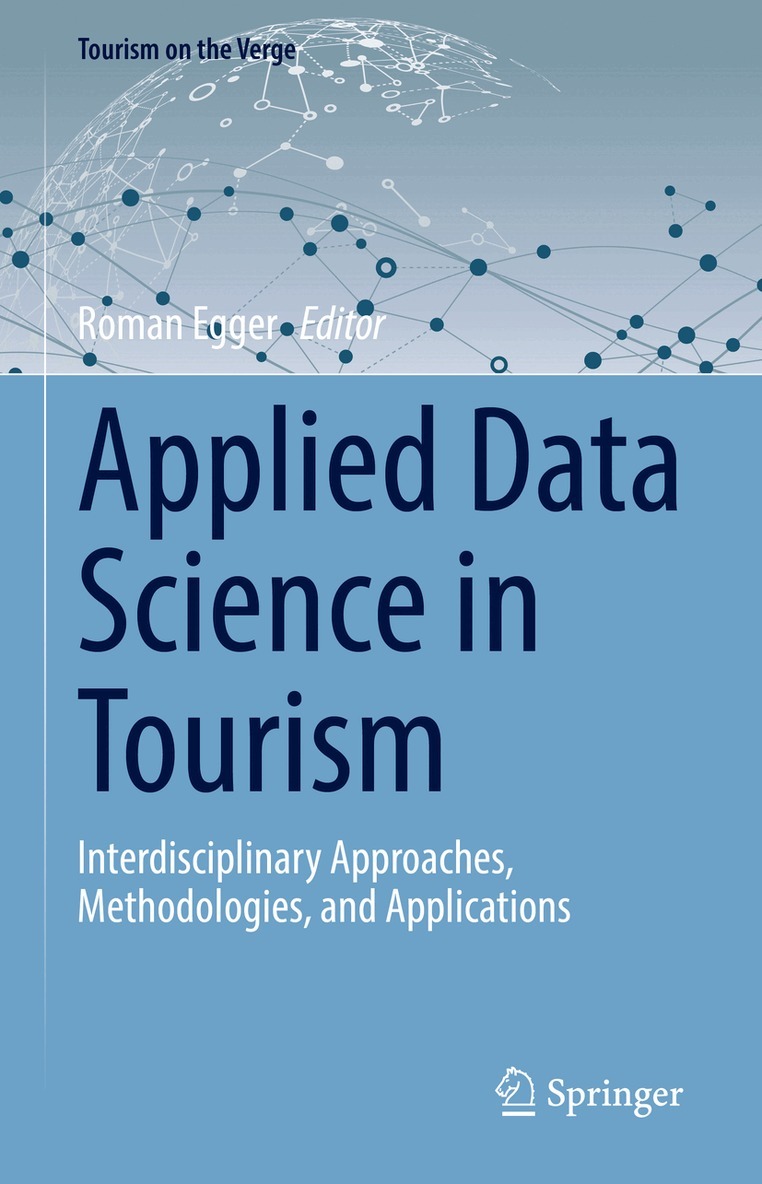
    Applied Data Science in Tourism

    Interdisciplinary Approaches, Methodologies, and Applications

    AvRoman Egger

    Inbunden, Engelska, 2022

    Del i serien Tourism on the Verge

    646 kr

    Beställningsvara. Skickas inom 5-8 vardagar. Fri frakt över 249 kr.

    Beskrivning

    Access to large data sets has led to a paradigm shift in the tourism research landscape. Big data is enabling a new form of knowledge gain, while at the same time shaking the epistemological foundations and requiring new methods and analysis approaches. It allows for interdisciplinary cooperation between computer sciences and social and economic sciences, and complements the traditional research approaches. This book provides a broad basis for the practical application of data science approaches such as machine learning, text mining, social network analysis, and many more, which are essential for interdisciplinary tourism research. Each method is presented in principle, viewed analytically, and its advantages and disadvantages are weighed up and typical fields of application are presented. The correct methodical application is presented with a "how-to" approach, together with code examples, allowing a wider reader base including researchers, practitioners, and students entering the field. The book is a very well-structured introduction to data science – not only in tourism – and its methodological foundations, accompanied by well-chosen practical cases. It underlines an important insight: data are only representations of reality, you need methodological skills and domain background to derive knowledge from them- Hannes Werthner, Vienna University of TechnologyRoman Egger has accomplished a difficult but necessary task: make clear how data science can practically support and foster travel and tourism research and applications. The book offers a well-taught collection of chapters giving a comprehensive and deep account of AI and data science for tourism- Francesco Ricci, Free University of Bozen-Bolzano This well-structured and easy-to-read book provides a comprehensive overview of data science in tourism. It contributes largely to the methodological repository beyond traditional methods.- Rob Law, University of Macau

    Produktinformation

    • Utgivningsdatum:2022-02-01
    • Mått:155 x 235 x 44 mm
    • Vikt:1 128 g
    • Format:Inbunden
    • Språk:Engelska
    • Serie:Tourism on the Verge
    • Antal sidor:608
    • Förlag:Springer Nature Switzerland AG
    • ISBN:9783030883881

    Utforska kategorier

    • Servicesektorn inom Ekonomi och Ledarskap
    • Matematisk statistik inom Naturvetenskap och teknik
    • Artificiell intelligens inom Data och IT

    Mer om författaren

    Dr. Roman Egger is a full Professor at the Salzburg University of Applied Sciences at the Department of Innovation and Management in Tourism, where he is the head of eTourism, and head of key competencies and research. His research focus lies on new technologies in tourism and their adoption from a user-centric perspective, as well as on methodological issues in tourism research. Roman has published 19 books so far, a large number of articles and chapters in international journals and edited books, is co-editor of the Journal of Tourism Science (De Gruyter), series editor of “Tourism on the Verge” (Springer), and board member of a number of journals. He is a member of IFITT, AIEST, DGT, and a fellow of The ICE. Roman has received more than a dozen awards in his career.

    Recensioner i media

    “Applied Data Science in Tourism is an incredibly helpful contribution to data science research in the fields of tourism and hospitality that is both easy to read and tremendously fascinating. This book is a valuable source of theoretical and methodological knowledge for both academics and industry practitioners of tourism and related fields such as hospitality, leisure, and event management. Especially considering the increasing demand for data analytics and the use of big data in service industries.” (Omid Oshriyeh, Information Technology & Tourism, Vol. 25 (1), 2023)

    Innehållsförteckning

    • Part I: Theoretical Fundaments.- AI and Big Data in Tourism.- Epistemological Challenges.- Data Science and Interdisciplinarity.- Data Science and Ethical Issues.- Web Scraping.- Part II: Machine Learning.- Machine Learning in Tourism: A Brief Overview.- Feature Engineering.- Clustering.- Dimensionality Reduction.- Classification.- Regression.- Hyperparameter Tuning.- Model Evaluation.- Interpretability of Machine Learning Models.- Part III: Natural Language Processing.- Natural Language Processing (NLP): An Introduction.- Text Representations and Word Embeddings.- Sentiment Analysis.- Topic Modelling.- Entity Matching: Matching Entities Between Multiple Data Sources.- Knowledge Graphs.- Part IV: Additional Methods.- Network Analysis.- Time Series Analysis.- Agent-Based Modelling.- Geographic Information System (GIS).- Visual Data Analysis.- Software and Tools.