• Fri frakt över 249 kr
  • •
  • Snabba leveranser
  • •
  • Billiga böcker
Kundservice

Du är på sajten för privatpersoner.

Företag, bibliotek eller offentlig verksamhet?

Du handlar på classic.bokus.com, där alla dina funktioner finns intakta.
Till classic.bokus.com
Bokus logotyp. Gå till startsidan.
  • Erbjudanden
  • Nyheter
  • Student
  • Topplistor
  • Barn & ungdom
  • Bokus Play
  • E-böcker
  • Pocketböcker
  • Spel & pussel

10% rabatt på allt med kod: NYSTART10 →

Sidfot

Mina sidor

    Hjälp

    • Kundservice
    • Vanliga frågor och svar
    • Frakt och leverans
    • Retur vid ångerrätt
    • Reklamera vara
    • Betalning
    • Köpvillkor
    • Allmänna villkor
    • Information om webbplatsens tillgänglighet

    Om Bokus

    • Om oss
    • Pressrum
    • För studenter
    • För företag
    • För bibliotek och offentlig verksamhet
    • För leverantörer
    • Hållbarhet

    Populärt

    • Aktuella erbjudanden
    • Presentkort
    • Studentlitteratur
    • Nya böcker
    • Topplistor
    • Signerade böcker
    • Engelska böcker

    Inspiration

    • Boktips
    • BookTok
    • Populära bokserier
    • Barnbokskaraktärer
    • Populära författare
    Logotyp för Bokus
    Följ oss på Facebook (extern länk)Följ oss på Instagram (extern länk)Följ oss på YouTube (extern länk)Följ oss på TikTok (extern länk)
    bokus @ CookiesAnpassa cookiesIntegritetspolicyKöpvillkor
    Till Citymail hemsida (extern länk)Till Budbee hemsida (extern länk)Till Postnord hemsida (extern länk)Till Schenker hemsida (extern länk)Till Early Bird hemsida (extern länk)Till Walleys hemsida (extern länk)
    1. Naturvetenskap och teknik
    2. Geovetenskap
    3. Miljövetenskap och miljöpolitik

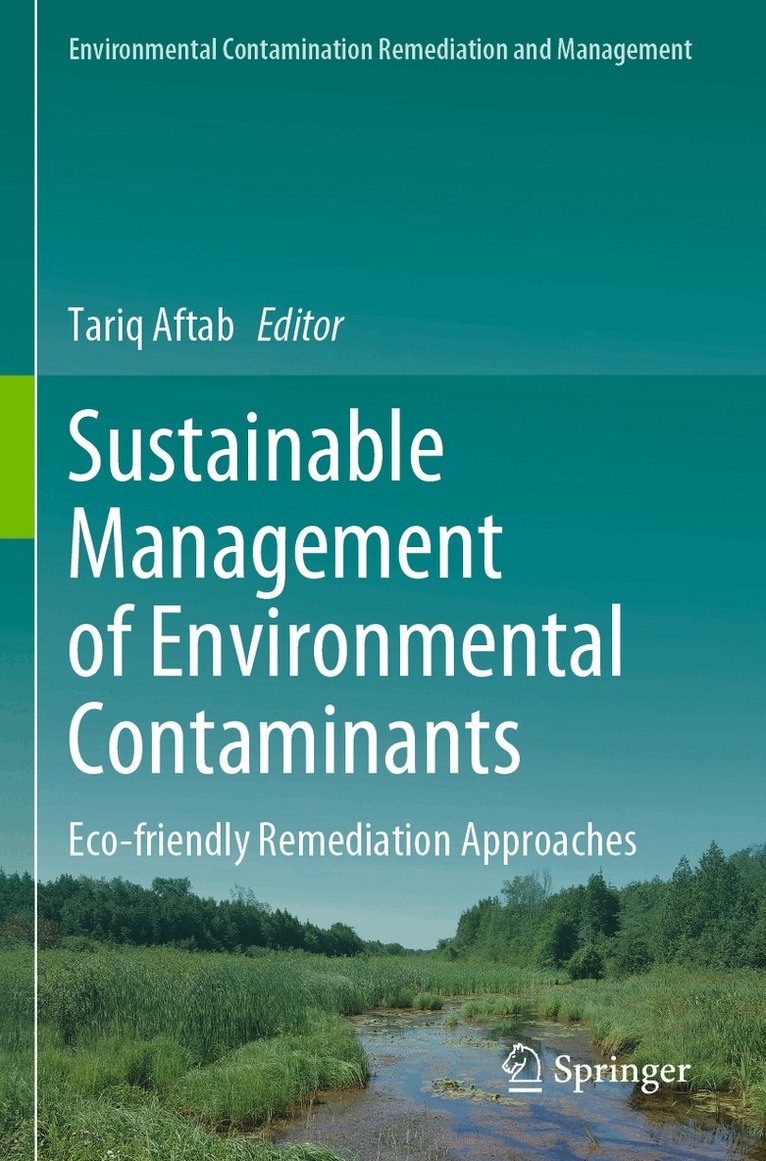
    Sustainable Management of Environmental Contaminants

    Eco-friendly Remediation Approaches

    AvTariq Aftab

    Häftad, Engelska, 2023

    Del i serien Environmental Contamination Remediation and Management

    1 949 kr

    Beställningsvara. Skickas inom 10-15 vardagar. Fri frakt över 249 kr.

    Beskrivning

    Environmental contaminants are chemicals that accidentally or deliberately enter the environment, often, but not always, as a result of human activities. Some of these contaminants may have been manufactured for industrial use, and because they are very stable, they do not break down easily. If released to the environment, these contaminants may enter the food chain. Other environmental contaminants are naturally occurring chemicals, but industrial activity may increase their mobility or increase the amount available to circulate in the environment, allowing them to enter the food chain at higher levels than would otherwise occur. Environmental contaminants influence the physiological cell reactions at different and heterogeneous basics and lead to altering in normal cell function primarily at the molecular and biochemical level. Molecular responses to such common environmental stresses have been studied intensively over the last few years, in which there is an intricate network of signaling pathways controlling perception of these environmental stress signals, the generation of second messengers and signal transduction. Recent advances in many areas of plant and microbial research, including genotyping, make scientists optimistic that valuable solutions will be found to allow deployment/commercialization of strategies better able to tolerate these environmental stresses.Environmental remediation was historically viewed as an inherently sustainable activity, as it restores contamination; however, researchers and practitioners are increasingly recognizing that there can be substantial environmental footprints and socioeconomic costs associated with remediation. Sustainability is an imperative in the emerging green and sustainable remediation movement, which is reshaping the entire remediation industry.Understanding the significant roles of sustainable or eco-friendly approaches in mitigating environmental contaminants, the current subject has recently attracted the attention of scientists from across the globe. This comprehensive volume “Sustainable Management of Environmental Contaminants: Eco-friendly Remediation Approaches" highlights the various prospects involved in current scenario. The current volume comprises the chapters from diverse areas dealing with biotechnology, microbial technology, nanotechnology, molecular biology, green and sustainable remediation, etc. I am hopeful that this volume will furnish the requisite of all those who are working or have interest in the current topic.

    Produktinformation

    • Utgivningsdatum:2023-11-06
    • Mått:155 x 235 x 31 mm
    • Vikt:850 g
    • Format:Häftad
    • Språk:Engelska
    • Serie:Environmental Contamination Remediation and Management
    • Antal sidor:551
    • Förlag:Springer International Publishing AG
    • ISBN:9783031084485

    Utforska kategorier

    • Miljövetenskap och miljöpolitik inom Naturvetenskap och teknik
    • Biovetenskap inom Naturvetenskap och teknik

    Innehållsförteckning

    • Chapter 1. Sustainable Management of Environmental Contaminants: Factors, Control and Phytoremediation.- Chapter 2. Environmental Sustainability with Polyhydroxyalkanoates (PHA) as Plastic Alternatives.- Chapter 3. Advanced sewage disinfection technologies eco-friendly with the environment and public health.- Chapter 4. Application of fungi and bacteria in the management of azo dyes in the industrial effluents.- Chapter 5. Bioremediation: an effective, significant and eco-friendly approach for sustainable management.- Chapter 6. Exploitation of arbuscular mycorrhizal (AM) fungi as a sustainable management strategy for remediation of cadmium contaminated soils.- Chapter 7. Medicinal and Aromatic Plant Species with Potential for Remediation of Metal(loid)-Contaminated Soils.- Chapter 8. Heavy Metal Toxicity and Phytoremediation by the Plants of Brassicaceae Family: A Sustainable Management.- Chapter 9. Combating Nanotoxicity in Plants: Green Nanotechnology Perspective for a Sustainable Future.- Chapter 10. Strategies and Recent Advances in the Management of Waste Present in Soil and Water by Microbes.- Chapter 11. Green Remediation for Sustainable Environment.- Chapter 12. Application of nanotechnology in remediation of environmental pollutants.- Chapter 13. Seed priming as a sustainable solution to mitigate salinity and drought stress in plants.- Chapter 14. Microbial Biosurfactants: Characterization, Properties and Environmental Applications.- Chapter 15. Gene-Environment Interaction during Bioremediation.- Chapter 16. Myco-remediation: A sustainable biodegradation of environmental pollutants.- Chapter 17. Achieving ecofriendly environment through sustainable management of solid wastes in soil ecosystem.- Chapter 18. Mycoremediation of agriculture waste for the cultivation of edible mushroom.- Chapter 19. Removal of organic dyes from wastewaters using metal oxide nanoparticles.- Chapter 20. Thiourea can Mitigate the Adverse Effect of Ozone on Crop Productivity.- Chapter 21. Challenges and Solutions for Sustainable Urban Water Management.