• Fri frakt över 249 kr
  • •
  • Snabba leveranser
  • •
  • Billiga böcker
Kundservice

Du är på sajten för privatpersoner.

Företag, bibliotek eller offentlig verksamhet?

Du handlar på classic.bokus.com, där alla dina funktioner finns intakta.
Till classic.bokus.com
Bokus logotyp. Gå till startsidan.
  • Erbjudanden
  • Nyheter
  • Student
  • Topplistor
  • Barn & ungdom
  • Bokus Play
  • E-böcker
  • Pocketböcker
  • Spel & pussel

10% rabatt på allt med kod: NYSTART10 →

Sidfot

Mina sidor

    Hjälp

    • Kundservice
    • Vanliga frågor och svar
    • Frakt och leverans
    • Retur vid ångerrätt
    • Reklamera vara
    • Betalning
    • Köpvillkor
    • Allmänna villkor
    • Information om webbplatsens tillgänglighet

    Om Bokus

    • Om oss
    • Pressrum
    • För studenter
    • För företag
    • För bibliotek och offentlig verksamhet
    • För leverantörer
    • Hållbarhet

    Populärt

    • Aktuella erbjudanden
    • Presentkort
    • Studentlitteratur
    • Nya böcker
    • Topplistor
    • Signerade böcker
    • Engelska böcker

    Inspiration

    • Boktips
    • BookTok
    • Populära bokserier
    • Barnbokskaraktärer
    • Populära författare
    Logotyp för Bokus
    Följ oss på Facebook (extern länk)Följ oss på Instagram (extern länk)Följ oss på YouTube (extern länk)Följ oss på TikTok (extern länk)
    bokus @ CookiesAnpassa cookiesIntegritetspolicyKöpvillkor
    Till Citymail hemsida (extern länk)Till Budbee hemsida (extern länk)Till Postnord hemsida (extern länk)Till Schenker hemsida (extern länk)Till Early Bird hemsida (extern länk)Till Walleys hemsida (extern länk)
    1. Samhälle och politik
    2. Samhälle och kultur
    3. Kultur och medier
    4. Kulturvetenskap

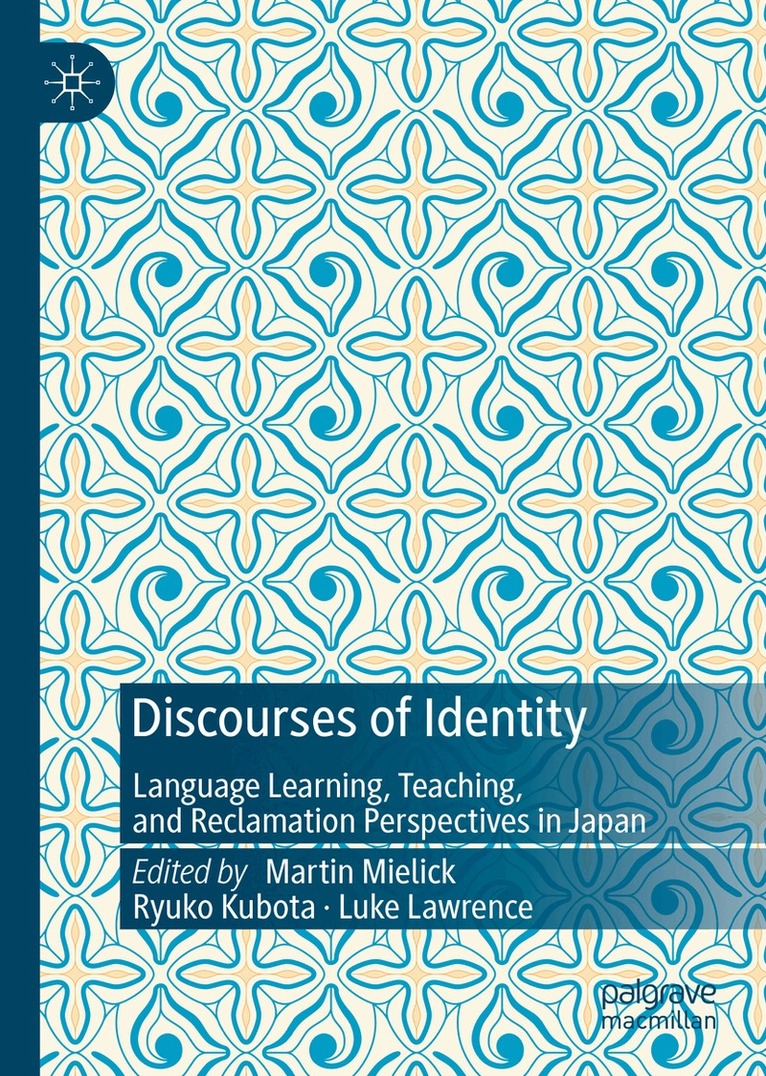
    Discourses of Identity

    Language Learning, Teaching, and Reclamation Perspectives in Japan

    AvMartin Mielick,Ryuko Kubota

    Inbunden, Engelska, 2023

    1 733 kr

    Beställningsvara. Skickas inom 10-15 vardagar. Fri frakt över 249 kr.

    Beskrivning

    This edited book draws on research on identity in language education to present a detailed and multi-faceted study of identity in language learning, teaching and revitalization settings in the context of Japan. It employs a diverse range of theoretical approaches, including poststructuralism, critical realism, cognitive behavioral theory, and complexity theory,, as well as methodologies such as linguistic ethnography, narrative enquiry, and critical multimodal discourse analysis. The authors focus on multiple dimensions of identity, illuminating linguistic, cultural and human complexity as manifested in language teaching and learning. This book will be of interest to advanced students and scholars of TESOL, applied linguistics, education, Japanese studies, East Asian studies, linguistic anthropology, indigenous languages and sociolinguistics.

    Produktinformation

    • Utgivningsdatum:2023-02-08
    • Mått:148 x 210 x 30 mm
    • Vikt:630 g
    • Format:Inbunden
    • Språk:Engelska
    • Antal sidor:382
    • Förlag:Springer International Publishing AG
    • ISBN:9783031119873

    Utforska kategorier

    • Kulturvetenskap inom Samhälle och politik
    • Antropologi inom Samhälle och politik
    • Språkundervisning och språkinlärning inom Språk och ordböcker

    Mer om författaren

    ​Martin Mielick is Senior Lecturer at the English Language Institute at Kanda University of International Studies, Chiba, Japan.Ryuko Kubota is Professor in the Department of Language and Literacy Education in the Faculty of Education at the University of British Columbia, Canada. Luke Lawrence is an English Lecturer in the Department of Sociology at Toyo University, Japan.

    Innehållsförteckning

    • Introduction: Language learner and teacher identity in multilingual Japan (Ryuko Kubota).- Part I: English Language Learner Identity.- Chapter 1: English language learners’ discursive constructions of national and global identities in the Japanese university context (Martin Mielick).- Chapter 2: It’s because I’m Japanese’: Examining L2 learners’ core beliefs and silent behaviour using a cognitive-behavioural theory-based approach (Kate Maher).- Chapter 3: Becoming the paths we tread: Learning through an ideological landscape of practice (Daniel Hooper).- Chapter 4: Constructing linguistic identity under native-speakerism: A case study of a migrant student studying English in Japan (Xinqi He).- Part II: Japanese Language Learner Identity.- Chapter 5: Am I a nurse? Conflicts in the professional identities of three Indonesian nurses who came to Japan through an Economic Partnership Agreement (Chiharu Shima).- Chapter 6: Language Learning as a Shelter: Restoring a Positive Self-Image by Learning a Second Language (Kazuhiro Yonemoto).- Chapter 7: No need to invest in the Japanese language?’: The changes of career choices and identities for plurilingual Chinese students in Japan (Keiko Kitade).- Chapter 8: Who speaks yasashii nihongo for whom?: Reimagining the socially constructed ‘beneficiary’ and the ‘benefactor’ identities of plain Japanese for ‘foreigners’ (Noriko Iwasaki).- Chapter 9: A discursive construction of Nikkei identity and interculturality: Official hybridity, constructed desire, and a masked heterogeneity (Kyoko Motobayashi).- Part III: Indigenous Language Revitalization and Identity.- Chapter 10: The process of constructing and reclaiming Ainu identity: the Urespa project initiative (Yumiko Ohara & Yuki Okada).- Chapter 11: In search of Indigenous identity through re-creation of Ainu self-sustaining community: praxis and learning in action (Tatsiana Tsagelnik).- Chapter 12: New Speakers of Ryukyuan languages: Negotiation, Construction and Change of Identities (Madoka Hammine).- Chapter 13: Against the odds: Second language learners of Ryukyuan (Patrick Heinrich & Giulia Valsecchi).- Part IV: English Language Teacher Identity.- Chapter 14: Ideology, emotion and identity: The impact of English-only policies on Japanese English teachers in Japan (Luke Lawrence).- Chapter 15: Discursive positioning of the Philippines and Filipino teachers in the Skype eikaiwa industry (Misako Tajima).- Chapter 16: ‘It feels like I’m stuck in a web sometimes’: The culturally emergent identity experiences of a queer assistant language teacher in small-town Japan (Ashley R. Moore).- Chapter 17: Identity and the emotions of non-Japanese university teachers of English in Japan (Sam Morris).- Chapter 18: Going beyond the binary: Translingual teacher identity negotiation through translanguaging practice (Yuzuko Nagashima).- Chapter 19: Frames, ideologies, and the construction of professional identities among non-Japanese EFL teachersin Japan (Robert J. Lowe).