• Fri frakt över 249 kr
  • •
  • Snabba leveranser
  • •
  • Billiga böcker
Kundservice

Du är på sajten för privatpersoner.

Företag, bibliotek eller offentlig verksamhet?

Du handlar på classic.bokus.com, där alla dina funktioner finns intakta.
Till classic.bokus.com
Bokus logotyp. Gå till startsidan.
  • Erbjudanden
  • Nyheter
  • Student
  • Topplistor
  • Barn & ungdom
  • Bokus Play
  • E-böcker
  • Pocketböcker
  • Spel & pussel

10% rabatt på allt med kod: NYSTART10 →

Sidfot

Mina sidor

    Hjälp

    • Kundservice
    • Vanliga frågor och svar
    • Frakt och leverans
    • Retur vid ångerrätt
    • Reklamera vara
    • Betalning
    • Köpvillkor
    • Allmänna villkor
    • Information om webbplatsens tillgänglighet

    Om Bokus

    • Om oss
    • Pressrum
    • För studenter
    • För företag
    • För bibliotek och offentlig verksamhet
    • För leverantörer
    • Hållbarhet

    Populärt

    • Aktuella erbjudanden
    • Presentkort
    • Studentlitteratur
    • Nya böcker
    • Topplistor
    • Signerade böcker
    • Engelska böcker

    Inspiration

    • Boktips
    • BookTok
    • Populära bokserier
    • Barnbokskaraktärer
    • Populära författare
    Logotyp för Bokus
    Följ oss på Facebook (extern länk)Följ oss på Instagram (extern länk)Följ oss på YouTube (extern länk)Följ oss på TikTok (extern länk)
    bokus @ CookiesAnpassa cookiesIntegritetspolicyKöpvillkor
    Till Citymail hemsida (extern länk)Till Budbee hemsida (extern länk)Till Postnord hemsida (extern länk)Till Schenker hemsida (extern länk)Till Early Bird hemsida (extern länk)Till Walleys hemsida (extern länk)
    1. Psykologi och pedagogik
    2. Pedagogik
    3. Utbildningsstrategier och utbildningspolitik

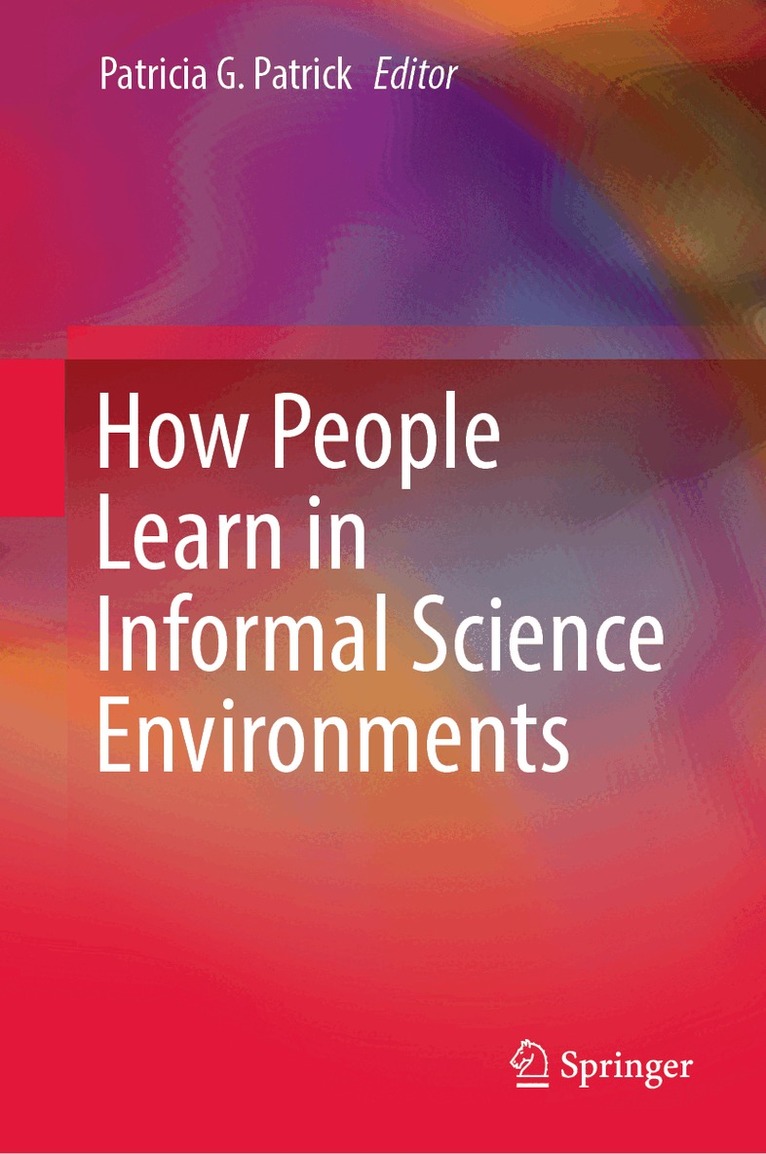
    How People Learn in Informal Science Environments

    AvPatricia G. Patrick

    Inbunden, Engelska, 2023

    1 625 kr

    Beställningsvara. Skickas inom 10-15 vardagar. Fri frakt över 249 kr.

    Beskrivning

    This edited volume brings together an international perspective of 22 diverse learning theories applied to a range of informal science learning environments. The book is divided into 7 sections: community of practice, critical theory, identity theory, sociocultural, socioscientific, and social entrepreneurship, systems theory, and theory development. The chapters present how researchers from diverse backgrounds and cultures use theories in their work and how these may be applied as theoretical frameworks for future research. The chapters bridge theory and practice and collectively address a wide range of ages (children-adults) and contexts. The book is written to engage a broad audience of researchers in universities and museums, while appealing to the growing number of researchers and educators who recognize the importance of informal learning to the development of environmental and scientific literacy. It is essential reading for inexperienced researchers and those seeking new theoretical perspectives.

    Produktinformation

    • Utgivningsdatum:2023-04-04
    • Mått:155 x 235 x 37 mm
    • Vikt:1 033 g
    • Format:Inbunden
    • Språk:Engelska
    • Antal sidor:568
    • Förlag:Springer International Publishing AG
    • ISBN:9783031132902

    Utforska kategorier

    • Utbildningsstrategier och utbildningspolitik inom Psykologi och pedagogik
    • Skolan och förskolan inom Psykologi och pedagogik
    • Undervisning i specifika ämnen inom Psykologi och pedagogik

    Mer om författaren

    Dr. Patrick is an associate professor at Columbus State University and a Fulbright Scholar (2019 & 2022). Her Fulbright project focused on the ways Sumatran (Indonesia) Battra, native healers, passed native medicine, environmental, and ecological knowledge to the next generation. She is the coauthor of Zoo Talk (Springer) and Editor of Preparing Informal Science Educators (Springer). Her research focuses on the importance of communicating science to the public and the relationship between communication and science literacy. Her interest is identifying how families learn and share science knowledge.

    Innehållsförteckning

    • Part 1: Adult Learning.- Chapter 1. Teaching About the Holocaust Through Expeditionary Learning.- Chapter 2. Conceptualising and working With a Theory of Learning for Adults Who Need to Know.- Part 2: Aquariums, Arboretums, and Zoos.-  Chapter 3. The ARCS Model: Motivate Audiences and Facilitating Learning.- Chapter 4. Application of the Contextual Model of Learning and the Situated Identity Model in Informal STEM Learning Research.- Chapter 5. Socioscientific Issues and the Potential for Fostering Engagement in Informal Science Institutions.- Chapter 6. Sociocultural Theory: Defining Interactions at an Arboretum, Aquarium, and State Park.- Chapter 7. Merging Three Learning Theories to Understand How Learning Outside the Classroom Institutions Learn Themselves.- Part 3: Community Spaces.- Chapter 8. A Mobile Theory of Learning and Becoming in and Through Relations of Dignity: A Research Framing for Research Outside the Classroom.- Chapter 9. Complementing Informal STEM Education with Social Entrepreneurship.- Chapter 10. Playing to Become a Science Person: The Application of Play and Identity Theories in Two Out-of-School Settings.