• Fri frakt över 249 kr
  • •
  • Snabba leveranser
  • •
  • Billiga böcker
Kundservice

Du är på sajten för privatpersoner.

Företag, bibliotek eller offentlig verksamhet?

Du handlar på classic.bokus.com, där alla dina funktioner finns intakta.
Till classic.bokus.com
Bokus logotyp. Gå till startsidan.
  • Erbjudanden
  • Nyheter
  • Student
  • Topplistor
  • Barn & ungdom
  • Bokus Play
  • E-böcker
  • Pocketböcker
  • Spel & pussel

10% rabatt på allt med kod: NYSTART10 →

Sidfot

Mina sidor

    Hjälp

    • Kundservice
    • Vanliga frågor och svar
    • Frakt och leverans
    • Retur vid ångerrätt
    • Reklamera vara
    • Betalning
    • Köpvillkor
    • Allmänna villkor
    • Information om webbplatsens tillgänglighet

    Om Bokus

    • Om oss
    • Pressrum
    • För studenter
    • För företag
    • För bibliotek och offentlig verksamhet
    • För leverantörer
    • Hållbarhet

    Populärt

    • Aktuella erbjudanden
    • Presentkort
    • Studentlitteratur
    • Nya böcker
    • Topplistor
    • Signerade böcker
    • Engelska böcker

    Inspiration

    • Boktips
    • BookTok
    • Populära bokserier
    • Barnbokskaraktärer
    • Populära författare
    Logotyp för Bokus
    Följ oss på Facebook (extern länk)Följ oss på Instagram (extern länk)Följ oss på YouTube (extern länk)Följ oss på TikTok (extern länk)
    bokus @ CookiesAnpassa cookiesIntegritetspolicyKöpvillkor
    Till Citymail hemsida (extern länk)Till Budbee hemsida (extern länk)Till Postnord hemsida (extern länk)Till Schenker hemsida (extern länk)Till Early Bird hemsida (extern länk)Till Walleys hemsida (extern länk)
    1. Naturvetenskap och teknik
    2. Geovetenskap
    3. Miljövetenskap och miljöpolitik

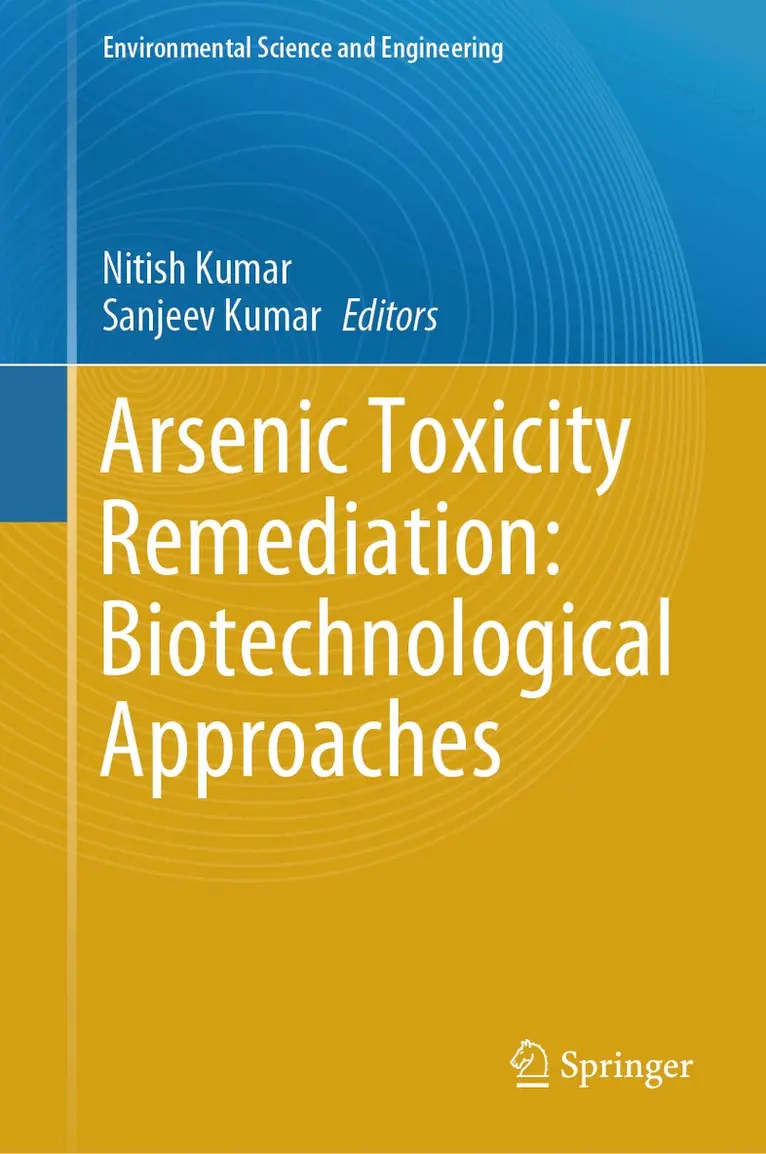
    Arsenic Toxicity Remediation: Biotechnological Approaches

    AvNitish Kumar,Sanjeev Kumar

    Inbunden, Engelska, 2023

    Del i serien Environmental Science and Engineering

    1 674 kr

    Beställningsvara. Skickas inom 10-15 vardagar. Fri frakt över 249 kr.

    Beskrivning

    Arsenic contamination in drinking water and associated adverse outcomes is one of the major health issues in more than 50 countries worldwide. The scenario is getting even more detrimental with increasing number of affected people and newer sites reported from all over the world. Apart from drinking water, the presence of arsenic has been found in various other dietary sources. Threatening the health of millions of people due to arsenic’s toxicity and carcinogenicity, the major routes of arsenic exposure for humans are either through drinking water or crops. This edited volume brings together a diverse group of environmental science, sustainability, and health researchers to address the challenges posed by global mass poisoning caused by arsenic water contamination. The book sheds light on this global environmental issue and proposes solutions to aquatic contamination through multi-disciplinary sustainable approaches and case studies from different parts of world. This book addresses the problem of arsenic by pursuing a holistic approach. It presents the status quo in different parts of the world and provides essential information on food-related arsenic exposure risks for humans and possible preventive and curative measures for tackling arsenic poisoning. The mechanisms of arsenic uptake, translocation, and distribution in plants and grains are also explained. In closing, the book reviews a variety of prospective sustainable solutions to the problem of arsenic accumulation in soil and water.The book comprises three sections. First section describes the routes of exposure to environmental arsenic and its transport in soil and aquatic ecosystems including its source and distribution in specific locations. Second section explains the health risks linked to arsenic exposure in food and the environment. Third section addresses sustainable arsenic contamination mitigation strategies using the potential applications of recent biotechnological techniques, bioremediation, phytoremediation, genetic engineering, nanotechnology, and in silico approaches.The book is intended for a broad audience including researchers, scientists, and readers with diverse backgrounds including agriculture, environmental science, food science, environmental management, and human health. It can also be used as an important reference guide for undergraduate and graduate students, university faculties, and environmentalists. The book may serve as a reference to environment and sustainability researchers, students, and policy makers.

    Produktinformation

    • Utgivningsdatum:2023-08-30
    • Mått:155 x 235 x 25 mm
    • Vikt:688 g
    • Format:Inbunden
    • Språk:Engelska
    • Serie:Environmental Science and Engineering
    • Antal sidor:340
    • Förlag:Springer International Publishing AG
    • ISBN:9783031375606

    Utforska kategorier

    • Miljövetenskap och miljöpolitik inom Naturvetenskap och teknik
    • Biokemisk teknik inom Naturvetenskap och teknik
    • Folkhälsa och hälsopedagogik inom Medicin

    Mer om författaren

    Dr. Nitish Kumar is Senior Assistant Professor at the Department of Biotechnology, Central University of South Bihar, Gaya, Bihar, India. Dr. Kumar completed his doctoral research from the Council of Scientific & Industrial Research-Central Salt & Marine Chemicals Research Institute, Bhavnagar, Gujarat, India. He has published more than seventy research articles and chapters in the leading international and national journals or books. He has also edited 4 books which are published by Springer and Taylor & Francis. He has a wide area of research experience in environmental biotechnology and currently working on arsenic remediation by the application of different biotechnological techniques. He has received many awards/fellowships/project from various organizations, e.g., the CSIR, DBT, ICAR and SERB-DST, BRNS-BARC, etc. He is Active Reviewer for journals including Biotechnology Reports, Aquatic Botany, Industrial Crops and Products, PLOS ONE, Plant Biochemistry and Biotechnology, 3Biotech, etc. He is also Associate Editor of the journal GENE (Elsevier).Sanjeev Kumar is an assistant professor at the School of Agriculture Science, K.K. University, Nalanda, Bihar, India. He graduated in Plant Breeding and Genetics from CSK Himachal Pradesh Krishi Vishwavidyalaya, Palamapur, HP, India.  He has an exhaustive experience in the field of agriculture particularly in soil analysis and cultivation of cash crops such as tea, stevia in Dhauladhar' range of Himalaya. He has a great exposure to plantation and spice crops for more than 15 years in the Dhauladhar range of the Himalaya. He has a wide area of research experience in the field of agriculture. He has received many fellowships during his academic career. He has published research articles, book chapters in leading international and national journals and books.

    Innehållsförteckning

    • Source and distribution Arsenic in soil and aquatic ecosystem – A review.- Arsenic dynamics in contaminated soil and water- A review.- Arsenic Speciation: An Overview.- Groundwater Arsenic Contamination in India: Vulnerability and Scope for Remedy.- Arsenic Contamination of Soil and Water and Related Bio-hazards in Bangladesh.- Ecotoxicology of arsenic in the marine environment.- Human Health Effects of Chronic Arsenic Exposure.-  Arsenicosis: review of recent advances.- Effects of Arsenic: Neurological and Cellular Perspective.- Understanding the Bioaccumulation and Biosorption of Arsenic [As(III)] in Plants and water and Biotechnological Approaches for Its Bioremediation.- Microbial biotechnology as an emerging wastewater treatment process for arsenic mitigation: A critical review.- The role of plant growth promoting bacteria on arsenic removal: A review of existing perspectives.- Alginate-based biotechnology: A review on the arsenic removal technologies and future possibilities.- Arsenic Phytoremediation: a Feasible Approach in the Near Future.- Removal of arsenic from water using nano adsorbents and challenges: An updated review.- Developments in Nanoadsorbents for the Treatment of Arsenic-Contaminated Water.- In silico approach for bioremediation of arsenic-A review.