• Fri frakt över 249 kr
  • •
  • Snabba leveranser
  • •
  • Billiga böcker
Kundservice

Du är på sajten för privatpersoner.

Företag, bibliotek eller offentlig verksamhet?

Du handlar på classic.bokus.com, där alla dina funktioner finns intakta.
Till classic.bokus.com
Bokus logotyp. Gå till startsidan.
  • Erbjudanden
  • Nyheter
  • Student
  • Topplistor
  • Barn & ungdom
  • Bokus Play
  • E-böcker
  • Pocketböcker
  • Spel & pussel

Må bättre, för mindre! Upp till 50% rabatt på hälsoböcker

Sidfot

Mina sidor

    Hjälp

    • Kundservice
    • Vanliga frågor och svar
    • Frakt och leverans
    • Retur vid ångerrätt
    • Reklamera vara
    • Betalning
    • Köpvillkor
    • Allmänna villkor
    • Information om webbplatsens tillgänglighet

    Om Bokus

    • Om oss
    • Pressrum
    • För studenter
    • För företag
    • För bibliotek och offentlig verksamhet
    • För leverantörer
    • Hållbarhet

    Populärt

    • Aktuella erbjudanden
    • Presentkort
    • Studentlitteratur
    • Nya böcker
    • Topplistor
    • Signerade böcker
    • Engelska böcker

    Inspiration

    • Boktips
    • BookTok
    • Populära bokserier
    • Barnbokskaraktärer
    • Populära författare
    Logotyp för Bokus
    Följ oss på Facebook (extern länk)Följ oss på Instagram (extern länk)Följ oss på YouTube (extern länk)Följ oss på TikTok (extern länk)
    bokus @ CookiesAnpassa cookiesIntegritetspolicyKöpvillkor
    Till Citymail hemsida (extern länk)Till Budbee hemsida (extern länk)Till Postnord hemsida (extern länk)Till Schenker hemsida (extern länk)Till Early Bird hemsida (extern länk)Till Walleys hemsida (extern länk)
    1. Juridik
    2. Internationell rätt
    3. Folkrätt

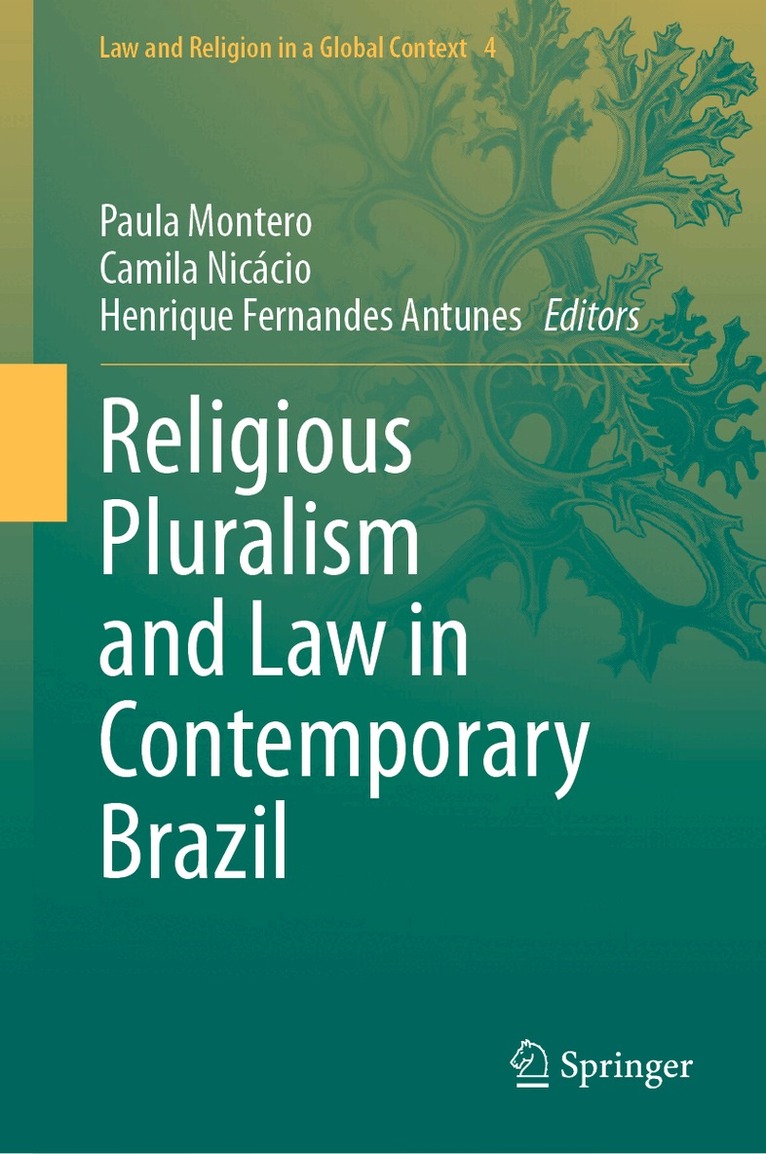
    Religious Pluralism and Law in Contemporary Brazil

    AvPaula Montero,Camila Nicácio

    Inbunden, Engelska, 2023

    Del i serien Law and Religion in a Global Context

    1 518 kr

    Beställningsvara. Skickas inom 10-15 vardagar. Fri frakt över 249 kr.

    Beskrivning

    This book represents a unique contribution to understanding the interactions between law and religion in contemporary Brazil. It analyzes how the regulation of religions according to the classical notion of secularism has become a source of tensions since the 1990s. Against this background, the respective chapters demonstrate, on the basis of various case studies, how the constitutional principle of pluralism, introduced by the 1988 federal constitution after a military dictatorship, has been addressed by new political actors, such as religious leaders, parliamentarians, influencers, state representatives, and activists. In particular, the chapters demonstrate how the mobilization of legal language, notably the language of human rights, has become fundamental to developing and consolidating new political agendas concerning secularism, tolerance, freedom of expression, gender and sexuality, family, and cultural heritage. In the authors’ approach, human rights assume a central role in social disputes as a language in which actors constitute themselves as rights subjects, form activist networks, and pursue their goals by expressing themselves in public. Given its focus and scope, the book will be of interest to all scholars seeking to understand the relationships between diversity and the regulation of religious practices in plural societies, where the classical notion of secularism continues to show its limitations.

    Produktinformation

    • Utgivningsdatum:2023-12-29
    • Mått:155 x 235 x 19 mm
    • Vikt:535 g
    • Format:Inbunden
    • Språk:Engelska
    • Serie:Law and Religion in a Global Context
    • Antal sidor:231
    • Upplaga:23001
    • Förlag:Springer International Publishing AG
    • ISBN:9783031419805

    Utforska kategorier

    • Folkrätt inom Juridik
    • Religion: allmänt inom Filosofi och religion
    • Komparativ rätt inom Juridik

    Mer om författaren

    Prof. Paula Montero is an Anthropology Professor at the State University of São Paulo (USP – Brazil) and a Senior Researcher at the Brazilian Center of Analysis and Planning (Cebrap). Ph.D. in Political Science at the University of São Paulo, Brazil, she was Visiting Scholar at the Institute of Latin American and Iberian Studies at Columbia University in 1984 and Tinker Visiting Professor at the University of Chicago in 1996. She participates as a principal investigator of the Nonreligion in a Complex Future project (University of Ottawa). Her research interests are focused on the interface between religion, law, and pluralism.Prof. Camila Nicácio is a Law School Professor at the Federal University of Minas Gerais (UFMG – Brazil). Ph.D. in Law at the Université Paris I, Panthéon Sorbonne, France. She is Visiting Professor at Université de Laval, University of Ottawa, and Université Paris I, and participates as a collaborator of the Nonreligion in a Complex Future project (University of Ottawa). Her research interests are focused on the interface between law/religion, legal pluralism, human rights, and conflict mediation.Dr. Henrique Antunes is a postdoctoral fellow at the Brazilian Center of Analysis and Planning. He has a Ph.D. in anthropology from the University of São Paulo. He is a member of the Center for Interdisciplinary Studies on Psychoactive Substances (NEIP) and the coordinator of the Ayahuasca Community Committee of the Chacruna Institute for Psychedelic Plant Medicines. He is also a member of the Nonreligion in a Complex Future project. His research interests are focused on religion, law, and drug policies.

    Innehållsförteckning

    • Introduction: Religious Pluralism and Law in Contemporary Brazil.- Part I Pluralism: minority rights, religious freedom and secularism.- Religion and Laicity in Dispute: Two Categories Under Construction in Brazil’s legal Debate on Religious Education in Public Schools.- Evangelical jurists and human rights in Brazil: a case study of the National Association of Evangelical Jurists (ANAJURE).- Formalizing religious intolerance in police records: a picture of a (de)construction problem.- Evangelicals Against the Criminalization of Homophobia: The “Christian Majority" and the Dispute Over Public Morality.- “It is not solved just by writing it down on paper”: patrimonialization policies and the religious use of ayahuasca as a Brazilian intangible cultural heritage.- Part II Human Rights as Language.- Controversies in Brazil’s Supreme Court over when human life begins.- Quilombola communities and the right to land ownership: notes on a legal controversy in the Supreme Federal Court.- Humanrights and their policy-visibility in producing a public Islam in Brazil.- Human rights and works of the imagination: an ethnography of the first ordained transgender reverend in Latin America.