Beställningsvara. Skickas inom 10-15 vardagar. Fri frakt över 249 kr.
Beskrivning
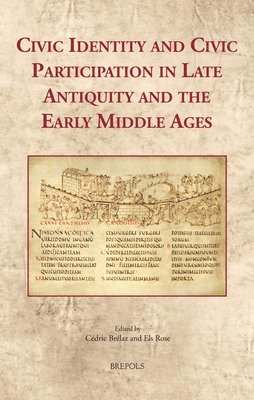
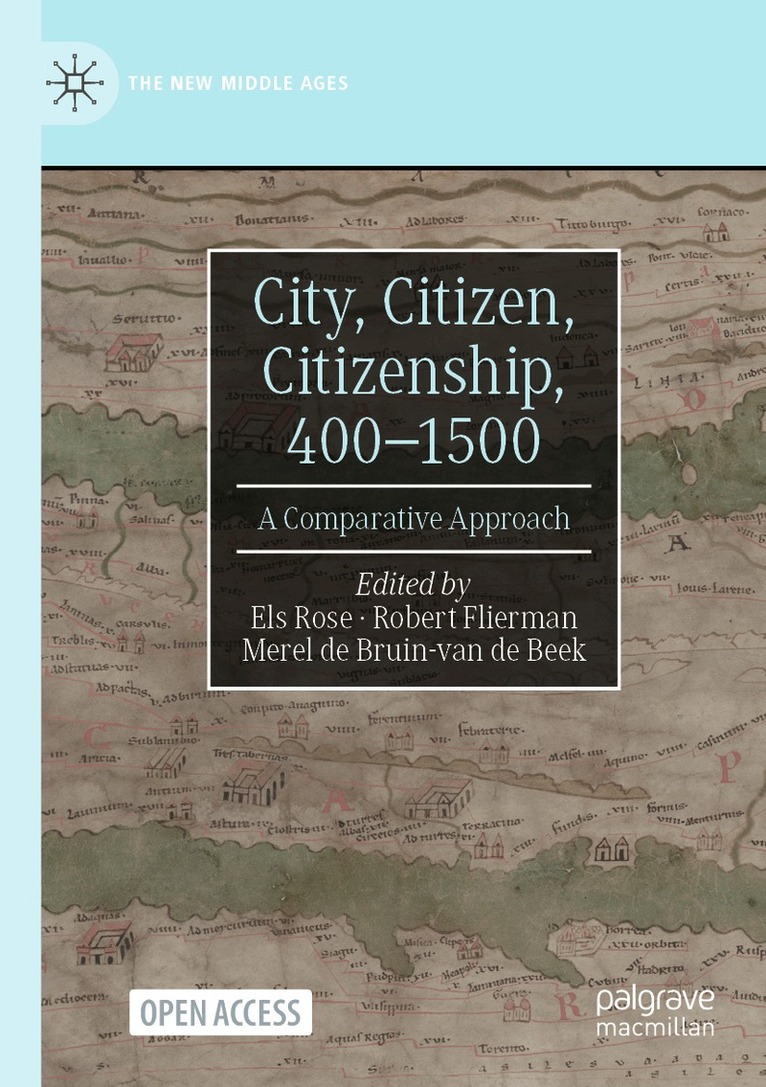
At the same time, the book seeks to address why the city remained such a salient concept also in non-urban contexts – the periphery, the desert, the monastery – and how medieval thinking on the ideal city and civic community could involve denunciation of the earthly city and its institutional trappings.
Els Rose holds the Chair of Late and Medieval Latin at Utrecht University, the Netherlands and guided the NWO VICI project ‘Citizenship Discourses in the Early Middle Ages, 400–1100’ (2017-2023). She has published widely on Latin liturgical traditions in the early medieval West, and on the Latin rewritings of early Christian apocryphal literature. Robert Flierman is Assistant Professor of Medieval Latin at Utrecht University, the Netherlands. From 2018 to 2022, he worked as a postdoc in the NWO VICI project ‘Citizenship Discourses in the Early Middle Ages, 400–1100’. He currently leads the NWO VIDI project ‘Lettercraft and Epistolary Performance in Early Medieval Europe’ (2023-2027). Merel de Bruin-van de Beek was a PhD candidate in the NWO VICI project ‘Citizenship Discourses in the Early Middle Ages, 400–1100’. Her research focuses on the employment and function of citizenship terminology in the late antique sermons of Maximus of Turin, Augustine of Hippo and Peter Chrysologus of Ravenna.
Innehållsförteckning
Chapter 1.The Medieval City: Stones, Communities, Concepts.- Chapter 2. Civic Commitment in the Post-Roman West: The Visigothic Case Study.- Chapter 3. Water Provision in Early Islamic Cities: A Multidisciplinary Approach to Urban Peter.-Chapter 4. Places of Love and Honour: Cities and Almost-Cities in the Carolingian World.- Chapter 5. Expressing Civic Pride in Stone. Church Towers and Town Halls in the Fifteenth- and Sixteenth-Century Low Countries.- Chapter 6. The Saint and the Citizens: Scripting Civic Behaviour in Early Medieval Hagiography.- Chapter 7. Pleasing God, Serving the Citizens: Charity and Water Supply in Cairo and Baghdad.- Chapter 8. Thinking about Urbanity, Urban Settlements, Literacy, and Exclusion. The Case of Medieval Scandinavia.- Chapter 9. Doing the Dirty Work: Ribalds, Armies and Public Health in the Southern Low Countries, 1100-1500,- Chapter 10. Civic Cohesion in Turbulent Times: Galbert of Bruges, the Urban Community and the Murder of the Count of Flanders in 1127.- Chapter 11. Creating Communities and Discussing Citizenship through Juridical Parody (France and Burgundy, Fifteenth Century). Chapter 12. Protecting the civitas, Warning the civis: Spiritual Defences in Two Sermons by Maximus of Turin.- Chapter 13. All Manner of Precious Stones: Civic Discourse and the Construction of the Early Medieval City.- Chapter 14. Imagining Rome: Reading a Ninth-Century Carolingian Manuscript in its Monastic Context.- Chapter 15. The Way to Rome in the Medieval Welsh Imagination.- Chapter 16. Citizenship as Performance.