• Fri frakt över 249 kr
  • •
  • Snabba leveranser
  • •
  • Billiga böcker
Kundservice

Du är på sajten för privatpersoner.

Företag, bibliotek eller offentlig verksamhet?

Du handlar på classic.bokus.com, där alla dina funktioner finns intakta.
Till classic.bokus.com
Bokus logotyp. Gå till startsidan.
  • Erbjudanden
  • Nyheter
  • Student
  • Topplistor
  • Barn & ungdom
  • Bokus Play
  • E-böcker
  • Pocketböcker
  • Spel & pussel

10% studentrabatt med kod TERM26

Sidfot

Mina sidor

    Hjälp

    • Kundservice
    • Vanliga frågor och svar
    • Frakt och leverans
    • Retur vid ångerrätt
    • Reklamera vara
    • Betalning
    • Köpvillkor
    • Allmänna villkor
    • Information om webbplatsens tillgänglighet

    Om Bokus

    • Om oss
    • Pressrum
    • För studenter
    • För företag
    • För bibliotek och offentlig verksamhet
    • För leverantörer
    • Hållbarhet

    Populärt

    • Aktuella erbjudanden
    • Presentkort
    • Studentlitteratur
    • Nya böcker
    • Topplistor
    • Signerade böcker
    • Engelska böcker

    Inspiration

    • Boktips
    • BookTok
    • Populära bokserier
    • Barnbokskaraktärer
    • Populära författare
    Logotyp för Bokus
    Följ oss på Facebook (extern länk)Följ oss på Instagram (extern länk)Följ oss på YouTube (extern länk)Följ oss på TikTok (extern länk)
    bokus @ CookiesAnpassa cookiesIntegritetspolicyKöpvillkor
    Till Citymail hemsida (extern länk)Till Budbee hemsida (extern länk)Till Postnord hemsida (extern länk)Till Schenker hemsida (extern länk)Till Early Bird hemsida (extern länk)Till Walleys hemsida (extern länk)
    1. Naturvetenskap och teknik
    2. Matematik och naturvetenskap
    3. Biologi
    4. Biokemi

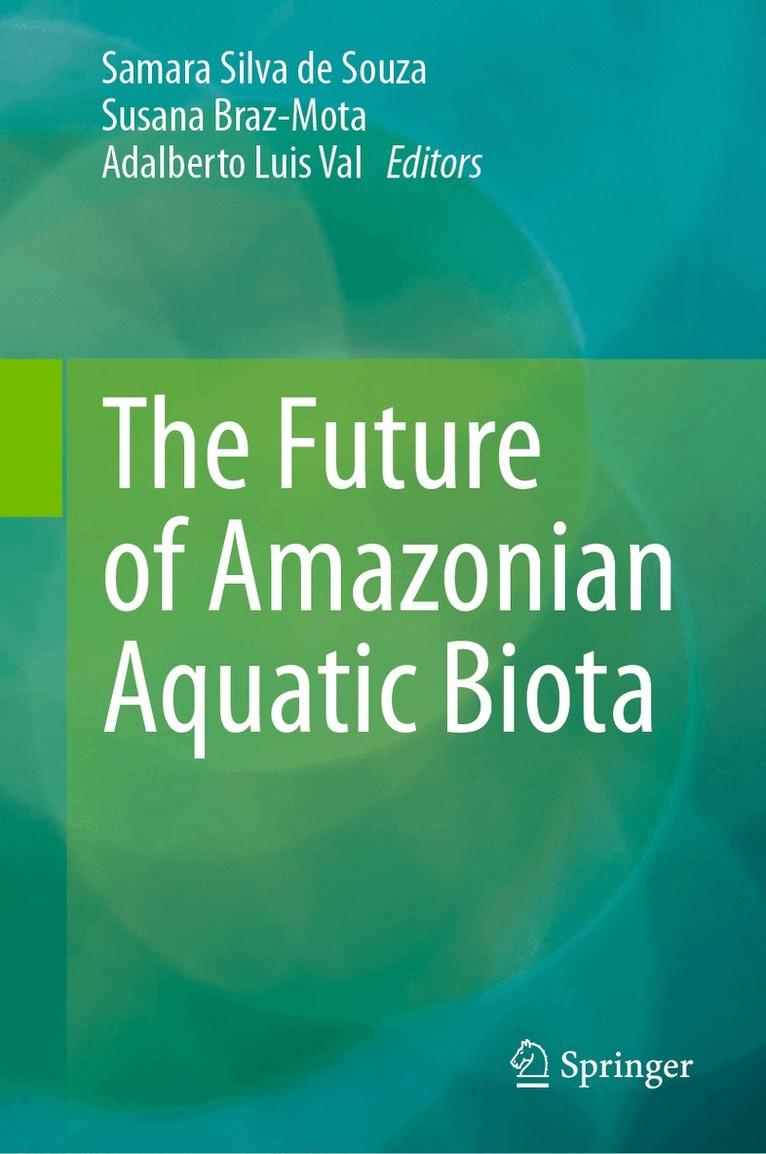
    Future of Amazonian Aquatic Biota

    AvSamara Silva de Souza,Susana Braz-Mota

    Inbunden, Engelska, 2024

    2 502 kr

    Beställningsvara. Skickas inom 10-15 vardagar. Fri frakt över 249 kr.

    Beskrivning

    The aquatic habitats of the Amazon region are subject to natural daily and seasonal variations in the physico-chemical properties of the water. The organisms that inhabit these habitats have developed adaptations to cope with these natural events. However, human-induced environmental changes are threatening ecosystems and affecting biodiversity at all levels of biological organization by causing drastic changes in climatic conditions in a shorter period of time, without giving organisms time to adapt. In this sense, the book addresses the future of aquatic organisms in the Amazon, including bacterial symbionts, insects, crustaceans, fish, plants, and amphibians, and provides an overview of what the future of biodiversity in the Amazon will look like, both in terms of organisms' adaptations to natural changes and in terms of vulnerability and responses to human impacts, highlighting possible mechanisms to minimize the expected impacts. The book also provides a brief overview of the risks that climate change poses to livestock, strategies for the sustainable use of species in the Amazon region and the impact of climate change on fish diseases.

    Produktinformation

    • Utgivningsdatum:2024-12-30
    • Mått:155 x 235 x 38 mm
    • Vikt:1 060 g
    • Format:Inbunden
    • Språk:Engelska
    • Antal sidor:590
    • Förlag:Springer International Publishing AG
    • ISBN:9783031668210

    Utforska kategorier

    • Biokemi inom Naturvetenskap och teknik
    • Kemi inom Naturvetenskap och teknik
    • Biovetenskap inom Naturvetenskap och teknik

    Mer om författaren

    Samara Silva de Souza, Ph.D. in Genetics, Conservation and Evolutionary Biology (INPA), studies aquatic toxicology with a focus on the effects of contaminants such as hydrocarbons and pesticides and the combination with physical-chemical factors in water on the biological responses of fish, including molecular biology, oxidative stress and antioxidant mechanisms.Susana Braz-Mota, PhD in Biology, Freshwater Biology and Inland Fisheries (INPA), is an expert in the physiological effects of metals, nanoparticles, herbicides and hydrocarbons on mortality, free radical production, antioxidant defense, oxidative stress and morphological changes of aquatic organisms. She also studies the mitochondrial biochemical mechanisms of respiration in fish exposed to high temperature and hypoxia.Adalberto Val is a leading expert in the field of Amazonian fish biology. He has advised over 120 students and published over 220 articles. His books include Fishes of the Amazon and Their Environment, published by Springer. He has served as General Director of INPA (2006-2014) and has been coordinating the ADAPTA project since 2009. He is a member of the Brazilian Academy of Sciences, a member of the World Academy of Sciences (TWAS), and an awardee of the Gran Cross of the National Order of Scientific Merit (Brazil).

    Innehållsförteckning

    • Introduction.- Part I Impacts of anthropogenic pressure and climate change in the responses of Amazonian aquatic organisms.- 1 Anthropogenic climate change is a present and future stressor for fish communities in the Amazon Basin.- 2 Genetics, toxicological background, and environmental adaptation processes of disease- vector mosquitoes in the Amazon.- 3 Dissolved Organic Carbon (DOC) of the Rio Negro, Amazonia: Importance, Processes and Potential Anthropogenic Impacts.- 4 Impacts of climate change and local disturbance on stream fish assemblages in the Amazon.- 5 Amazonian aquatic insects in a changing world.- 6 Aquatic herbaceous plants of the Amazonian Wetlands: key species under pressure.- 7 The fate of floodplain forests in a changing Amazon.- 8 Amazonian aquatic food webs, their variation and vulnerability in regard to climate change.- Part II – Ecotoxicology: fish and amphibian sensitivity.- 9 A double threat to Amazonian frogs: toxic contaminants and their interaction with global climate change.- 10 Toxicological impacts of pesticides and heavy metals on Amazon fish: trends and future perspectives.- 11 Impact of organic pollution on the genome of native Amazonian fish species: highlights for the cytogenomics and gene expression.- Part III – Phenotypic plasticity and adaptive mechanisms: change to survive.- 12 Amazonian fish and their bacterial symbionts: An intricate co-dependence relationship in a changing environment.- 13 Environmental nucleic acids: A toolkit for monitoring diversity, conservation and environmental/population health.- 14 Air-breathing fish in the Amazon facing elevated temperatures.- Part IV - Physiological and biochemical responses.- 15 AMAZONIAN CRUSTACEANS: Macrobrachium amazonicum (Decapoda, Palaemonidae).- 16 Is electron transport system activity assay useful for aerobic scope estimation of thermal metabolic stress in fish? A case study with fish from different climatic zones..- 17 Limited thermal capacity of Amazonian fishes to survive in a warming world.- Part V – Aquaculture as a tool to ensure food security in the Amazon.- 18 The future of the value chain of the Pirarucu in the Brazilian Amazon.- 19 Impacts of Climate Change on the Parasite-Host Relationship in Freshwater Aquaculture.- 20 Conclusion and Perspectives.