• Fri frakt över 249 kr
  • •
  • Snabba leveranser
  • •
  • Billiga böcker
Kundservice

Du är på sajten för privatpersoner.

Företag, bibliotek eller offentlig verksamhet?

Du handlar på classic.bokus.com, där alla dina funktioner finns intakta.
Till classic.bokus.com
Bokus logotyp. Gå till startsidan.
  • Erbjudanden
  • Nyheter
  • Student
  • Topplistor
  • Barn & ungdom
  • Bokus Play
  • E-böcker
  • Pocketböcker
  • Spel & pussel

10% rabatt på allt med kod: NYSTART10 →

Sidfot

Mina sidor

    Hjälp

    • Kundservice
    • Vanliga frågor och svar
    • Frakt och leverans
    • Retur vid ångerrätt
    • Reklamera vara
    • Betalning
    • Köpvillkor
    • Allmänna villkor
    • Information om webbplatsens tillgänglighet

    Om Bokus

    • Om oss
    • Pressrum
    • För studenter
    • För företag
    • För bibliotek och offentlig verksamhet
    • För leverantörer
    • Hållbarhet

    Populärt

    • Aktuella erbjudanden
    • Presentkort
    • Studentlitteratur
    • Nya böcker
    • Topplistor
    • Signerade böcker
    • Engelska böcker

    Inspiration

    • Boktips
    • BookTok
    • Populära bokserier
    • Barnbokskaraktärer
    • Populära författare
    Logotyp för Bokus
    Följ oss på Facebook (extern länk)Följ oss på Instagram (extern länk)Följ oss på YouTube (extern länk)Följ oss på TikTok (extern länk)
    bokus @ CookiesAnpassa cookiesIntegritetspolicyKöpvillkor
    Till Citymail hemsida (extern länk)Till Budbee hemsida (extern länk)Till Postnord hemsida (extern länk)Till Schenker hemsida (extern länk)Till Early Bird hemsida (extern länk)Till Walleys hemsida (extern länk)
    1. Historia och arkeologi
    2. Historia
    3. Historia: särskilda händelser och ämnen
    4. Socialhistoria och kulturhistoria

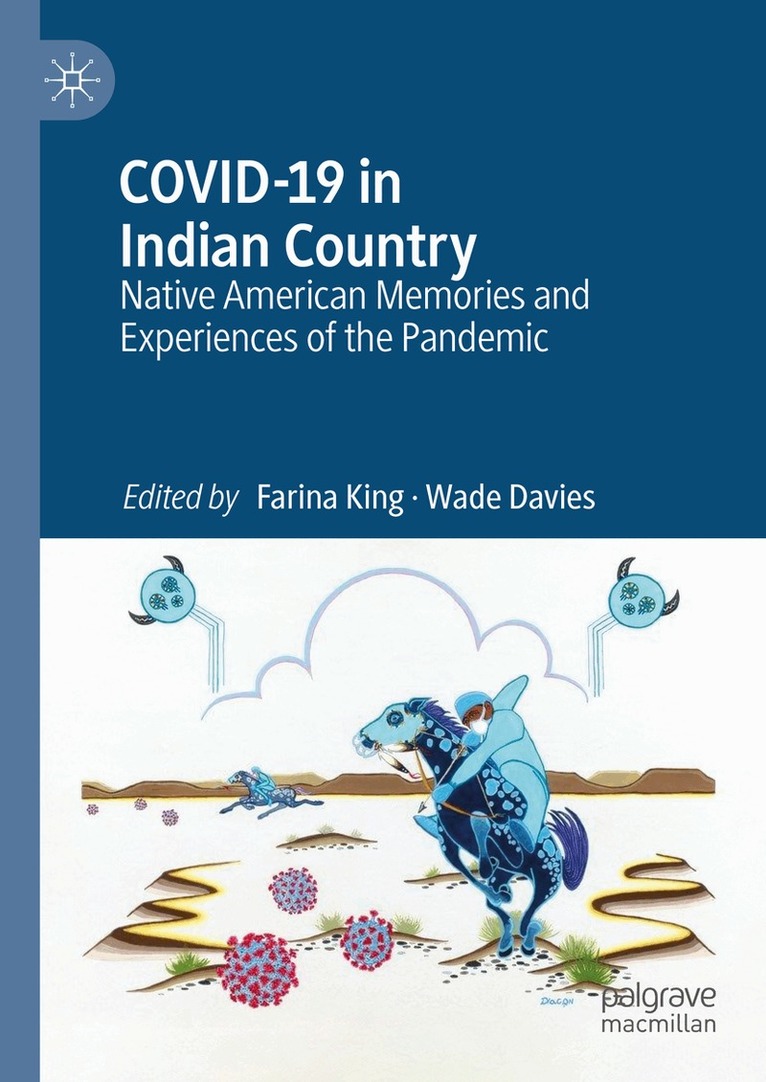
    COVID-19 in Indian Country

    Native American Memories and Experiences of the Pandemic

    AvFarina King,Wade Davies

    Inbunden, Engelska, 2024

    517 kr

    Beställningsvara. Skickas inom 10-15 vardagar. Fri frakt över 249 kr.

    Beskrivning

    As the COVID-19 pandemic struck peoples throughout the world, it disproportionately devastated Native American communities. The inequalities, disparities, and injustices they had long experienced as historically marginalized peoples magnified the effects of this crisis throughout Indian Country, causing high hospitalization and death rates, as well as intense economic and social dislocation. This edited volume seeks to tell stories of Native Americans facing this matrix of disease and colonialism in these pandemic years while also highlighting ways that Indigenous people innovated, bonded, and endured through this crisis. It features Indigenous perspectives and experiences through scholarly and creative pieces including short stories, visual art, and academic and personal narratives. Contributors ask how past experiences and traumas have contextualized Native people’s responses to COVID-19 and how intergenerational knowledge and ties have sustained their communities during the pandemic.

    Produktinformation

    • Utgivningsdatum:2024-12-10
    • Mått:148 x 210 x 24 mm
    • Vikt:566 g
    • Format:Inbunden
    • Språk:Engelska
    • Antal sidor:328
    • Förlag:Springer International Publishing AG
    • ISBN:9783031701832

    Utforska kategorier

    • Socialhistoria och kulturhistoria inom Historia och arkeologi
    • Amerikas historia inom Historia och arkeologi
    • Epidemiologi och medicinsk statistik inom Medicin

    Mer om författaren

    Farina King is an Associate Professor of Native American Studies and Horizon Chair of American Ecology and Culture at the University of Oklahoma, USA. Her books include The Earth Memory Compass: Diné Landscapes and Education in the Twentieth Century (2018) and Diné dóó Gáamalii: Navajo Latter-day Saint Experiences in the Twentieth Century (2023).  Wade Davies is a Professor of History at the University of Montana, USA. His books include Healing Ways: Navajo Health Care in the Twentieth Century (2001) and Native Hoops: The Rise of American Indian Basketball, 1895-1970 (2020).

    Innehållsförteckning

    • Introduction.- Part I: Historical Inequities and Institutions.- Chapter 1: “‘The Tribal Decline’: Fort Hall Reservation and the Influenza Pandemic 1918 to 1920,” by Yvette Towersap.- Chapter 2: “Indigenous Communities under the COVID-19 Pandemic: How to Fight the “Invisible” Violence,” by Kumoko Noguchi.- Chapter 3: “The Intersection of the Law and Health: Water (In)security in Indian Country,” by Heather Tanana.- Part II: Student Experiences and Education.- Chapter 4: “Lived Experiences of Native American College Students during the COVID-19 Pandemic,” by Amoneeta Beckstein.- Chapter 5: “Navigating the unknown: Lessons learned from sustaining Indigenous community higher education during the COVID-19 Pandemic,” by Daniel Piper, Melissa Tehee, Erica Ficklin, and Rachael Killgore.- Chapter 6: “A Vigil” by Farina King and Phillip Lee Smith.- Part III: Grassroots and Community Responses.- Chapter 7: “A 21st Century Pandemic in Indian Country: The Resilience of the Muscogee (Creek) Nation Against Covid-19,” by Midge Dellinger.- Chapter 8: “’The Box’: More than a Receptacle for Newspapers, A Witness to COVID’s Impact at a Tribal College,” by Christine Ami.- Chapter 9: “The Rise of Non-Profit Action in the Face of Tribal Governing Non-Action: The Limits of Navajo Institutions in the Covid-19 Crisis,” by Wendy Greyeyes.- Part IV: Art and Language as Survivance.- Chapter 10: “Native American Memories and Experiences of the Pandemic,” by Gavin Healey.- Chapter 11: “Maawanji’idiwag: They Come Together,” by Chelsea Mead.- Part V: Motherhood, Aunties, and Families.- Chapter 12: “Aunties of Resilience: Decolonization during Covid-19,” by Jennifer Frazee.- Chapter 13: “A Navajo Mother Fights for Her Child during COVID-19: a personal narrative,” by Shaina A. Nez.- Chapter 14: “American Indian Women Combating COVID-19, the House Disruptor,” by Mary Jo Tippeconic Fox and Aresta Tsosie-Paddock.- Chapter 15: “Indigenous Motherhood Resiliency: Adapting Cultural Teachings During COVID-19 Restrictions,” by Natahnee Nuay Winder.- Conclusion.