• Fri frakt över 249 kr
  • •
  • Snabba leveranser
  • •
  • Billiga böcker
Kundservice

Du är på sajten för privatpersoner.

Företag, bibliotek eller offentlig verksamhet?

Du handlar på classic.bokus.com, där alla dina funktioner finns intakta.
Till classic.bokus.com
Bokus logotyp. Gå till startsidan.
  • Erbjudanden
  • Nyheter
  • Student
  • Topplistor
  • Barn & ungdom
  • Bokus Play
  • E-böcker
  • Pocketböcker
  • Spel & pussel

10% rabatt på allt med kod: NYSTART10 →

Sidfot

Mina sidor

    Hjälp

    • Kundservice
    • Vanliga frågor och svar
    • Frakt och leverans
    • Retur vid ångerrätt
    • Reklamera vara
    • Betalning
    • Köpvillkor
    • Allmänna villkor
    • Information om webbplatsens tillgänglighet

    Om Bokus

    • Om oss
    • Pressrum
    • För studenter
    • För företag
    • För bibliotek och offentlig verksamhet
    • För leverantörer
    • Hållbarhet

    Populärt

    • Aktuella erbjudanden
    • Presentkort
    • Studentlitteratur
    • Nya böcker
    • Topplistor
    • Signerade böcker
    • Engelska böcker

    Inspiration

    • Boktips
    • BookTok
    • Populära bokserier
    • Barnbokskaraktärer
    • Populära författare
    Logotyp för Bokus
    Följ oss på Facebook (extern länk)Följ oss på Instagram (extern länk)Följ oss på YouTube (extern länk)Följ oss på TikTok (extern länk)
    bokus @ CookiesAnpassa cookiesIntegritetspolicyKöpvillkor
    Till Citymail hemsida (extern länk)Till Budbee hemsida (extern länk)Till Postnord hemsida (extern länk)Till Schenker hemsida (extern länk)Till Early Bird hemsida (extern länk)Till Walleys hemsida (extern länk)
    1. Samhälle och politik
    2. Social välfärd och brottslighet
    3. Brottslighet och kriminologi
    4. Kriminalvård och straff

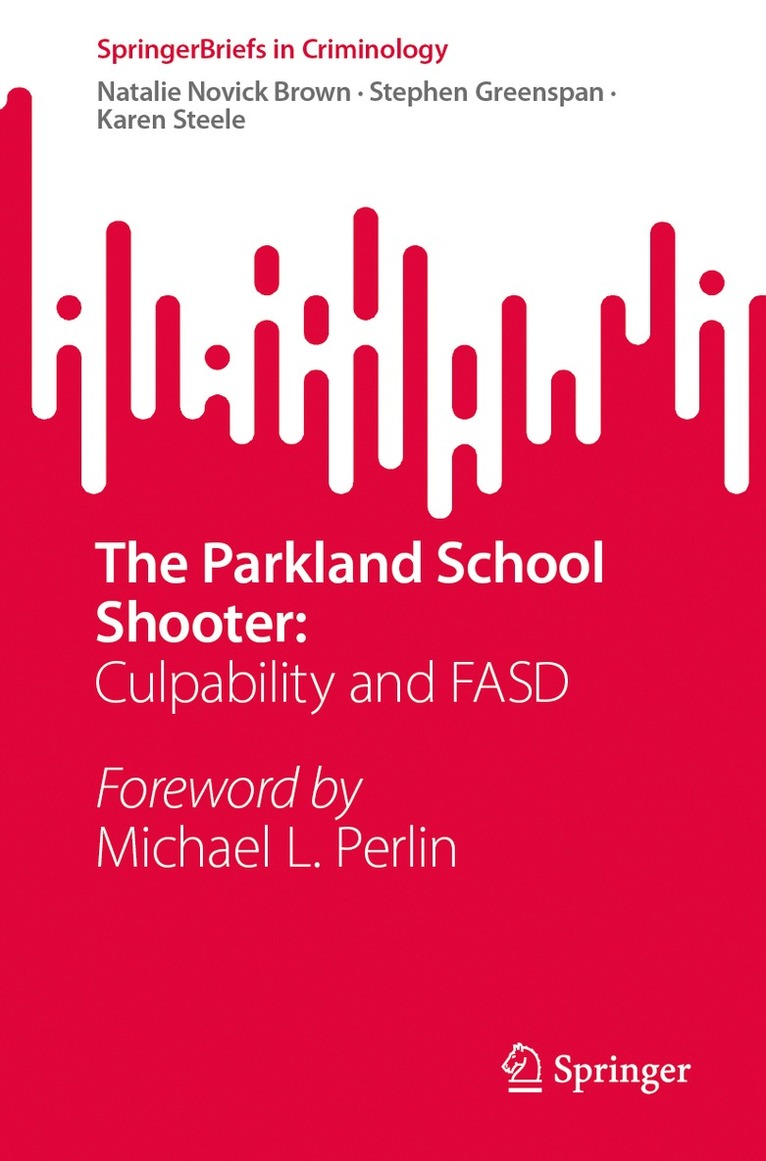
    Parkland School Shooter:

    Culpability and FASD

    AvNatalie Novick Brown,Stephen Greenspan

    Häftad, Engelska, 2024

    Del i serien SpringerBriefs in Criminology

    583 kr

    Beställningsvara. Skickas inom 10-15 vardagar. Fri frakt över 249 kr.

    Beskrivning

    This brief explores the justification of the death penalty, using the 2018 Marjorie Stoneman Douglas High School shooting in Parkland, Florida, as a case study. The authors argue that when an offender’s impairments severely impact their ability to make rational decisions, the death penalty is unjustified, regardless of the crime's severity. The book examines the case of Nikolas Cruz, the school shooter diagnosed with fetal alcohol spectrum disorder (FASD), including: The nature of FASD, how it was measured, and how it manifested in Cruz.The impact of FASD on Cruz’s adaptive functioning.The concept of “psychiatric overshadowing” and how it led to the oversight of Cruz’s FASD and associated brain damage by many mental health experts.The broader implications of FASD, with a recommendation to expand death penalty exemptions to include disorders equivalent to intellectual disabilities (ID).By focusing on the highly controversial Cruz case, the authors—key experts from the trial—offer insights into FASD and its often-overlooked role in determining criminal responsibility and sentencing. This book is essential for forensic psychologists, psychiatrists, mental health professionals, FASD/DD specialists, researchers, and legal professionals involved in death penalty defense work.

    Produktinformation

    • Utgivningsdatum:2024-11-09
    • Mått:155 x 235 x 9 mm
    • Vikt:184 g
    • Format:Häftad
    • Språk:Engelska
    • Serie:SpringerBriefs in Criminology
    • Antal sidor:92
    • Förlag:Springer International Publishing AG
    • ISBN:9783031741685

    Utforska kategorier

    • Kriminalvård och straff inom Samhälle och politik
    • Arbetspsykologi inom Psykologi och pedagogik

    Mer om författaren

    Natalie Novick Brown is a forensic psychologist in the Seattle area and courtesy Clinical Assistant Professor at the University of Washington School of Medicine. She co-founded “FASD Experts,” the leading multidisciplinary group that conducts evaluations of FASD defendants in capital cases. Those capital cases included the Parkland shooter Nikolas Cruz, for whose legal team she compiled a definitive social-developmental history and conducted adaptive behavior assessments. She has evaluated several hundred adolescents and adults with FASD, trained graduate students and psychologists on the subject, testified in capital murder cases in nearly 20 states, and authored over 40 peer-reviewed journal articles and book chapters dealing with FASD. Her edited book Evaluating Fetal Alcohol Spectrum Disorders in the Forensic Context: A manual for mental health practice (2021) is the most authoritative book on the subject. She, along with the other two authors, was elected to the Hall of Fame of FASD United, formerly the National Organization for Fetal Alcohol Syndrome. She was retained as a defense expert in the Parkland case and evaluated Nikolas Cruz but did not testify.Stephen Greenspan is a developmental psychologist who is Emeritus Professor of Educational Psychology at the University of Connecticut, where he was director of the A. J. Pappanikou Center for Developmental Disorders. He is the most-cited authority in the Intellectual and Developmental Disability (IDD) section of DSM-5 and DSM-5-TR and has authored or co-authored nearly 100 scholarly publications pertaining to the IDD population, with much of his recent work involving forensic issues pertaining to FASD and its IDD-equivalence. He has testified in many criminal cases (mostly homicides) involving offenders with possible IDD, including FASD. The focus of much of his work is on social incompetence, particularly gullibility and foolishness (lack of risk-awareness) as defining features of IDD, and he has written the only comprehensive books on both of those topics: Annals of Gullibility (2009) and Anatomy of Foolishness (2019). He was retained as a defense expert in the Parkland case but did not testify.Karen Steele is an attorney based in Salem, Oregon, whose practice involves complex/capital cases with an emphasis on neurodevelopmental issues (e.g., FASD) and late adolescent brain development. Specifically, she identifies the consequent behavioral attributes, needs, and vulnerabilities stemming from those conditions as well as their forensic implications, using that information to deepen the court’s understanding of her clients’ disabilities.  A sole practitioner, Karen’s practice interests flow from the lives, conditions, and contexts of her clients, including the 1987 capital prosecution of a youth who was 30 days past his 18th birthday and now is in his mid-50s.  Outside of individual case contexts, Karen consults, presents, and writes on the relevance and treatment of neurodevelopmental conditions in court and correctional settings and on ethical and practice standards in investigating, integrating, and presenting neuroscientific information, which include Forward-Thinking Mitigation and excuses for not presenting information, such as “Double-Edged Sword” evidence.

    Innehållsförteckning

    • Chapter One—Evidence of FASD.- Chapter Two—How FASD affected the “adaptive functioning” of Nikolas Cruz.- Chapter Three--Why do experts routinely miss FASD and other brain-based disorders?.- Chapter Four—Why and when should FASD reduce criminal culpability and sentencing.