Inbunden, Engelska, 2026
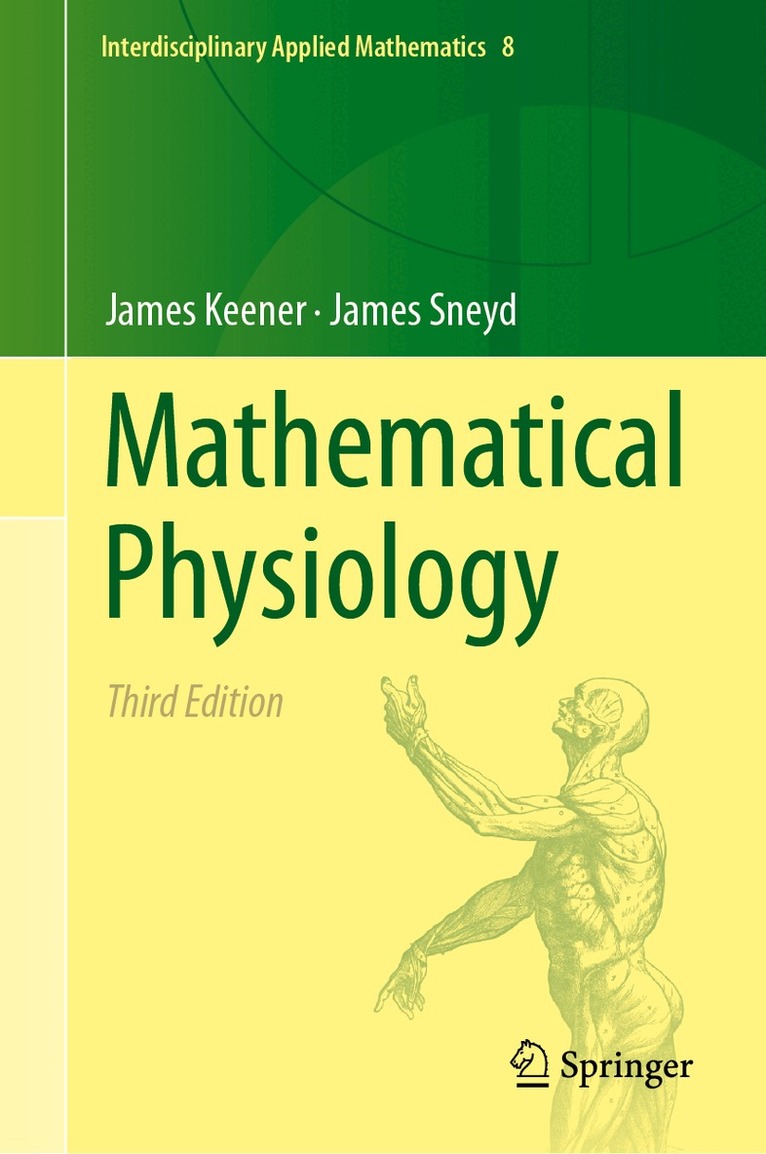
Mathematical Physiology
1237 kr
Beställningsvara. Skickas inom 10-15 vardagar. Fri frakt över 249 kr.
Beskrivning
The intersection of mathematics and physiology has a rich history, with mathematical models playing a critical role in advancing our understanding of physiological systems, from basic cellular dynamics to complex systems biology. Through the examination of both classic and contemporary models, this book shows how real-world physiological problems can be studied and understood using mathematical techniques. Now more accessible than ever, this updated edition is specifically designed for both students and instructors. It offers a host of new features aimed at enhancing the learning experience:Complete code for all figures: Every figure in the book is accompanied by full computational code—available in a variety of formats, including Matlab, Python and XPPAUT—enabling readers to replicate and experiment with the models themselves.Solutions: Full solutions, including code, for all exercises, are provided to reinforce key concepts and help teachers and students develop hands-on experience with the mathematical tools discussed.Improved clarity: While the core material remains largely the same, numerous sections have been rewritten and clarified, with additional figures and more detailed explanations.Convenient resources: All figures are now available for download in PDF format, making them ideal for inclusion in lecture slides or presentations. This third edition builds upon the solid foundation of the earlier versions, with carefully updated material that ensures the book remains a valuable resource for anyone studying or teaching quantitative physiology. Whether you're a student diving into the world of mathematical modeling or an instructor looking for clear, practical resources for your course, Mathematical Physiology provides the perfect balance of theory, application, and computational tools. James Keener is a Distinguished Professor of Mathematics at the University of Utah. He and his wife live in Salt Lake City, but don't be surprised if he moves to the mountains.James Sneyd is a Professor of Mathematics at the University of Auckland in New Zealand, where he has worked for about five thousand years. He lives with his wife beside a beach, and would rather be swimming. Reviews of the first edition:...probably the best book ever written on the interdisciplinary field of mathematical physiology. Mathematical Reviews, 2000In addition to being good reading, excellent pedagogy, and appealing science, the exposition is lucid and clear, and there are many good problem sets to choose from... Highly recommended. Mathematical Biosciences, 1999Both authors are seasoned experts in the field of mathematical physiology and particularly in the field of excitability, calcium dynamics and spiral waves. It directs students to become not merely skilled technicians in biological research but masters of the science. SIAM, 2004The first edition was the winner of the 1998 Association of American Publishers "Best New Title in Mathematics.”
Produktinformation
- Utgivningsdatum: 2026-01-03
- Mått: 230 x 50 x 160 mm
- Vikt: 2 205 g
- Format: Inbunden
- Språk: Engelska
- Serie: Interdisciplinary Applied Mathematics
- Antal sidor: 1 222
- Upplaga: 3
- Förlag: Springer International Publishing AG
- ISBN: 9783031832161
Utforska kategorier
Betyg & recensioner
0 recensioner
Inga recensioner tillgängliga.