• Fri frakt över 249 kr
  • •
  • Snabba leveranser
  • •
  • Billiga böcker
Kundservice

Du är på sajten för privatpersoner.

Företag, bibliotek eller offentlig verksamhet?

Du handlar på classic.bokus.com, där alla dina funktioner finns intakta.
Till classic.bokus.com
Bokus logotyp. Gå till startsidan.
  • Erbjudanden
  • Nyheter
  • Student
  • Topplistor
  • Barn & ungdom
  • Bokus Play
  • E-böcker
  • Pocketböcker
  • Spel & pussel

10% rabatt på allt med kod: NYSTART10 →

Sidfot

Mina sidor

    Hjälp

    • Kundservice
    • Vanliga frågor och svar
    • Frakt och leverans
    • Retur vid ångerrätt
    • Reklamera vara
    • Betalning
    • Köpvillkor
    • Allmänna villkor
    • Information om webbplatsens tillgänglighet

    Om Bokus

    • Om oss
    • Pressrum
    • För studenter
    • För företag
    • För bibliotek och offentlig verksamhet
    • För leverantörer
    • Hållbarhet

    Populärt

    • Aktuella erbjudanden
    • Presentkort
    • Studentlitteratur
    • Nya böcker
    • Topplistor
    • Signerade böcker
    • Engelska böcker

    Inspiration

    • Boktips
    • BookTok
    • Populära bokserier
    • Barnbokskaraktärer
    • Populära författare
    Logotyp för Bokus
    Följ oss på Facebook (extern länk)Följ oss på Instagram (extern länk)Följ oss på YouTube (extern länk)Följ oss på TikTok (extern länk)
    bokus @ CookiesAnpassa cookiesIntegritetspolicyKöpvillkor
    Till Citymail hemsida (extern länk)Till Budbee hemsida (extern länk)Till Postnord hemsida (extern länk)Till Schenker hemsida (extern länk)Till Early Bird hemsida (extern länk)Till Walleys hemsida (extern länk)
    1. Samhälle och politik
    2. Politik och statsskick
    3. Centralt styre och förvaltning

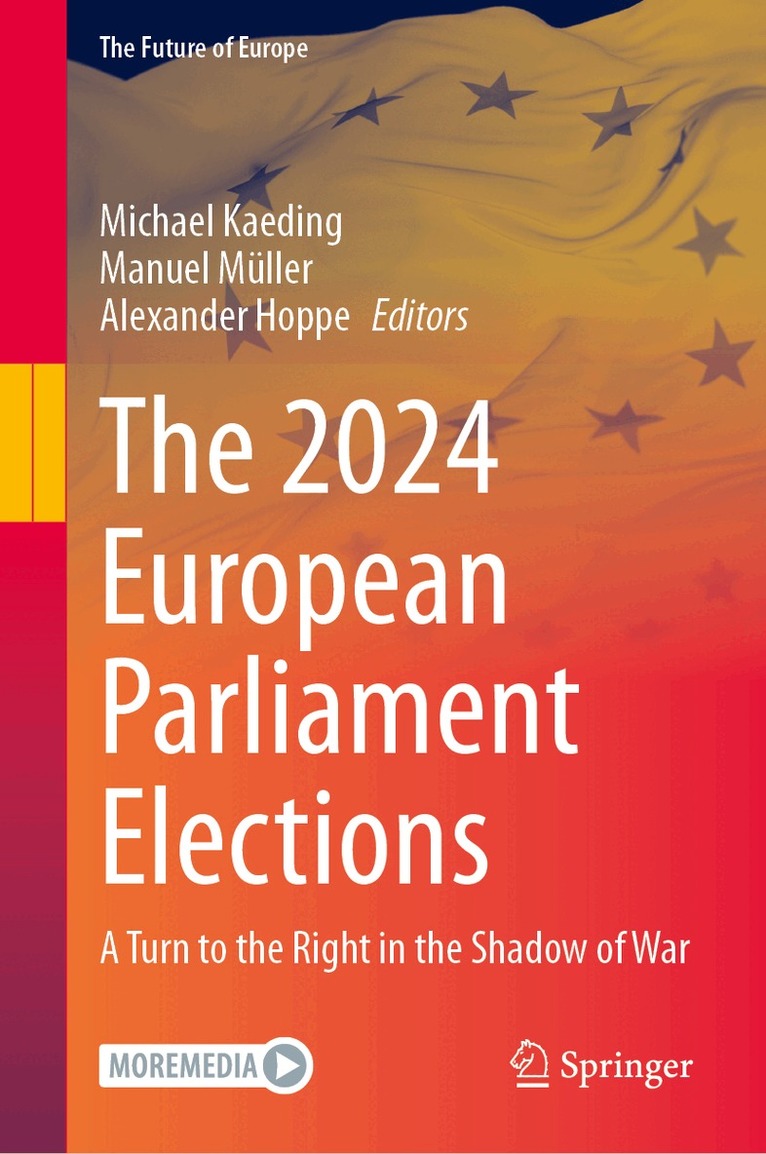
    2024 European Parliament Elections

    A Turn to the Right in the Shadow of War

    AvMichael Kaeding,Manuel Müller

    Inbunden, Engelska, 2025

    Del i serien Future of Europe

    1 949 kr

    Beställningsvara. Skickas inom 10-15 vardagar. Fri frakt över 249 kr.

    Beskrivning

    Released shortly after the 2024 European Parliament elections, this book gathers contributions that analyze the elections from various perspectives. The main objective is to offer a timely assessment of different facets such as electoral systems, electoral campaigns, the public perception of the elections, the role of European parties, determinants of voting behavior, and the consequences of the electoral results for European governance. In addition to analyses from European studies, perspectives from other (sub)disciplines and research areas, such as election, party, communication and governance research, are featured in the volume. The authors, which consist of accomplished academics and civil society actors, present a highly diverse range of analyses, individually very rich and based on solid original research. Taken together, their contributions offer the reader a comprehensive understanding of the issues, parties, and mechanisms behind the European elections of 2024.

    Produktinformation

    • Utgivningsdatum:2025-07-25
    • Mått:155 x 235 x 30 mm
    • Vikt:838 g
    • Format:Inbunden
    • Språk:Engelska
    • Serie:Future of Europe
    • Antal sidor:428
    • Förlag:Springer International Publishing AG
    • ISBN:9783031894541

    Utforska kategorier

    • Centralt styre och förvaltning inom Samhälle och politik
    • Statsskick och politiska processer inom Samhälle och politik
    • Statsvetenskap och politisk teori inom Samhälle och politik

    Mer om författaren

    Dr. Michael Kaeding is a Professor of Political Science (specialization: European Integration and European Union Politics) and Vice-Dean of Research at the Faculty of Social Sciences, University of Duisburg-Essen (Germany), as well as Director of Studies at the Department of European Political and Governance Studies, College of Europe in Bruges (Belgium). He has published in various leading international journals and book series with Springer Nature. Dr. Manuel Müller is a Senior Research Fellow in the European Union research program at the Finnish Institute of International Affairs, Helsinki (Finland). Since 2011, Manuel has run the blog “Der (europäische) Föderalist”. He has published several monographs and edited volumes, among others for Springer Nature. Dr. Alexander Hoppe is a lecturer and post-doctoral researcher at the Institute for Political Science and the Department of European Integration and European Politics at the University of Duisburg-Essen (Germany). He has published in international academic journals.

    Innehållsförteckning

    • The 2024 European Parliament Election: A Turn to the Right in the Shadow of War.- Part 1: Parties and Electoral System.- The EU Party System Between Fragmentation, Polarisation and National Interests.- “Parties of Parties?” – Europarty Headquarters Agency and Membership Selection.- A Fluid Parliament: Changes in the Composition of EP Political Groups ahead and after the 2024 Elections.- Do Birds of a Feather Flock Together? Why European Right-Wing Populists Group Separately at the European Parliament. The Case of the 2024 Elections.- More than a Transnational Experiment? Volt and DiEM25 from the 2019 to the 2024 European elections.- The 2024 European Parliament Elections: Åland and Territorial Autonomy Representation in the European Union.- How Many Votes to Win a Seat? Distortions of Electoral Equality in the 2024 European Election.- From 27 to 37: A Possible Scenario for the Composition of the European Parliament in a Fully Enlarged European Union Part 2: Election Campaign Issues.- Core State Powers and the European Elections 2024.- Europarties: Continuous Advocacy for Further Integration, Thin Agendas for Constitutional Reform.- Climate Change and Political Parties: Higher Salience and More Diversification Over Climate Change in the 2024 EP Elections?.- “Another Brick in the Wall”? Asylum and Migration as a Campaign Issue for the 2024 European Elections.- New Issue, Old Topics? How Parties Value AI Politics in the EU Elections 2024.- Defending democracy from inside: The 2024 elections in the aftermath of Qatargate Part 3: Foreign Policy and Enlargement as Campaign Issues.- Broad Consensus With a Few Outliers: Russia’s War Against Ukraine in the Manifestos for the 2024 European Elections.- Israel-Palestine in the 2024 European Parliament Elections.- China Policy as an Issue in the European Parliament Elections.- EU Enlargement in the EP Election Campaigns: Comparison Between National Parties and Political Groups.- Part 4: Gender Issues.- Gendered Shades of Right? Gender+ Equality Issues in the Economic Right EP2024 Political Agenda.- Gendered Representation of Lead Candidates in the 2024 EP Election Campaign on Instagram.- Gender Equality in the New European Parliament: Europarties and Political Groups.- Gender and Descriptive Representation: What’s New After the 2024 Election? Part 5: Campaigns and the Public Sphere.- Digital Political Advertising in European Parliamentary Elections: Spending and Reach of Social Media Advertisements by Political Parties in 27 EU Countries.- Follow and Vote! Mobilisation Through Social Media Influencers in the 2024 European Election Campaign.- European Election Campaign on TikTok: How AfD and RN Communicate with Young Voters.- The Populist Far Right and Europe’s Young Voters: Comparing the TikTok Campaigns of Fidesz and the Rassemblement National in the 2024 European Parliamentary Elections.- Voting Age 16: Attitudes and Voting Behaviour of Young People in the 2024 European Elections.- TikTok Use and Young AfD Voters.- The Power of the “Fourth State Power”: To What Extent Did Regional Press Coverage Influence Regional Voter Turnout in the 2024 European Elections?.- Whispering EU Unveiling EU Salience in National Elections Ahead of the 2024 European Parliament Election.- Part 6: Voter Turnout and Voting Behaviour.- The 2024 European Parliament Election as Second-Order Election: An Analysis of the Election Results in All EU Member States.- Differences in the Social Dispersion of Voter Turnout - A Comparison between European and National Elections.- Are Populist Parties Saving the EU Election Turnout? European Elections in the Context of Popular Euroscepticism: The Austrian Double Election and Its Significance for the EU.- Part 7: The Lead Candidate Process and the Election of the New Commission.- Electing the European Commission’s Presidents: The Role of Candidates’ Personal Qualities and Leadership Styles in European Parliament Debates.- Who Holds the Reins? The Power Play Between the European Parliament and the European Council in Choosing the Commission President.- Inter-Institutional Competition and the Spitzenkandidaten Procedure: Third Time’s A Charm?.