• Fri frakt över 249 kr
  • •
  • Snabba leveranser
  • •
  • Billiga böcker
Kundservice

Du är på sajten för privatpersoner.

Företag, bibliotek eller offentlig verksamhet?

Du handlar på classic.bokus.com, där alla dina funktioner finns intakta.
Till classic.bokus.com
Bokus logotyp. Gå till startsidan.
  • Erbjudanden
  • Nyheter
  • Student
  • Topplistor
  • Barn & ungdom
  • Bokus Play
  • E-böcker
  • Pocketböcker
  • Spel & pussel

10% rabatt på allt med kod: NYSTART10 →

Sidfot

Mina sidor

    Hjälp

    • Kundservice
    • Vanliga frågor och svar
    • Frakt och leverans
    • Retur vid ångerrätt
    • Reklamera vara
    • Betalning
    • Köpvillkor
    • Allmänna villkor
    • Information om webbplatsens tillgänglighet

    Om Bokus

    • Om oss
    • Pressrum
    • För studenter
    • För företag
    • För bibliotek och offentlig verksamhet
    • För leverantörer
    • Hållbarhet

    Populärt

    • Aktuella erbjudanden
    • Presentkort
    • Studentlitteratur
    • Nya böcker
    • Topplistor
    • Signerade böcker
    • Engelska böcker

    Inspiration

    • Boktips
    • BookTok
    • Populära bokserier
    • Barnbokskaraktärer
    • Populära författare
    Logotyp för Bokus
    Följ oss på Facebook (extern länk)Följ oss på Instagram (extern länk)Följ oss på YouTube (extern länk)Följ oss på TikTok (extern länk)
    bokus @ CookiesAnpassa cookiesIntegritetspolicyKöpvillkor
    Till Citymail hemsida (extern länk)Till Budbee hemsida (extern länk)Till Postnord hemsida (extern länk)Till Schenker hemsida (extern länk)Till Early Bird hemsida (extern länk)Till Walleys hemsida (extern länk)
    1. Medicin
    2. Medicin: allmänt
    3. Den medicinska professionen
    4. Medicinsk etik och läkaretik
    • Nyhet

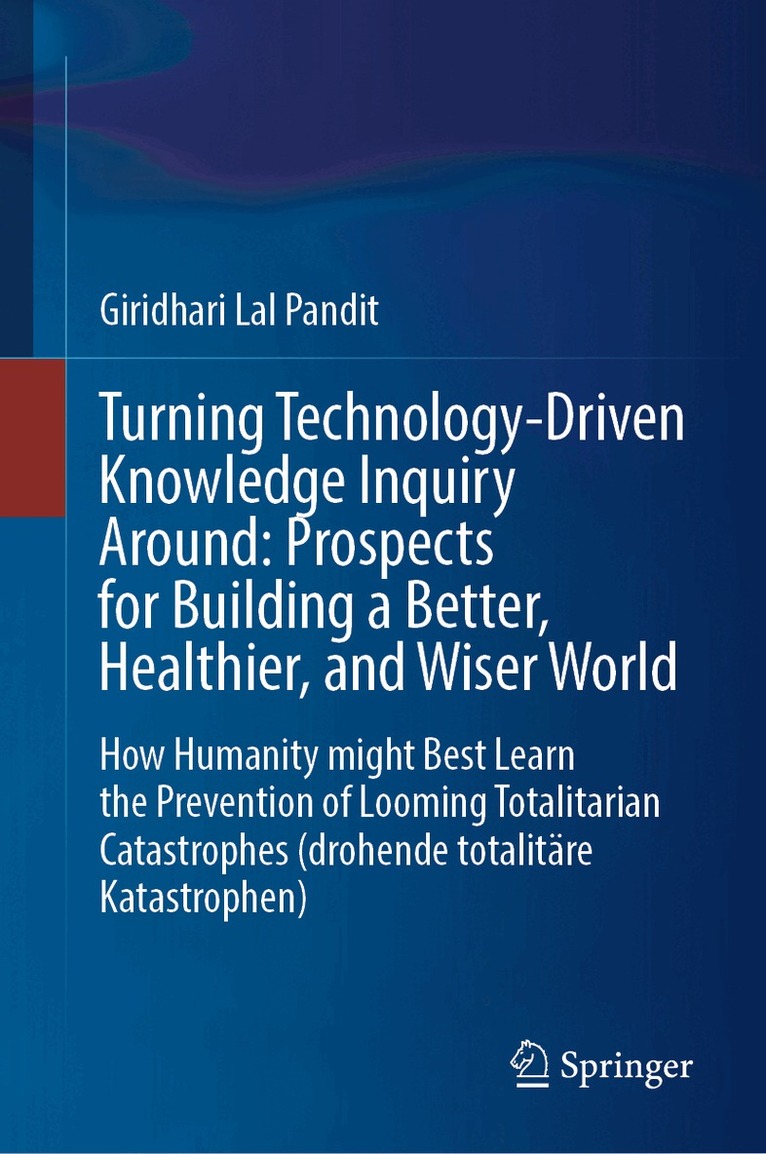
    Turning Technology-Driven Knowledge Inquiry Around: Prospects for Building a Better, Healthier, and Wiser World

    How Humanity might Best Learn the Prevention of Looming Totalitarian Catastrophes (drohende totalitäre Katastrophen)

    AvGiridhari Lal Pandit

    Inbunden, Engelska, 2026

    1 461 kr

    Beställningsvara. Skickas inom 11-20 vardagar. Fri frakt över 249 kr.

    Beskrivning

    This book proposes ecology of wisdom as a new field of study and interdisciplinary research, with Institutional Wisdom-in-Design at its core. It examines how Institutional Wisdom-in-Design can be identified, developed, and applied to transform global institutions, from schools and universities to research laboratories and international organizations. Through a methodologically structured exploration across a preface, an acknowledgement, an abstract, an introduction, fourteen chapters, and an epilogue, it introduces a unifying methodological framework to address new frontiers of institutional and interdisciplinary inquiry. Central themes in focus include an Institutional Copernican Revolution for academic and international bodies; the World-5 of Methodology of Wis-Design Improvement Science as a foundation for advancing moral progress in education, healthcare, and human rights; and Culture of Wisdom Inquiry driven science and technology to address global challenges. The volume develops a theory of Knowledge Resources Dynamics across the sciences and humanities, focused on human well-being interests in terms of Planetary Imperatives of Inclusive Sustainable Development. By linking Institutional Wisdom-in-Design with human well-being, it articulates a framework for rethinking the role of institutions in securing brighter prospects for humanity’s future. Because ecological human well-being interests are seriously undermined by the unending race for competitive war-industries capable of proliferating “nuclear weapons bazaars” globally, it envisages a world-order which can free humanity from making new types of dangerous weapons, from investing in the proliferation of nuclear weapons, and from the looming totalitarian catastrophes such as a nuclear war.

    Produktinformation

    • Utgivningsdatum:2026-08-16
    • Mått:155 x 235 x undefined mm
    • Format:Inbunden
    • Språk:Engelska
    • Antal sidor:477
    • Förlag:Springer Nature Switzerland AG
    • ISBN:9783032175014

    Utforska kategorier

    • Medicinsk etik och läkaretik inom Medicin
    • Naturvetenskapens filosofi inom Naturvetenskap och teknik
    • Naturvetenskapens historia inom Naturvetenskap och teknik

    Mer om författaren

    Born in the village Saelia (Saely, in Kashmiri), Anantnag, South of Kashmir Valley, on the 27th May 1945, Giridhari Lal Pandit received his school education at the Government High School Doru, Anantnag, Kashmir University, Srinagar, studying Mathematics, Sanskrit, History, Geography and Hindi (1949-1959). At the Government Intermediate College Anantnag, Kashmir University, Srinagar he studied Mathematics, Economics, English Literature, Hindi, and Sanskrit (1959-1961). He then studied Economics, Philosophy, Psychology, Ethics, Hindi and English Literature at the Government Sri Pratap College Srinagar, Kashmir (1961-1963), earning a B. A. Degree in 1963. In July 1963, Giridhari Lal Pandit was admitted by the University of Lucknow, Uttar Pradesh, as a student of M.A. (Philosophy) in the Department of Philosophy and Psychology. In 1965, Pandit was awarded “Dr. Cameron Devi Dayal Misra Gold Medal” by the University of Lucknow in recognition of his earning the M. A. Degree in Philosophy with distinction, securing the First Position in order of merit. In November 1965, Giridhari Lal Pandit was awarded a Doctoral Fellowship at the world-famous Central University of Visva--Bharati, Santiniketan, Bolpur, West Bengal, founded by the poet-seer Nobel Laureate Rabindranath Tagore in 1921. In 1972, Visva- Bharati awarded Giridhari Lal Pandit the Ph. D degree in Philosophy: Philosophy of Science, at its Annual Convocation that was presided over by the then Prime Minister of India, Mrs. Indira Gandhi in her capacity as the Chancellor (herself its former student).

    Innehållsförteckning

    • Preface.- Acknowledgements.- Declarations.- Abstract.- Introduction.- Chapter1. Core-Contextual Methodological Structuralism: Rationality of Methodological Variance in the Sciences, Humanities and Beyond.- Chapter 2. Epistemological Ontology, Methodology of Science, and Rationality of Scientific Change: Lessons from Interface-Building Dynamic Turn in the Theories of Ernst Cassirer and Karl R. Popper.- Chapter 3. From the Norm of Doubt to the Norm of Reason: World-3 of Core-Contexts and Frontiers of Theory Development.- Chapter 4. Methodology of Wis-Design-Improvement Science (MWISc): Prospects of a Moral Era in Education, Healthcare and Human Rights.- Chapter 5. Knowledge Environments for Knowledge Resources Dynamics.- Chapter 6. Rationality of Methodological Variance: Wisdom Inquiry, Education, and Technology?.- Chapter 7. How Vulnerable is Traditional Wisdom of Culture: Prolegomenon to a Culture of Wisdom Inquiry Driven World.- Chapter 8. Scenario-Building Problem-Solving Rationality of Wisdom Inquiry.- Chapter 9. Breaches in the Reach of Empowerment: When can we put a Final End to Collective Crimes Against Humanity?.- Chapter 10. Living Our Lives within the Ever-Widening Negative Externalities: Rethinking Development, Culture, and Ecology.- Chapter 11 Ecological Imperative of Environmental Nesting Type 2.- Chapter 12. Methodology of Wis-Design Improvement Science (MWDISc): Towards an Institutional Copernican Revolution.- Chapter 13. Models of Development within an Ecologically Challenged Finite Earth: Trade- Offs between Prosperity and Freedom.- Chapter 14. Ecological Environmental Realism: Planetary Imperatives of Inclusive Sustainable Development.- Epilogue: Wisdom without the Wise Subject: From the Methodology of Wis-Design Improvement Science to Institutional Copernican Revolution.