• Fri frakt över 249 kr
  • •
  • Snabba leveranser
  • •
  • Billiga böcker
Kundservice

Du är på sajten för privatpersoner.

Företag, bibliotek eller offentlig verksamhet?

Du handlar på classic.bokus.com, där alla dina funktioner finns intakta.
Till classic.bokus.com
Bokus logotyp. Gå till startsidan.
  • Erbjudanden
  • Nyheter
  • Student
  • Topplistor
  • Barn & ungdom
  • Bokus Play
  • E-böcker
  • Pocketböcker
  • Spel & pussel

10% rabatt på allt med kod: NYSTART10 →

Sidfot

Mina sidor

    Hjälp

    • Kundservice
    • Vanliga frågor och svar
    • Frakt och leverans
    • Retur vid ångerrätt
    • Reklamera vara
    • Betalning
    • Köpvillkor
    • Allmänna villkor
    • Information om webbplatsens tillgänglighet

    Om Bokus

    • Om oss
    • Pressrum
    • För studenter
    • För företag
    • För bibliotek och offentlig verksamhet
    • För leverantörer
    • Hållbarhet

    Populärt

    • Aktuella erbjudanden
    • Presentkort
    • Studentlitteratur
    • Nya böcker
    • Topplistor
    • Signerade böcker
    • Engelska böcker

    Inspiration

    • Boktips
    • BookTok
    • Populära bokserier
    • Barnbokskaraktärer
    • Populära författare
    Logotyp för Bokus
    Följ oss på Facebook (extern länk)Följ oss på Instagram (extern länk)Följ oss på YouTube (extern länk)Följ oss på TikTok (extern länk)
    bokus @ CookiesAnpassa cookiesIntegritetspolicyKöpvillkor
    Till Citymail hemsida (extern länk)Till Budbee hemsida (extern länk)Till Postnord hemsida (extern länk)Till Schenker hemsida (extern länk)Till Early Bird hemsida (extern länk)Till Walleys hemsida (extern länk)
    1. Kultur
    2. Konstböcker
    3. Konsthistoria
    • Nyhet

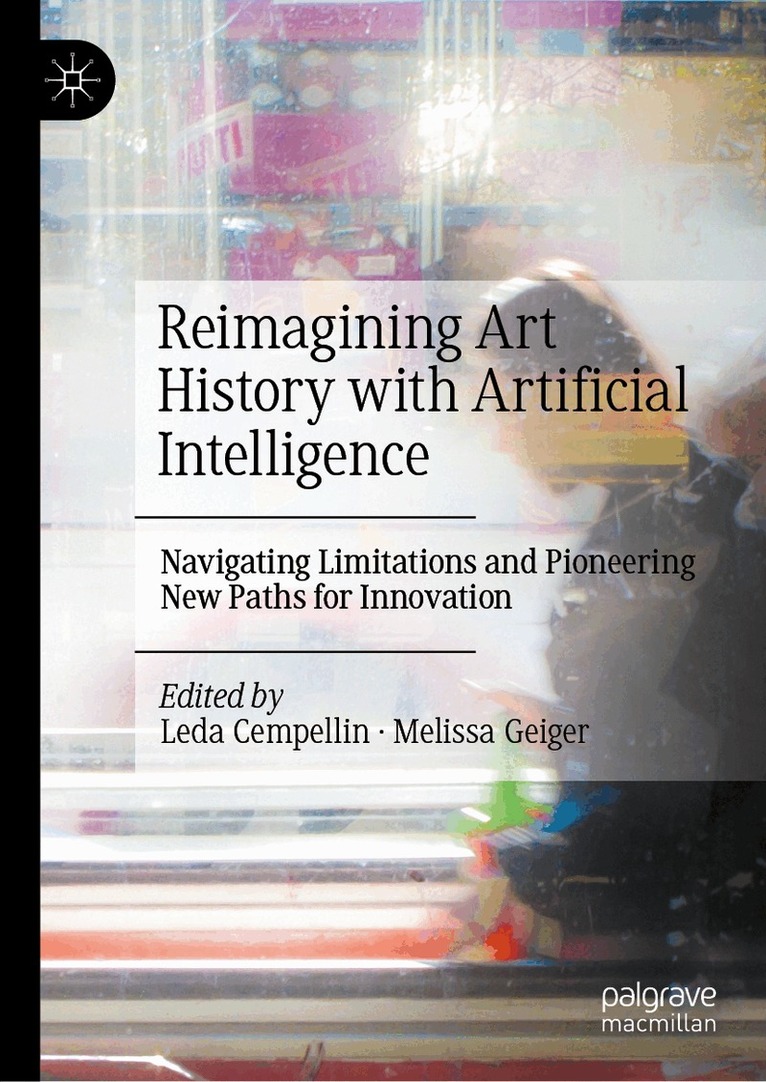
    Reimagining Art History with Artificial Intelligence

    Navigating Limitations and Pioneering New Paths for Innovation

    AvLeda Cempellin,Melissa Geiger

    Inbunden, Engelska, 2026

    1 673 kr

    Beställningsvara. Skickas inom 10-15 vardagar. Fri frakt över 249 kr.

    Beskrivning

    This anthology examines how AI and Art History intersect across research, museums, pedagogy, and global perspectives, revealing potential and limits in the interpretation of visual culture. Chapters explore new models for art, artificialism, deskilling, prosumption, AI‑generated imagery, and questions of sentience, alongside studio-sourced datasets and representational tools. Museum‑focused essays address AI’s catalogue raisonné, curating algorithms, and explainable AI, while teaching‑focused contributions analyze digital art history, computer vision, and Tree‑of‑Thought prompting. Global case studies consider the colonial gaze, information literacy, cultural constraints of text‑to‑image generation and text‑prompted image retrieval. The volume highlights Art History’s leadership guiding critical, ethical, empathetic AI uses.

    Produktinformation

    • Utgivningsdatum:2026-07-14
    • Mått:148 x 210 x 25 mm
    • Vikt:596 g
    • Format:Inbunden
    • Språk:Engelska
    • Antal sidor:346
    • Förlag:Springer Nature Switzerland AG
    • ISBN:9783032216847

    Utforska kategorier

    • Konsthistoria inom Kultur
    • Kulturvetenskap inom Samhälle och politik
    • Artificiell intelligens inom Data och IT

    Mer om författaren

    Leda Cempellin (PhD, Università degli Studi di Parma, Italy) is Professor of Art History at South Dakota State University, USA. Her interdisciplinary research spans late modernism, SoTL in Art History, Museum Studies, collaboration, metacognition, wayfinding, AI, and critical thinking. She is the author of The Ideas, Identity and Art of Daniel Spoerri (2017) and co‑editor of Museum Studies for a Post‑Pandemic World (2024), reflecting her focus on collaborative and transitional practices.Melissa Geiger is Associate Professor of Art History at East Stroudsburg University of Pennsylvania, USA. She studies major paradigm shifts in art, including the impact of photography and Rauschenberg’s Experiments in Art and Technology. Her interdisciplinary approach led to co‑founding the Paragone Society and co‑designing its inaugural conference in collaboration with the University of Michigan, Flint Art Department and the Flint Museum of Art. Geiger also curates exhibitions and engages in community‑based arts initiatives.

    Innehållsförteckning

    • Chapter 1: Introduction. Towards an Integrated Ecosystem: AI and Art History as a Synergic Professional Landscape across Research, Museums, Pedagogy, and Global Perspectives.- PART I: Reframing Art History: Theoretical and Aesthetic Foundations in the Age of AI.- Chapter 2: New Models for Art: AI as a Representational Tool.- Chapter 3: The Human Glitch or Artificialism.- Chapter 4: AI Art, Deskilling and Prosumption.- Chapter 5:Not Touched By Human Hands: Misattributed AI Sentience and the Power of Images.- Chapter6: AI Interventions with a Studio-Sourced Dataset.- PART II: When Art History Meets AI in Museum Practices.- Chapter 7 : AI’s Catalogue Raisonné: Co-Curatorial Approaches to Digital Documentation of Art Collections.- Chapter 8: Curating the Algorithm: An Educational Encounter with AI and Art Exhibitions.- Chapter 9: Recognition as an Epistemic Glass Box: Explainable AI in Museum Contexts.- PART III: AI-Enhanced Pedagogy: Transforming Art History Education.- Chapter 10: From Digital Art History to Artificial Intelligence.- Chapter 11: Computer Vision, Human Vision, and Future Visions: Lessons from AI in the Liberal Arts Classroom.- Chapter 12: Utilising Tree-of-Thought Prompting to Facilitate Self-Reflective Analysis in Undergraduate Media Studies Students.- PART IV: AI-Driven Imagery: Global Insights for the Responsible Advancement of Art History.- Chapter 13: AI and the Colonial Gaze.- Chapter 14: Contextual and Cultural Limitations of Text-to-Image Generators: The Case of East Asia.- Chapter 15: Contextual and Cultural Limitations of Text-to-Image Generators: The Case of East Asia.- Chapter 16: Generative AI for Image-based Academic Use: An LLM-supported Assignment for Information Literacy and Visual Analysis of Indigenous American Fibre Arts.- PART V: Conclusion.- Chapter 17: Looking Ahead: Art History’s Call for Ethical Uses of AI To Build a More Thoughtful, Empathetic, and Responsible Society.