• Fri frakt över 249 kr
  • •
  • Snabba leveranser
  • •
  • Billiga böcker
Kundservice

Du är på sajten för privatpersoner.

Företag, bibliotek eller offentlig verksamhet?

Du handlar på classic.bokus.com, där alla dina funktioner finns intakta.
Till classic.bokus.com
Bokus logotyp. Gå till startsidan.
  • Erbjudanden
  • Nyheter
  • Student
  • Topplistor
  • Barn & ungdom
  • Bokus Play
  • E-böcker
  • Pocketböcker
  • Spel & pussel

10% rabatt på allt med kod: NYSTART10 →

Sidfot

Mina sidor

    Hjälp

    • Kundservice
    • Vanliga frågor och svar
    • Frakt och leverans
    • Retur vid ångerrätt
    • Reklamera vara
    • Betalning
    • Köpvillkor
    • Allmänna villkor
    • Information om webbplatsens tillgänglighet

    Om Bokus

    • Om oss
    • Pressrum
    • För studenter
    • För företag
    • För bibliotek och offentlig verksamhet
    • För leverantörer
    • Hållbarhet

    Populärt

    • Aktuella erbjudanden
    • Presentkort
    • Studentlitteratur
    • Nya böcker
    • Topplistor
    • Signerade böcker
    • Engelska böcker

    Inspiration

    • Boktips
    • BookTok
    • Populära bokserier
    • Barnbokskaraktärer
    • Populära författare
    Logotyp för Bokus
    Följ oss på Facebook (extern länk)Följ oss på Instagram (extern länk)Följ oss på YouTube (extern länk)Följ oss på TikTok (extern länk)
    bokus @ CookiesAnpassa cookiesIntegritetspolicyKöpvillkor
    Till Citymail hemsida (extern länk)Till Budbee hemsida (extern länk)Till Postnord hemsida (extern länk)Till Schenker hemsida (extern länk)Till Early Bird hemsida (extern länk)Till Walleys hemsida (extern länk)
    1. Samhälle och politik
    2. Samhälle och kultur
    3. Kultur och medier
    4. Kulturvetenskap
    • Nyhet

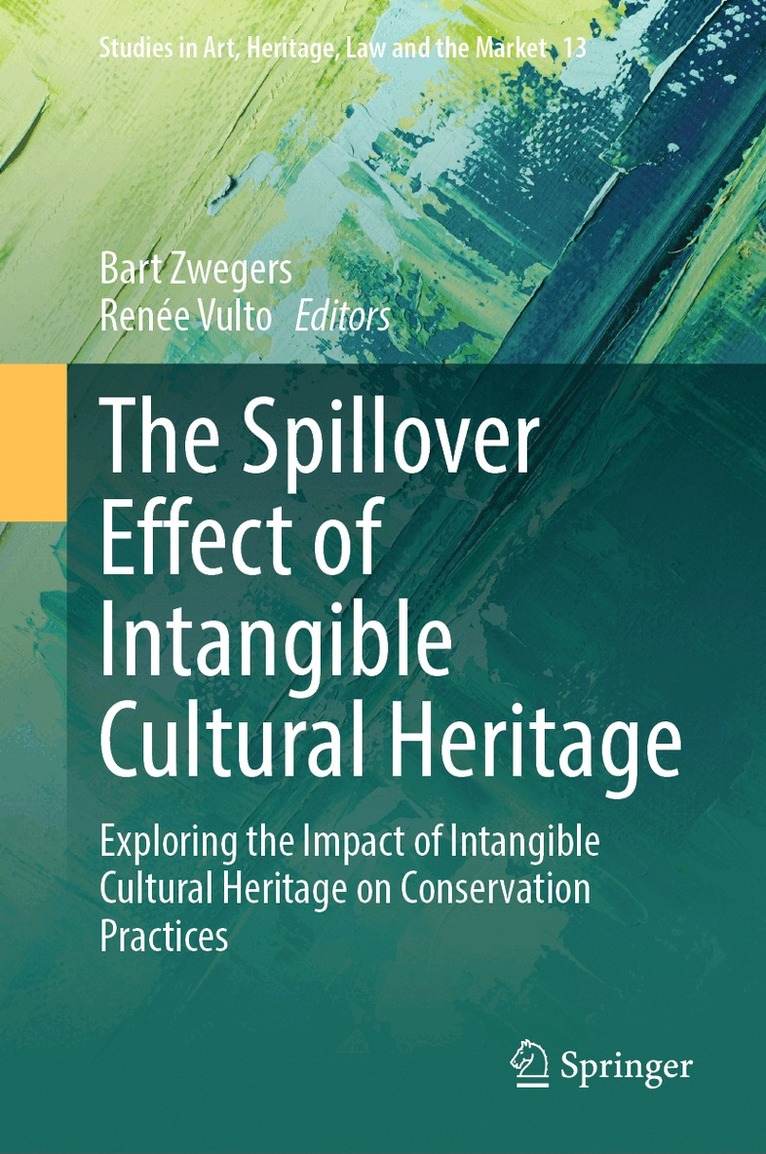
    Spillover Effect of Intangible Cultural Heritage

    Exploring the Impact of Intangible Cultural Heritage on Conservation Practices

    AvBart Zwegers,Renée Vulto

    Inbunden, Engelska, 2026

    Del 13 i serien Studies in Art, Heritage, Law and the Market

    1 785 kr

    Beställningsvara. Skickas inom 10-15 vardagar. Fri frakt över 249 kr.

    Beskrivning

    This edited volume examines the unforeseen effects of the notion of intangible heritage on conservation practices not only for urban contexts, but more generally for cultural practices. The notion of monumentality that UNESCO asserted focused on the material, tangible qualities of objects. It inevitably favoured European heritage sites and largely ignored forms of 'living' cultural heritage. This criticism not only came from scholars, but also from UNESCO member states from the Global South that addressed this omission and lobbied intensely for a more inclusive notion of World Heritage. One of the outcomes of these debates was the 2003 'Intangible Heritage Convention' – which was hoped to offer a remedy to the imbalanced global spread of World Heritage. Much academic research focuses on assessing whether or not the Convention indeed met its promises of broadening the heritage concept and ensuring a more even spread of World Heritage. Less attention has, however, been given to its unforeseen implications for contemporary heritage practices. By introducing less strict notions of authenticity, UNESCO and ICOMOS helped lay the conceptual grounds for many urban and industrial developments that it now resists. Urban planners, politicians and developers have used the notion of intangible cultural heritage to legitimize intrusive changes to historic urban landscapes or heritage sites. The introduction of the concept of intangible cultural heritage has thus not simply created ‘just another list’, but produced shifts in how we discuss, define and manage historic built environments in the 21st century.The chapters address the history of the ‘Intangible Heritage Convention', as well as its current uses in various contexts. The book includes both contributions that are theoretical in nature, as well as chapters that explore specific case studies. Key questions that the volume addresses include: How did the notion of heritage evolve to include cultural practices? What is the history of intangible heritage as concept and a practice? How did the notion of intangible heritage affect conservation philosophy and practice? How was the notion of intangible heritage criticized and by whom? How did the conservation philosophy evolve in relation to the notion of intangible heritage? And how do these issues influence views on and dealings with intangible heritage today?The book brings together different disciplinary and cultural perspectives from different parts of the globe. Contributing authors are based in Southern Africa, Europe, South Asia and North America. The book’s main audience includes academics interested in heritage and heritage practitioners.

    Produktinformation

    • Utgivningsdatum:2026-07-17
    • Mått:155 x 235 x 15 mm
    • Vikt:422 g
    • Format:Inbunden
    • Språk:Engelska
    • Serie:Studies in Art, Heritage, Law and the Market
    • Antal sidor:162
    • Förlag:Springer Nature Switzerland AG
    • ISBN:9783032253514

    Utforska kategorier

    • Kulturvetenskap inom Samhälle och politik
    • Juridik: metod och teori inom Juridik
    • Folkrätt inom Juridik

    Mer om författaren

    Dr. Bart Zwegers is a lecturer and heritage curator at Maastricht University. He has an educational background in arts and culture and science and technology studies. In 2022, Bart published the monograph Cultural Heritage in Transition with Springer. He teaches in the Bachelor Arts and Culture and the Master Arts and Heritage. He is also involved in various regional heritage organisations, including the working group on industrial heritage and the Royal Society for the History and Archaeology of Limburg. Bart's research focuses on UNESCO World Heritage, with a focus on its political and institution history.  As a curator, he also creates exhibition – particularly on academic heritage.Dr. Renée Vulto is Assistant Professor of Intangible Cultural Heritage in the cultural history department of Utrecht University. She has an background in musicology and literary studies. Renée teaches courses on media history, intangible heritage, and (post)colonial cultures in the BA programme History and the MA Cultural History and Heritage at UU, and regularly engages with other student groups, interdisciplinary academic audiences, and a broader public.

    Innehållsförteckning

    • Introduction: the Spillover Effect of Intangible Cultural Heritage.- Part I The Governance of Intangible Cultural Heritage.- A Fiddle for Everyone? Municipal Level Decision Making and the UNESCO Process in Kaustinen, Finland.- The Governance of Intangible Cultural Heritage: Practices, Stakeholders, and Masterpieces in Zimbabwe.- Part II Rethinking Craftsmanship, Restoration and Reconstruction.- The Relevance of Building Crafts for Cultural Heritage Conservation and the Quality of Life: Case Studies from Egypt.- From CNC Machine to Chisel: Balancing (3D) Technology and Craftsmanship in the Restoration of Notre Dame, Dom Tower, and Grote Kerk.- The Reconstruction of Kāṣthaṃaṇdap: As Seen Through its Intangible Ritual Practices.- Part III New and Future Uses of Intangible Cultural Heritage.- Reframing Museum Practice: the ICHC’s Impact on Museums.- Learning from Intangible Cultural Heritage in Times of Climate Change.