• Fri frakt över 249 kr
  • •
  • Snabba leveranser
  • •
  • Billiga böcker
Kundservice

Du är på sajten för privatpersoner.

Företag, bibliotek eller offentlig verksamhet?

Du handlar på classic.bokus.com, där alla dina funktioner finns intakta.
Till classic.bokus.com
Bokus logotyp. Gå till startsidan.
  • Erbjudanden
  • Student
  • Topplistor
  • Barn & ungdom
  • Bokus Play
  • E-böcker
  • Ljudböcker
  • Pocketböcker
  • Spel & pussel

Upp till 25% på utvalda nyheter →

Sidfot

Mina sidor

    Hjälp

    • Kundservice
    • Vanliga frågor och svar
    • Frakt och leverans
    • Retur vid ångerrätt
    • Reklamera vara
    • Betalning
    • Köpvillkor
    • Allmänna villkor
    • Information om webbplatsens tillgänglighet

    Om Bokus

    • Om oss
    • Pressrum
    • För studenter
    • För företag
    • För bibliotek och offentlig verksamhet
    • För leverantörer
    • Hållbarhet

    Populärt

    • Aktuella erbjudanden
    • Presentkort
    • Studentlitteratur
    • Nya böcker
    • Topplistor
    • Signerade böcker
    • Engelska böcker

    Inspiration

    • Boktips
    • BookTok
    • Populära bokserier
    • Barnbokskaraktärer
    • Populära författare
    Logotyp för Bokus
    Följ oss på Facebook (extern länk)Följ oss på Instagram (extern länk)Följ oss på YouTube (extern länk)Följ oss på TikTok (extern länk)
    bokus @ CookiesAnpassa cookiesIntegritetspolicyKöpvillkor
    Till Citymail hemsida (extern länk)Till Budbee hemsida (extern länk)Till Postnord hemsida (extern länk)Till Schenker hemsida (extern länk)Till Early Bird hemsida (extern länk)Till Walleys hemsida (extern länk)
    1. Samhälle och politik
    2. Samhälle och kultur
    3. Kultur och medier
    4. Kulturvetenskap

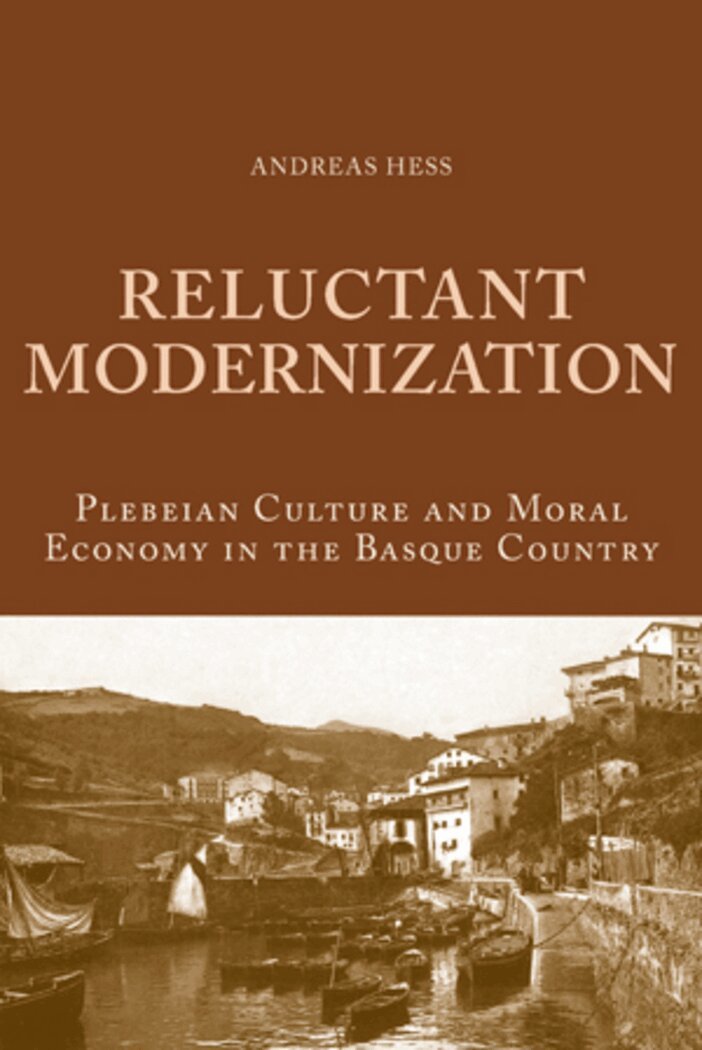
    Reluctant Modernization

    Plebeian Culture and Moral Economy in the Basque Country

    AvAndreas Hess

    Häftad, Engelska, 2009

    464 kr

    Tillfälligt slut

    Beskrivning

    Three institutions that are of particular importance to Basque history and culture form the main subject of this book: the baserria (the Basque farmstead), the cofradía (the fraternity of fishermen) and the txoko (gastronomic society). In this study the three institutions are seen as windows; once we look through these windows, we get an opportunity to see the larger picture – namely the structural components of a rich plebeian culture and moral economy. While the investigation of baserri culture provides insights into Basque rural life and the radical changes that occurred with industrialization, the cofradía allows the reader to see the connection that the Basque Country has with the sea. The third institution, the txoko or sociedad gastronómica, represents a more recent and urban phenomenon and reflects an effort to come to terms with urbanization and the anonymous forms of modern life. The book closes with some reflections on cultures that have been somewhat reluctant to modernize.

    Produktinformation

    • Utgivningsdatum:2009-06-10
    • Mått:150 x 220 x 14 mm
    • Vikt:300 g
    • Format:Häftad
    • Språk:Engelska
    • Antal sidor:199
    • Förlag:Verlag Peter Lang
    • ISBN:9783039119080

    Utforska kategorier

    • Kulturvetenskap inom Samhälle och politik
    • Referensverk och tvärvetenskap inom Samhälle och politik
    • Sociala och etiska frågor inom Samhälle och politik

    Mer om författaren

    The Author: Andreas Hess teaches sociology at University College Dublin. His main publications include the authored books American Social and Political Thought: A Concise Introduction (2000) and Concepts of Social Stratification: European and American Models (2001); and the edited books American Social and Political Thought: A Reader (2003) and (with Christian Fleck and E. Stina Lyon) Intellectuals and their Publics: Perspectives from the Social Sciences (2009).

    Recensioner i media

    «Andreas Hess examines the ritualized contexts in which a culture shapes people’s basic definitions of lifestyle, identity and social allegiance. What sets apart this work is the combination of an almost ethnographic description of the Basque cultural institutions … and the proposal for a paradigm change in the study of current Basque issues by grounding the analysis squarely on political economy. The results go well beyond the Basque case.» (Professor Joseba Zulaika, Center for Basque Studies, University of Nevada)

    Innehållsförteckning

    • Contents: Introduction: From the Critique of Basque Egalitarianism to an Understanding of Reluctant Modernization – ‘Defending the Home’: Moral Economy in the Rural Environment: The Baserria: A ‘Total Institution’ in Historical Perspective - Function and Crisis of the Traditional Baserria - Reluctant Modernization I: The Baserria as an ‘Exit’ Model of Moral Economy – ‘Working the Waves’: The Brotherhood of Fishermen and Moral Economy: The Sea and the Harbour: A Short History of the Cofradía - Function and Crisis of the Cofradía - Reluctant Modernization II: The Cofradía as an Attempt to Facilitate ‘Voice’ – ‘The Social Bonds of Cooking’: Gastronomic Societies and Moral Economy: Origins, Historical Development and Geographical Distribution of the Txoko - Formal Organization, Social Context and Function of the Txoko - Between Homogenization and Differentiation: Basque Cooking and Culinary Culture - Reluctant Modernization III: ‘Commensality’, ‘Loyalty’ and Urban Forms of Life – Conclusion: Reluctant Modernization, Plebeian Culture and Moral Economy in the Basque Country.