• Fri frakt över 249 kr
  • •
  • Snabba leveranser
  • •
  • Billiga böcker
Kundservice

Du är på sajten för privatpersoner.

Företag, bibliotek eller offentlig verksamhet?

Du handlar på classic.bokus.com, där alla dina funktioner finns intakta.
Till classic.bokus.com
Bokus logotyp. Gå till startsidan.
  • Erbjudanden
  • Nyheter
  • Student
  • Topplistor
  • Barn & ungdom
  • Bokus Play
  • E-böcker
  • Pocketböcker
  • Spel & pussel

10% rabatt på allt med kod: NYSTART10 →

Sidfot

Mina sidor

    Hjälp

    • Kundservice
    • Vanliga frågor och svar
    • Frakt och leverans
    • Retur vid ångerrätt
    • Reklamera vara
    • Betalning
    • Köpvillkor
    • Allmänna villkor
    • Information om webbplatsens tillgänglighet

    Om Bokus

    • Om oss
    • Pressrum
    • För studenter
    • För företag
    • För bibliotek och offentlig verksamhet
    • För leverantörer
    • Hållbarhet

    Populärt

    • Aktuella erbjudanden
    • Presentkort
    • Studentlitteratur
    • Nya böcker
    • Topplistor
    • Signerade böcker
    • Engelska böcker

    Inspiration

    • Boktips
    • BookTok
    • Populära bokserier
    • Barnbokskaraktärer
    • Populära författare
    Logotyp för Bokus
    Följ oss på Facebook (extern länk)Följ oss på Instagram (extern länk)Följ oss på YouTube (extern länk)Följ oss på TikTok (extern länk)
    bokus @ CookiesAnpassa cookiesIntegritetspolicyKöpvillkor
    Till Citymail hemsida (extern länk)Till Budbee hemsida (extern länk)Till Postnord hemsida (extern länk)Till Schenker hemsida (extern länk)Till Early Bird hemsida (extern länk)Till Walleys hemsida (extern länk)
    1. Filosofi och religion
    2. Religion och tro
    3. Kristendom
    4. Biblar

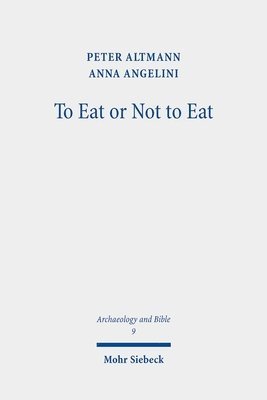
    To Eat or Not to Eat

    Studies on the Biblical Dietary Prohibitions

    AvPeter Altmann,Anna Angelini

    Häftad, Engelska, 2024

    Del 9 i serien Archaeology and Bible

    1 714 kr

    Beställningsvara. Skickas inom 5-8 vardagar. Fri frakt över 249 kr.

    Beskrivning

    Anna Angelini und Peter Altmann befassen sich mit zentralen Fragen zu den biblischen Speisegeboten und ihrer Bedeutung als Praktiken und Texte durch philologische, zooarchäologische, ikonografische und vergleichende altorientalische und griechisch-römische Perspektiven. Dabei untersuchen sie theoretische Rahmen, die in der modernen Auslegung verwendet werden, mögliche Ursprünge in Bezug auf die altisraelitische Religion und Gesellschaft, sowie die Verortung in Bezug auf die priesterliche Terminologie und die deuteronomische Tradition. Sie weiten den Untersuchungsbogen auf die Rezeption der Verbote des Zweiten Tempels sowohl in den Schriftrollen vom Toten Meer als auch in den griechisch-römischen Diskursen der ersten Jahrhunderte nach Christus aus. Mit ihren grundlegenden Studien liefern sie eine Annäherung an die Speisegebote, die den Weg für die Rekonstruktion ihres Entwicklungsweges in ihre heutigen Kontexte öffnet.

    Produktinformation

    • Utgivningsdatum:2024-08-20
    • Mått:156 x 232 x 17 mm
    • Vikt:467 g
    • Format:Häftad
    • Språk:Engelska
    • Serie:Archaeology and Bible
    • Antal sidor:305
    • Förlag:Mohr Siebeck
    • ISBN:9783161636578

    Utforska kategorier

    • Biblar inom Filosofi och religion
    • Religion: allmänt inom Filosofi och religion
    • Litteraturvetenskap inom Skönlitteratur

    Mer om författaren

    Peter Altmann (Von (Autor)) Born 1974; 2004 ThM and 2010 PhD in Old Testament, Princeton Theological Seminary; 2016 Habilitation, University of Zurich; 2008-23 Senior Researcher & Teaching Fellow, University of Zurich; currently David Allan Hubbard Associate Professor of Old Testament Fuller Theological Seminary.Anna Angelini (Von (Autor)) Born 1979; 2008 PhD Anthropology of the Ancient World, University of Siena; 2013-19 Senior Researcher and Teaching Fellow University of Lausanne; 2020-2024 Senior Researcher University of Zurich; currently Assistant Professor in Greek Language and Literature at the University of Siena.

    Innehållsförteckning

    • Preface1. The Dietary Laws of Lev 11 and Deut 14: Introducing Their Ancient and Scholarly Contexts (Peter Altmann and Anna Angelini)1. A Methodological View of the History of Scholarship2. Human-Animal Relationships in Ancient Israel3. The Hebrew Bible Context of Food and Drink Restrictions4. Biblical Treatments of Meat Prohibitions5. Questions for this Volume6. Widening Horizons2. Framing the Questions: Some Theoretical Frameworks for the Biblical Dietary Prohibitions (Peter Altmann)1. Anthropological Terminology2. Psychological Explanations3. Materialist Explanations4. Douglas and Other Structuralist Approaches to "Dirt" as Structural Anomaly5. Synthesis3. Traditions and Texts: The "Origins" of the Dietary Prohibitions of Lev 11 and Deut 14 (Peter Altmann)1. Composition-Critical Concerns2. Continuum: From "Sanctuary Ritual" to "Mundane Custom"3. Mundane Customary Origins?4. Sanctuary Ritual Origins?5. The Influence of Household or Local Religion?6. Ritual Practice and Ritual Text7. Conclusions and a Possible Reconstruction4. A Deeper Look at Deut 14:4-20 in the Context of Deuteronomy (Peter Altmann)1. The Language of Deut 14:1-2, 3, 21 and 4-202. Abomination and Impurity in Deut 14 and Elsewhere in Deuteronomy3. Mourning Rituals in 14:1-2 and their Link to vv. 3, 4-204. "You Are Children, Belonging to Yhwh Your God"5. A Holy People and Treasured Nation: Deut 7:6; 14:2, 21; 26:186. The Relationship between Deut 14 and 26:12-15, 16-197. The Stipulations of Deut 14:21 in the context of Deut 148. Eating in Deut 14:1-21 in the Context of Deuteronomy 13 and 14:22-279. Summary5. The Terms שׁקץ Šeqeṣ and טמא Ṭame' in Lev 11:2-23 and Deut 14:2-20: Overlapping or Separate Categories? (Peter Altmann)1. The Usage of שׁקץ and טמא in the Rest of the Hebrew Bible and Their Relevance for Lev 11/Deut 142. The Usage of טמא3. The Terms in Deut 14 and Lev 114. Conclusion6. Aquatic Creatures in the Dietary Laws: What the Biblical and Ancient Eastern Contexts Contribute to Understanding Their Categorization (Peter Altmann)1. Water Creatures from Iconography and Texts of Surrounding Regions2. Water Creatures in Levantine Zooarchaeology and Evidence of Consumption in Biblical Texts3. Sea Creatures in the Bible4. Discussion of the Texts of Lev 11:9-12 and Deut 14:9-105. Reasons for the Prohibition?6. Conclusions7. A Table for Fortune: Abominable Food and Forbidden Cults in Isaiah 65-66 (Anna Angelini)1. Introduction: Dietary Laws outside the Pentateuch and Isa 65-662. The References to Food in the Structure of Isa 65-663. Abominable Cults between Imagery and Practice4. The Pig: A Marker for Impurity5. The Greek Text: Sacrificing to Demons6. Summary and Conclusions8. Dietary Laws in the Second Temple Period: The Evidence from the Dead Sea Scrolls (Anna Angelini)1. Introduction: Food in Dead Sea Scrolls and Biblical Law2. Methodological Remarks3. Main Tendencies in the Dead Sea Scroll Materials Related to Food Laws4. Animals and the Purity of the Temple5. Summary and Conclusions: Food Laws between Discourse and Practice9. Looking from the Outside: The Greco-Roman Discourse on the Jewish Food Prohibitions in the First and Second Centuries CE (Anna Angelini)1. Introduction: The Origins of the Greek and Roman Traditions about Food Prohibitions2. The Greek and Latin Witnesses on Jewish Food Prohibitions in the First Century CE3. The Polemic Use of Jewish Dietary Prohibitions in Juvenal and Tacitus4. Plutarch and The Philosophical Tradition5. ConclusionsAppendix: Plutarch's Moralia, Table Talk IV, Question 5 (669 e-671c)10. "Thinking" and "Performing" Dietary Prohibitions: Why Should One Keep Them? One Meaning or Many? (Peter Altmann)1. Introduction2. (Envisioned) Practice and Significance and the Myth of the Singular Explanation3. Knowing How and When vs. Knowing Why