• Fri frakt över 249 kr
  • •
  • Snabba leveranser
  • •
  • Billiga böcker
Kundservice

Du är på sajten för privatpersoner.

Företag, bibliotek eller offentlig verksamhet?

Du handlar på classic.bokus.com, där alla dina funktioner finns intakta.
Till classic.bokus.com
Bokus logotyp. Gå till startsidan.
  • Erbjudanden
  • Nyheter
  • Student
  • Topplistor
  • Barn & ungdom
  • Bokus Play
  • E-böcker
  • Pocketböcker
  • Spel & pussel

10% rabatt på allt med kod: NYSTART10 →

Sidfot

Mina sidor

    Hjälp

    • Kundservice
    • Vanliga frågor och svar
    • Frakt och leverans
    • Retur vid ångerrätt
    • Reklamera vara
    • Betalning
    • Köpvillkor
    • Allmänna villkor
    • Information om webbplatsens tillgänglighet

    Om Bokus

    • Om oss
    • Pressrum
    • För studenter
    • För företag
    • För bibliotek och offentlig verksamhet
    • För leverantörer
    • Hållbarhet

    Populärt

    • Aktuella erbjudanden
    • Presentkort
    • Studentlitteratur
    • Nya böcker
    • Topplistor
    • Signerade böcker
    • Engelska böcker

    Inspiration

    • Boktips
    • BookTok
    • Populära bokserier
    • Barnbokskaraktärer
    • Populära författare
    Logotyp för Bokus
    Följ oss på Facebook (extern länk)Följ oss på Instagram (extern länk)Följ oss på YouTube (extern länk)Följ oss på TikTok (extern länk)
    bokus @ CookiesAnpassa cookiesIntegritetspolicyKöpvillkor
    Till Citymail hemsida (extern länk)Till Budbee hemsida (extern länk)Till Postnord hemsida (extern länk)Till Schenker hemsida (extern länk)Till Early Bird hemsida (extern länk)Till Walleys hemsida (extern länk)
    1. Psykologi och pedagogik
    2. Pedagogik
    3. Högskola och universitet
    4. Lärarutbildning

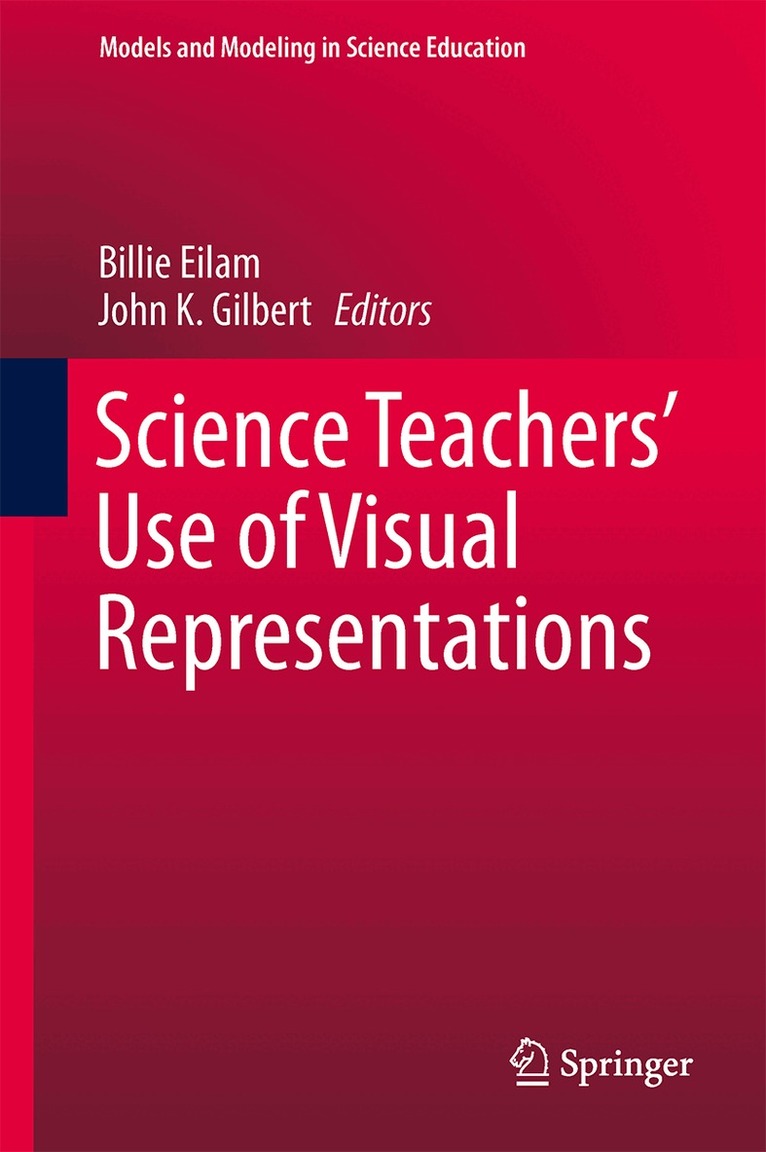
    Science Teachers’ Use of Visual Representations

    AvBillie Eilam,John K. Gilbert

    Inbunden, Engelska, 2014

    Del 8 i serien Models and Modeling in Science Education

    1 056 kr

    Beställningsvara. Skickas inom 10-15 vardagar. Fri frakt över 249 kr.

    Beskrivning

    This book examines the diverse use of visual representations by teachers in the science classroom. It contains unique pedagogies related to the use of visualization, presents original curriculum materials as well as explores future possibilities.The book begins by looking at the significance of visual representations in the teaching of science. It then goes on to detail two recent innovations in the field: simulations and slowmation, a process of explicit visualization. It also evaluates the way teachers have used different diagrams to illustrate concepts in biology and chemistry.Next, the book explores the use of visual representations in culturally diverse classrooms, including the implication of culture for teachers’ use of representations, the crucial importance of language in the design and use of visualizations and visualizations in popular books about chemistry. It also shows the place of visualizations in the growing use of informal, self-directed science education.Overall, the book concludes that if the potential of visualizations in science education is to be realized in the future, the subject must be included in both pre-service and in-service teacher education. It explores ways to develop science teachers’ representational competence and details the impact that this will have on their teaching.The worldwide trend towards providing science education for all, coupled with the increased availability of color printing, access to personal computers and projection facilities, has lead to a more extensive and diverse use of visual representations in the classroom. This book offers unique insights into the relationship between visual representations and science education, making it an ideal resource for educators as well as researchers in science education, visualization and pedagogy.

    Produktinformation

    • Utgivningsdatum:2014-07-24
    • Mått:155 x 235 x 24 mm
    • Vikt:660 g
    • Format:Inbunden
    • Språk:Engelska
    • Serie:Models and Modeling in Science Education
    • Antal sidor:338
    • Upplaga:2014
    • Förlag:Springer International Publishing AG
    • ISBN:9783319065250

    Utforska kategorier

    • Lärarutbildning inom Psykologi och pedagogik
    • Pedagogisk metodik inom Psykologi och pedagogik

    Innehållsförteckning

    • Section A: Research into teaching with visual representations.- Introduction.- Chapter 1 : The significance of visual representations in the teaching of science, B. Eilam, J.K. Gilbert.- Chapter 2 : Teaching and researching visual representations: Shared vision or divided world? S. Ainsworth & L. Newton.- Section B: Teachers’ selections, constructions and use of visual representations.- Introduction.- Chapter 3 : Representing visually: What teachers know and what they prefer, B. Eilam, Y. Poyas, R. Hasimshoni.- Chapter 4 : Slowmation: A process of explicit visualisation, J. Loughran.- Chapter 5 : Secondary biology teachers’ use of different types of diagrams for different purposes, Y. Liu, M. Won, D.F. Treagust.- Chapter 6 : Teaching stoichiometry with particulate diagrams – linking macro phenomena and chemical equations, M.W. Cheng, J.K. Gilbert.- Section C: Teachers’ use of visual representations in culturally-diverse classrooms.- Introduction.- Chapter 7 : Thoughts on visualizations in diverse cultural settings: The case of France and Pakistan, E. De Vries, M. Ashraf.- Chapter 8 : The implication of culture for teachers’ use of representations, B. Waldrip, S. Satupo, F. Rodie.- Chapter 9 : The interplay between language and visualization: The role of the teacher, L. Mammino.- Chapter 10: Visualizations in popular books about chemistry, J.K. Gilbert, A. Afonso.- Section D: Teachers’ supporting student learning from visual representations.- Introduction.- Chapter 11 : Teachers using interactive simulations to scaffold inquiry instruction in physical science education, D. Geelan, X.Fan.- Chapter 12: Transformed instruction: Teaching in a student-generated representations learning environment, O. Parnafes, R. Trachtenberg-Maslaton.- Chapter 13: The laboratory for making things: Developing multiple representations of knowledge, J. Bamberger.- Section E: Overview.- Chapter 14: Developing science teachers’ representational competence and itsimpact on their teaching, J.K.Gilbert, B. Eilam.