• Fri frakt över 249 kr
  • •
  • Snabba leveranser
  • •
  • Billiga böcker
Kundservice

Du är på sajten för privatpersoner.

Företag, bibliotek eller offentlig verksamhet?

Du handlar på classic.bokus.com, där alla dina funktioner finns intakta.
Till classic.bokus.com
Bokus logotyp. Gå till startsidan.
  • Erbjudanden
  • Nyheter
  • Student
  • Topplistor
  • Barn & ungdom
  • Bokus Play
  • E-böcker
  • Pocketböcker
  • Spel & pussel

10% rabatt på allt med kod: NYSTART10 →

Sidfot

Mina sidor

    Hjälp

    • Kundservice
    • Vanliga frågor och svar
    • Frakt och leverans
    • Retur vid ångerrätt
    • Reklamera vara
    • Betalning
    • Köpvillkor
    • Allmänna villkor
    • Information om webbplatsens tillgänglighet

    Om Bokus

    • Om oss
    • Pressrum
    • För studenter
    • För företag
    • För bibliotek och offentlig verksamhet
    • För leverantörer
    • Hållbarhet

    Populärt

    • Aktuella erbjudanden
    • Presentkort
    • Studentlitteratur
    • Nya böcker
    • Topplistor
    • Signerade böcker
    • Engelska böcker

    Inspiration

    • Boktips
    • BookTok
    • Populära bokserier
    • Barnbokskaraktärer
    • Populära författare
    Logotyp för Bokus
    Följ oss på Facebook (extern länk)Följ oss på Instagram (extern länk)Följ oss på YouTube (extern länk)Följ oss på TikTok (extern länk)
    bokus @ CookiesAnpassa cookiesIntegritetspolicyKöpvillkor
    Till Citymail hemsida (extern länk)Till Budbee hemsida (extern länk)Till Postnord hemsida (extern länk)Till Schenker hemsida (extern länk)Till Early Bird hemsida (extern länk)Till Walleys hemsida (extern länk)
    1. Ekonomi och Ledarskap
    2. Nationalekonomi
    3. Mikroekonomi

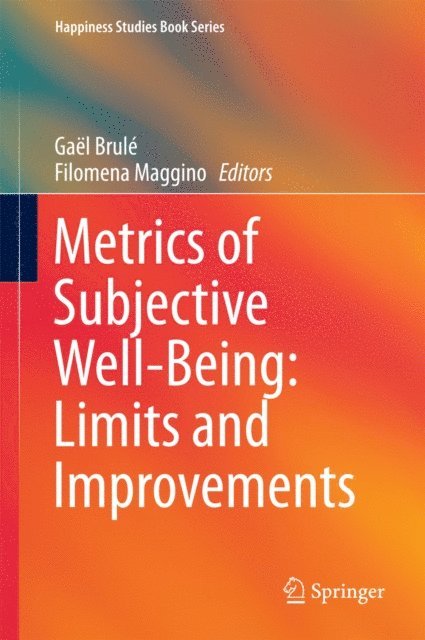
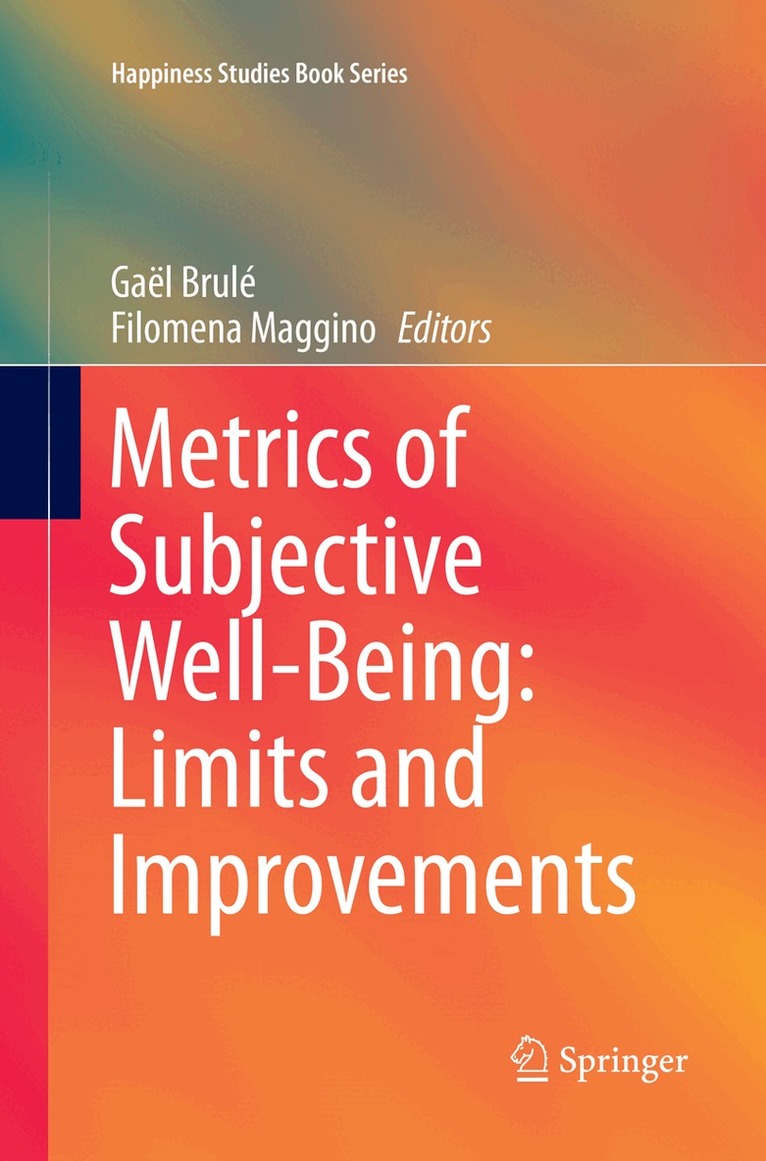
    Metrics of Subjective Well-Being: Limits and Improvements

    AvGaël Brulé,Filomena Maggino

    Inbunden, Engelska, 2017

    Del i serien Happiness Studies Book Series

    1 452 kr

    Beställningsvara. Skickas inom 10-15 vardagar. Fri frakt över 249 kr.

    Beskrivning

    This volume analyses the quantification of the effect of factors measuring subjective well-being, and in particular on the metrics applied. With happiness studies flourishing over the last decades, both in number of publications as well as in their exposure, researchers working in this field are aware of potential weaknesses and pitfalls of these metrics. Contributors to this volume reflect on different factors influencing quantification, such as scale size, wording, language, biases, and cultural comparability in order to raise awareness on the tools and on their conditions of use.

    Produktinformation

    • Utgivningsdatum:2017-08-09
    • Mått:155 x 235 x 21 mm
    • Vikt:582 g
    • Format:Inbunden
    • Språk:Engelska
    • Serie:Happiness Studies Book Series
    • Antal sidor:264
    • Upplaga:17001
    • Förlag:Springer International Publishing AG
    • ISBN:9783319618098

    Utforska kategorier

    • Mikroekonomi inom Ekonomi och Ledarskap
    • Sociologi inom Samhälle och politik
    • Folkhälsa och hälsopedagogik inom Medicin

    Mer om författaren

    Gaël Brulé(PhD) is a post-doc researcher in happiness studies at Erasmus University of Rotterdam. His areas of expertise are cross-national and cross-cultural comparison and comparability of happiness. Filomena Maggino is professor of Social Statistics at the University of Florence (Italy) and chief of the Laboratory of Statistics for Research in Social and Educational field. In the field of statistics applied to social research, her twenty-year research covers mainly data (i) production (with particular reference to subjective data assessment), (ii) analysis (with particular reference to multivariate analysis, scaling models and composite indicator construction), and presentation and dissemination (with particular reference to defining a model aimed at assessing the quality of communication in statistics). Her research interests aim at seeing these topics in the perspective of quality of life assessment.

    Innehållsförteckning

    • Chapter 1. Towards more complexity in subjective well-being studies; Gaël Brulé and Filomena Maggino.- Part I. Conceptual Issues.- Chapter 2. Can Good Life Be Measured? The dimensions and measurability of a life worth living; Frank Martela.- Chapter 3. The Subjective Object of Well-Being Studies. Well-being as the experience of being well; Mariano Rojas.- Part II.- Measurement issues.- Chapter 4. Measures of Happiness: Which to choose?; Ruut Veenhoven.- Chapter 5. Explaining the decline in subjective well-being over time in panel data; Katia Iglesias, Pascale Gazareth and Christian Suter.- Chapter 6. Reducing current limitations in order to enhance the quality of subjective well-being research: the example of mindfulness; Rebecca Shankland, Ilios Kotsou, Caroline Cuny, Lionel Strub, and Nicholas J. L. Brown.- Chapter 7. Measuring indecision in happiness studies; Stefania Capecchi.- Part III.- Comparability issues.- Chapter 8. Evaluating comparability of survey data on subjective wellbeing data; Inga Kristoffersen.-  Chapter 9. Label scale and rating scale in subjective well-being measurement; Ester Macri.- Part IV.- Possible improvements of the measurability of subjective well-being.- Chapter 10. Culture and Well Being: A Research Agenda Designed to Improve Cross-Cultural Research Involving the Life Satisfaction Construct; Dong-Jin Lee, Grace B. Yu and Joseph Sirgy.- Chapter 11. A Reconsideration of the Easterlin Happiness-Income Paradox; Kenneth Land, Vicki Lamb & Xiaolu Zang.- Chapter 12. Methods to Increase the Comparability in Cross-National Surveys, Highlight on the Scale Interval Method and the Reference Distribution Method; Tineke de Jonge.