• Fri frakt över 249 kr
  • •
  • Snabba leveranser
  • •
  • Billiga böcker
Kundservice

Du är på sajten för privatpersoner.

Företag, bibliotek eller offentlig verksamhet?

Du handlar på classic.bokus.com, där alla dina funktioner finns intakta.
Till classic.bokus.com
Bokus logotyp. Gå till startsidan.
  • Erbjudanden
  • Nyheter
  • Student
  • Topplistor
  • Barn & ungdom
  • Bokus Play
  • E-böcker
  • Pocketböcker
  • Spel & pussel

10% rabatt på allt med kod: NYSTART10 →

Sidfot

Mina sidor

    Hjälp

    • Kundservice
    • Vanliga frågor och svar
    • Frakt och leverans
    • Retur vid ångerrätt
    • Reklamera vara
    • Betalning
    • Köpvillkor
    • Allmänna villkor
    • Information om webbplatsens tillgänglighet

    Om Bokus

    • Om oss
    • Pressrum
    • För studenter
    • För företag
    • För bibliotek och offentlig verksamhet
    • För leverantörer
    • Hållbarhet

    Populärt

    • Aktuella erbjudanden
    • Presentkort
    • Studentlitteratur
    • Nya böcker
    • Topplistor
    • Signerade böcker
    • Engelska böcker

    Inspiration

    • Boktips
    • BookTok
    • Populära bokserier
    • Barnbokskaraktärer
    • Populära författare
    Logotyp för Bokus
    Följ oss på Facebook (extern länk)Följ oss på Instagram (extern länk)Följ oss på YouTube (extern länk)Följ oss på TikTok (extern länk)
    bokus @ CookiesAnpassa cookiesIntegritetspolicyKöpvillkor
    Till Citymail hemsida (extern länk)Till Budbee hemsida (extern länk)Till Postnord hemsida (extern länk)Till Schenker hemsida (extern länk)Till Early Bird hemsida (extern länk)Till Walleys hemsida (extern länk)
    1. Samhälle och politik
    2. Samhälle och kultur
    3. Kultur och medier
    4. Medievetenskap

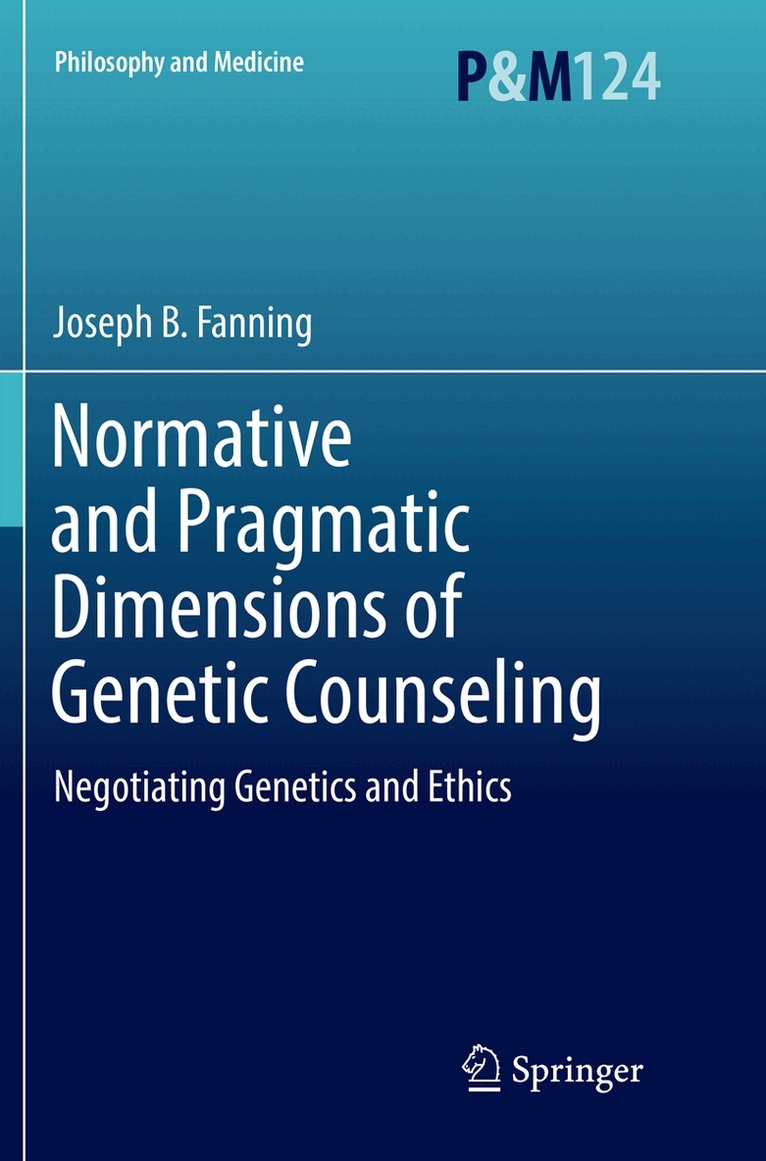
    Normative and Pragmatic Dimensions of Genetic Counseling

    Negotiating Genetics and Ethics

    AvJoseph B. Fanning

    Häftad, Engelska, 2018

    Del 124 i serien Philosophy and Medicine

    952 kr

    Beställningsvara. Skickas inom 10-15 vardagar. Fri frakt över 249 kr.

    Fler format och utgåvor

    Inbunden

    952 kr

    E-bok

    1 214 kr

    Beskrivning

    This book provides an elaboration and evaluation of the dominant conceptions of genetic counseling as they are accounted for in three different models: the teaching model; the psychotherapeutic model; and the responsibility model. The elaboration of these models involves an identification of the larger traditions, visions and theories of communication that underwrite them; the evaluation entails an assessment of each model’s theses and ultimately a comparison of their adequacy in response to two important concerns in genetic counseling: the contested values of non-directiveness and the recognition of differences across perspectives, with special focus on how religious and spiritual beliefs of patients are coordinated with the networks of meaning in genetics. Several insights are made explicit in this project through the work of Robert Brandom. Brandom’s deontic scorekeeping model demonstrates how dialogue is at the root of grasping a conceptual content. Against this backdrop, professional communications such as genetic counseling can be seen as late developments in linguistic practices that have structural challenges. Brandom’s model reminds us that the professional needs the client’s understanding to grasp conceptual content in a particular context.

    Produktinformation

    • Utgivningsdatum:2018-06-16
    • Mått:155 x 235 x 10 mm
    • Vikt:260 g
    • Format:Häftad
    • Språk:Engelska
    • Serie:Philosophy and Medicine
    • Antal sidor:151
    • Förlag:Springer International Publishing AG
    • ISBN:9783319831657

    Utforska kategorier

    • Medievetenskap inom Samhälle och politik
    • Biovetenskap inom Naturvetenskap och teknik
    • Medicinsk genetik inom Medicin

    Mer om författaren

    Joseph B. Fanning is Assistant Professor of Medicine in the Center for Biomedical Ethics and Society at Vanderbilt University Medical Center. He serves as the Director of the Clinical Ethics Consultation Service and works with patients, families and clinicians on ethical concerns that arise in health care.He received undergraduate training at Birmingham-Southern College (B.A. 1993) completed masters work at Princeton Theological Seminary (M.Div., 2000, Th.M., 2001); and earned his doctorate in the Graduate Department of Religion at Vanderbilt University (Ph.D. 2008).His research focuses on the role of communication and interpersonal skills in the development of therapeutic relationships across clinical contexts. Most recently, he and other members of a research team authored an article in Qualitative Health Research identifying obstacles to sharing expectations in a critical care context. He has co-authored a book based on fifty-five patient interviews titled, What Patients Teach: The Everyday Ethics of Healthcare (Oxford University Press, Fall 2013). In 2009, Fanning co-edited with Dr. Ellen Wright Clayton a special issue of the American Journal of Medical Genetics that focused on spiritual and religious issues in medical genetics.Fanning also teaches healthcare ethics across Vanderbilt working with students in the schools of Medicine and Nursing as well as with trainees across multiple residency and fellowship programs. He is also the lead instructor for undergraduate course in the College of Arts and Science titled “Death and Dying in America” that combines experiential learning through hospice volunteering with interdisciplinary engagement of the issues that surround death and dying.

    Innehållsförteckning

    • LIST OF TABLES.- INTRODUCTION.- Methodology and Terminology.- Debbie’s Case.- Mapping the Project.- Chapters; I. GENETIC COUNSELING:  MODELS AND VISIONS.- Teaching and Psychotherapeutic Models of Genetic Counseling.- Spiritualist Tradition.- A Technical Vision of Communication.- Theses of the Technical Vision.- The Technical Vision and the Teaching Model of Genetic Counseling.- Evaluation.- A Therapeutic Vision of Communication.- Theses of the Therapeutic Vision.- The Therapeutic Vision and Psychotherapeutic Model of Genetic Counseling.- Evaluation.- Summary.- II. A RESPONSIBILITY MODEL OF GENETIC COUNSELING.- Responsibility Model.- Embodiment Tradition of Communication.- A Pragmatic Theory of Communication.- What is communication?.- What is meaning?.- Underwriting the Responsibility Model.- Summary.- III. GENETIC COUNSELING AND NONDIRECTIVENESS.- A Brief History of Nondirectiveness.- Nondirectiveness and the Teaching Model.- Nondirectiveness and the.- Psychotherapeutic Model.- Nondirectiveness and the Responsibility Model.- Evaluation of Models: Debbie’s Case.- Summary.- IV. GENETIC COUNSELING AND SPIRITUAL ASSESSMENT.- Spiritual Assessment in Genetic Counseling.- Defining Spirituality.- Initial Motivations for Spiritual Assessment.- Explorations of Spiritual Assessment in Genetic Counseling.- HOPE Approach.- CEGRM.- Evaluation of Harms and Benefits.- Spiritual Assessment and Debbie’s Case.- Teaching Model.- Psychotherapeutic Model.- Responsibility Model.- Summary.- CONCLUSION.- Implications.- Genetic Counseling and Professional Communication.- Medicine and Spirituality.- APPENDIX.- BIBLIOGRAPHY.