• Fri frakt över 249 kr
  • •
  • Snabba leveranser
  • •
  • Billiga böcker
Kundservice

Du är på sajten för privatpersoner.

Företag, bibliotek eller offentlig verksamhet?

Du handlar på classic.bokus.com, där alla dina funktioner finns intakta.
Till classic.bokus.com
Bokus logotyp. Gå till startsidan.
  • Erbjudanden
  • Nyheter
  • Student
  • Topplistor
  • Barn & ungdom
  • Bokus Play
  • E-böcker
  • Pocketböcker
  • Spel & pussel

10% rabatt på allt med kod NYSTART10 →

Sidfot

Mina sidor

    Hjälp

    • Kundservice
    • Vanliga frågor och svar
    • Frakt och leverans
    • Retur vid ångerrätt
    • Reklamera vara
    • Betalning
    • Köpvillkor
    • Allmänna villkor
    • Information om webbplatsens tillgänglighet

    Om Bokus

    • Om oss
    • Pressrum
    • För studenter
    • För företag
    • För bibliotek och offentlig verksamhet
    • För leverantörer
    • Hållbarhet

    Populärt

    • Aktuella erbjudanden
    • Presentkort
    • Studentlitteratur
    • Nya böcker
    • Topplistor
    • Signerade böcker
    • Engelska böcker

    Inspiration

    • Boktips
    • BookTok
    • Populära bokserier
    • Barnbokskaraktärer
    • Populära författare
    Logotyp för Bokus
    Följ oss på Facebook (extern länk)Följ oss på Instagram (extern länk)Följ oss på YouTube (extern länk)Följ oss på TikTok (extern länk)
    bokus @ CookiesAnpassa cookiesIntegritetspolicyKöpvillkor
    Till Citymail hemsida (extern länk)Till Budbee hemsida (extern länk)Till Postnord hemsida (extern länk)Till Schenker hemsida (extern länk)Till Early Bird hemsida (extern länk)Till Walleys hemsida (extern länk)
    1. Psykologi och pedagogik
    2. Psykologi
    3. Biologisk psykologi och neuropsykologi

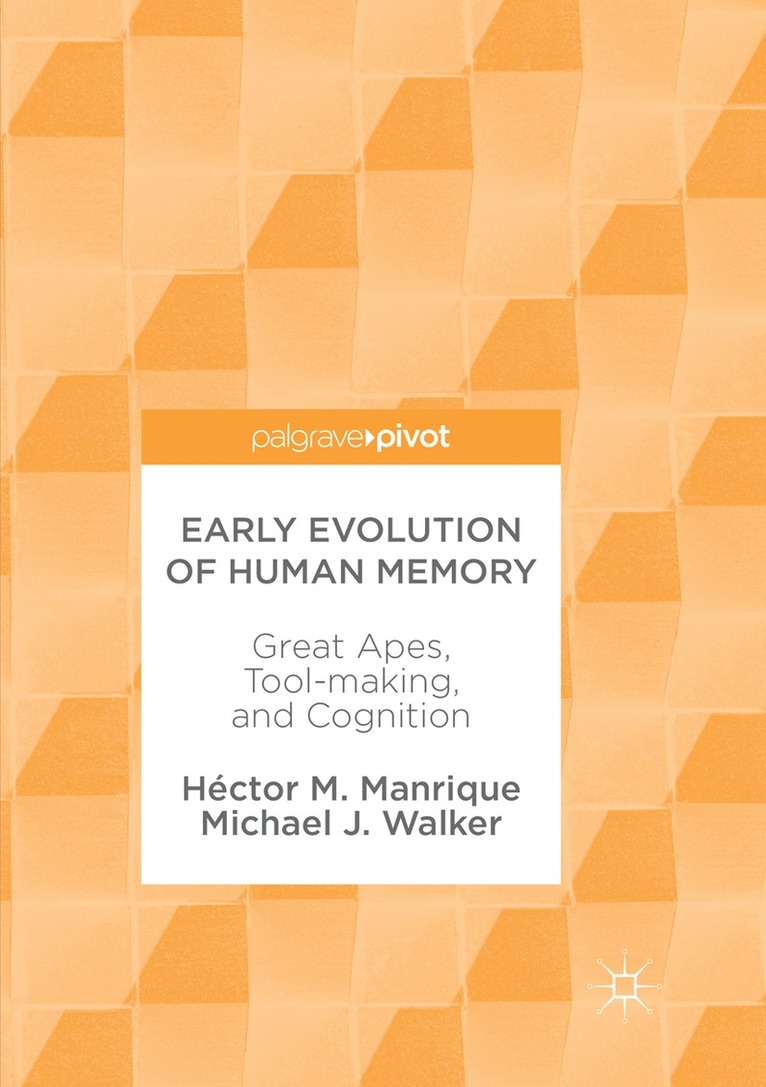
    Early Evolution of Human Memory

    Great Apes, Tool-making, and Cognition

    AvHéctor M. Manrique,Michael J. Walker

    Häftad, Engelska, 2018

    600 kr

    Beställningsvara. Skickas inom 10-15 vardagar. Fri frakt över 249 kr.

    Fler format och utgåvor

    Inbunden

    600 kr

    Beskrivning

    This work examines the cognitive capacity of great apes in order to better understand early man and the importance of memory in the evolutionary process. It synthesizes research from comparative cognition, neuroscience, primatology as well as lithic archaeology, reviewing findings on the cognitive ability of great apes to recognize the physical properties of an object and then determine the most effective way in which to manipulate it as a tool to achieve a specific goal. The authors argue that apes (Hominoidea) lack the human cognitive ability of imagining how to blend reality, which requires drawing on memory in order to envisage alternative future situations, and thereby modifying behavior determined by procedural memory. This book reviews neuroscientific findings on short-term working memory, long-term procedural memory, prospective memory, and imaginative forward thinking in relation to manual behavior. Since the manipulation of objects by Hominoidea in the wild (particularly in order to obtain food) is regarded as underlying the evolution of behavior in early Hominids, contrasts are highlighted between the former and the latter, especially the cognitive implications of ancient stone-tool preparation.

    Produktinformation

    • Utgivningsdatum:2018-08-11
    • Mått:148 x 210 x 10 mm
    • Vikt:226 g
    • Format:Häftad
    • Språk:Engelska
    • Antal sidor:150
    • Förlag:Springer International Publishing AG
    • ISBN:9783319877969

    Utforska kategorier

    • Biologisk psykologi och neuropsykologi inom Psykologi och pedagogik
    • Biovetenskap inom Naturvetenskap och teknik
    • Zoologi inom Naturvetenskap och teknik

    Mer om författaren

    Michael J. Walker is Honorific Emeritus Professor in the Department of Zoology & Physical Anthropology at University of Murcia, SpainHéctor M. Manrique is Assistant Professor in the Department of Psychology & Sociology at University of Zaragoza, Spain

    Innehållsförteckning

    • 1. Tool-Use by Great Apes in the Wild.- 2. Great Apes, Tools, and Cognition.- 3. Early Tool-Making and the Evolution of Human Memory Systems in the Brain.- 4. Concluding Remarks.