• Fri frakt över 249 kr
  • •
  • Snabba leveranser
  • •
  • Billiga böcker
Kundservice

Du är på sajten för privatpersoner.

Företag, bibliotek eller offentlig verksamhet?

Du handlar på classic.bokus.com, där alla dina funktioner finns intakta.
Till classic.bokus.com
Bokus logotyp. Gå till startsidan.
  • Erbjudanden
  • Nyheter
  • Student
  • Topplistor
  • Barn & ungdom
  • Bokus Play
  • E-böcker
  • Pocketböcker
  • Spel & pussel

10% studentrabatt med kod TERM26

Sidfot

Mina sidor

    Hjälp

    • Kundservice
    • Vanliga frågor och svar
    • Frakt och leverans
    • Retur vid ångerrätt
    • Reklamera vara
    • Betalning
    • Köpvillkor
    • Allmänna villkor
    • Information om webbplatsens tillgänglighet

    Om Bokus

    • Om oss
    • Pressrum
    • För studenter
    • För företag
    • För bibliotek och offentlig verksamhet
    • För leverantörer
    • Hållbarhet

    Populärt

    • Aktuella erbjudanden
    • Presentkort
    • Studentlitteratur
    • Nya böcker
    • Topplistor
    • Signerade böcker
    • Engelska böcker

    Inspiration

    • Boktips
    • BookTok
    • Populära bokserier
    • Barnbokskaraktärer
    • Populära författare
    Logotyp för Bokus
    Följ oss på Facebook (extern länk)Följ oss på Instagram (extern länk)Följ oss på YouTube (extern länk)Följ oss på TikTok (extern länk)
    bokus @ CookiesAnpassa cookiesIntegritetspolicyKöpvillkor
    Till Citymail hemsida (extern länk)Till Budbee hemsida (extern länk)Till Postnord hemsida (extern länk)Till Schenker hemsida (extern länk)Till Early Bird hemsida (extern länk)Till Walleys hemsida (extern länk)
    1. Naturvetenskap och teknik
    2. Teknik och industri
    3. Tillverkningsteknik

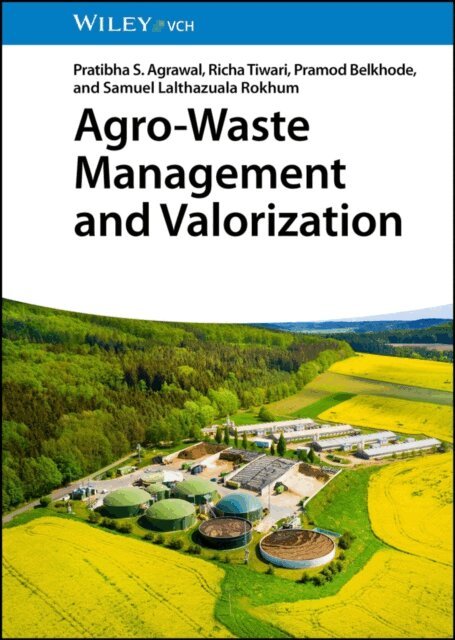
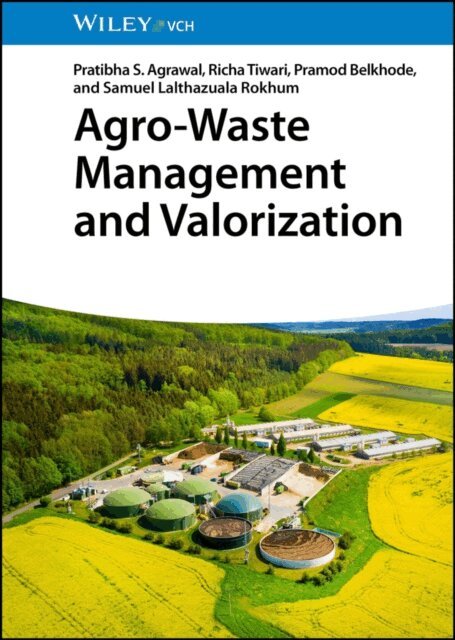
    Agro-Waste Management and Valorization

    AvPratibha S. Agrawal,Richa Tiwari

    Inbunden, Engelska, 2026

    1 796 kr

    Beställningsvara. Skickas inom 5-8 vardagar. Fri frakt över 249 kr.

    Beskrivning

    Presents cutting-edge insights on transforming agricultural waste into renewable energy, sustainable materials, and economic opportunities The urgent need to transition toward sustainable development has propelled agro-waste management to the forefront of global research and policy initiatives. Agricultural residues, once treated as environmental burdens, now offer vast potential as renewable feedstocks for biofuels, compost, and biochar, as well as for driving innovations in the circular economy. Agro-Waste Management and Valorization provides an authoritative and comprehensive overview of the scientific, technological, and economic frameworks required to turn agricultural waste into valuable resources. Through a multidisciplinary lens, the authors examine the chemistry, engineering, and environmental principles that shape modern waste-to-value pathways, while situating these approaches within relevant legislative and policy contexts. The book integrates fundamental concepts, applied research, and real-world case studies to demonstrate how biological and thermochemical conversion processes, waste biorefineries, and digital innovations can advance sustainability goals. Detailed analyses of bio-additives, composting strategies, and algae-based biorefineries highlight the practical applications of waste valorization across diverse agricultural systems. In-depth chapters incorporate techno-economic analyses and life cycle assessments to equip readers with the tools needed to evaluate feasibility and long-term impact. Both synthesizing current knowledge and charting a pathway for future inquiry and technology transfer in the field, Agro-Waste Management and Valorization: Explores advanced bioconversion and thermochemical techniques with detailed process parameters and optimization strategiesHighlights studies of waste-to-energy technologies and their integration into sustainable agricultural systemsAnalyzes international and national policy frameworks shaping agro-waste management and valorizationExamines waste biorefinery and algal biorefinery models with real-world scalability considerationsIncludes techno-economic analysis (TEA) and life cycle assessment (LCA) of key technologiesInvestigates innovative uses of glycerol and biochar, as well as emerging digital tools such as IoT for efficient waste monitoring and processingAgro-Waste Management and Valorization is an essential reference for graduate and postgraduate students in environmental chemistry, chemical engineering, agricultural sciences, and biotechnology, particularly in courses such as Environmental Sustainability, Waste Management, and Renewable Energy Systems. It is equally valuable for researchers, policymakers, and professionals in biotechnological and agricultural industries who are seeking practical and research-based approaches to agro-waste valorization.

    Produktinformation

    • Utgivningsdatum:2026-01-28
    • Mått:170 x 244 x 15 mm
    • Vikt:680 g
    • Format:Inbunden
    • Språk:Engelska
    • Antal sidor:400
    • Förlag:Wiley-VCH Verlag GmbH
    • ISBN:9783527355754

    Utforska kategorier

    • Tillverkningsteknik inom Naturvetenskap och teknik
    • Lantbruksteknik inom Naturvetenskap och teknik
    • Miljövetenskap och miljöpolitik inom Naturvetenskap och teknik

    Mer om författaren

    Pratibha S. Agrawal is a PhD Supervisor at Laxminarayan Innovation Technological University, Nagpur, India. With 16 years of teaching and research experience, she is a recognized authority in applied chemistry and sustainable resource management. Richa Tiwari is pursuing her PhD. at Laxminarayan Innovation Technological University, Nagpur, India. Her research interests include biofuels, environmental impact assessment, waste oils, recycling technologies, and sustainable development practices. Pramod Belkhode is an Associate Professor of Mechanical Engineering in the Department of General Engineering at Laxminarayan Innovation Technological University, Nagpur, India. His research areas include automation, ergonomics, man-machine systems, and agricultural mechanization. Samuel Lalthazuala Rokhum is an Associate Professor of Chemistry at the National Institute of Technology Silchar, Assam, India. His research spans organic chemistry, renewable energy, material science, and heterogeneous catalysis. He has authored over 140 research papers and 21 book chapters.

    Innehållsförteckning

    • Preface xiii1 Waste-to-value Opportunity and Challenges 11.1 Introduction 11.1.1 Waste-to-energy 21.1.2 Environmental Benefits 31.1.3 Energy Generation Potential 31.1.4 Economic Potential 41.2 Classification of Waste 61.2.1 Hazardous Waste 61.2.2 Non-hazardous Waste 81.3 Current Status in Waste Management 91.3.1 Waste Collection 91.3.2 Waste Consolidation and Transportation 121.3.3 Waste Disposal Practices 131.3.4 Lack of Awareness 161.4 Problems Encountered in Waste Handling 161.5 Economic Competitiveness 181.6 Sustainable Challenges 191.6.1 Feedstock Availability 201.6.2 Operational Challenges 231.7 Carbon Sequestration for Green and Sustainable Environment 241.8 IoT Services 261.9 Smart City Infrastructure 281.10 Conclusion and Discussion 29References 292 A Perspective on the Emergence and Need for Alternate Fuels 352.1 Introduction 352.2 Challenges Associated with Conventional Fuels 362.3 Alternative Fuels 382.4 Types of AFs 392.4.1 Ammonia 392.4.2 Hydrogen 412.4.3 Alcohol-derived Fuels 432.4.3.1 Methanol 432.4.3.2 Ethanol 452.4.3.3 Dimethyl Ether 462.4.4 Biodiesel 472.5 Applications of AFs 492.5.1 Dual-fuel Mode 492.5.2 Blend Form 502.6 Environmental Impact and Economic Feasibility 512.7 Future Aspects of AFs 522.8 Conclusion 52References 533 The Role of Waste in the Circular Economy, Policies, and Legislation 573.1 Introduction 573.2 Crucial Reasons for Implementing a Circular Economy 593.2.1 Restore Environment 603.2.2 Recycling Industry 603.2.3 Social Responsibility 603.2.4 Reduces Waste 603.2.5 Renewable Energy 603.3 Principles of the Circular Economy 613.3.1 Designing for Efficiency 613.3.2 Resource Regeneration 613.3.3 Closing the Loop 623.3.4 Promoting Renewable Energy 623.3.5 Systems Thinking 623.4 Role of Agro-waste in the Circular Economy – Examples 623.4.1 Biochar Production 633.4.2 Anaerobic Digestion 653.4.3 Circular Agriculture Models 653.5 Circular Economy Challenges 663.5.1 Logistical Challenges 673.5.2 Technological Innovation 673.5.3 Policy and Economic Incentives 673.6 Agro-waste 673.6.1 Classification of Agro-waste 673.6.2 Sources and Generation Patterns 683.7 Agro-waste Management: Current Practices 693.7.1 Current Practices in Agro-waste Management 693.7.2 Traditional Disposal Methods 703.7.3 Environmental Impacts of Agro-waste 703.7.4 Circular Economy Framework 713.7.5 Overview of Existing National and International Policies 713.7.5.1 The European Union Waste Framework Directive and Agro-waste in the Circular Economy 713.7.5.2 US Environmental Protection Agency Regulations and Agro-waste 733.7.5.3 India’s National Policy on Biofuels and Agro-waste 753.8 Challenges in Implementing the Circular Economy for Agro-waste 763.8.1 Economic Challenges 773.8.2 Technological Limitations 793.9 Conclusion 81References 834 Agro-waste Management 874.1 Introduction 874.2 Assessment of RDF and SRF 884.3 MSW and RDF/SRF Legislation 894.4 Type of Solid Waste 894.5 Pelletization and Incineration 914.6 Case Study: Energy Recovery Potential 924.7 Liquid-waste Management 934.8 Physicochemical Treatment 944.9 Physical or Mechanical Treatment 964.10 Biological Treatment 964.11 E-waste 974.12 Environmental and Health Impacts of Waste Mismanagement 984.13 Disposal Methods of Waste Management 984.14 Environmental Impacts and Considerations 994.15 Sustainable Waste Management 994.16 Biological Conversion Techniques 1004.16.1 Composting: Processes, Chemical Engineering Aspects, and Applications 1004.16.2 AD: Processes, Chemical Engineering Aspects, and Applications 1014.16.3 Emerging Biological Conversion Technologies 1024.17 Thermochemical Conversion Techniques 1034.17.1 Pyrolysis: Unlocking the Potential of Bio-oil, Biochar, and Syngas 1034.17.2 Alkaline Hydrolysis: Extracting Lignin and Enhancing Cellulose Digestibility 1074.17.3 Transesterification: Transforming Agro-waste-derived Oils and Fats into Biodiesel 1084.18 Techno-economic Analysis and Life Cycle Assessment: Evaluating Sustainability 1114.18.1 TEA: The Bottom Line 1114.18.2 LCA: Environmental Footprint 1124.19 Emerging Technologies and Future Trends: Shaping the Future of Agro-waste Management 1124.20 Conclusion 113References 1145 Waste Biorefinery 1215.1 Introduction 1215.2 Waste Feedstock for Biorefinery 1235.3 Kinetic Analysis of Biomass 1245.4 Conversion Processes 1265.4.1 Thermochemical Conversions 1275.4.2 Combined Gasification-fermentation Processes 1305.4.3 Food Waste Biorefinery 1325.4.4 Municipal Waste Biorefinery 1355.4.5 Lignocellulosic Biorefinery 1375.5 Water-based Biorefinery 1395.6 The Economic Aspects of Waste-to-energy Biorefineries 1415.7 Conclusion 143References 1446 Algal Biorefinery 1496.1 Introduction 1496.1.1 Algae as a Versatile Feedstock for Biorefining: An Overview 1496.1.2 The Algal Biorefinery Concept: Integrated Processes 1516.1.3 Potential of Agro-waste as a Nutrient Source and Environmental Benefits in Algal Biorefining 1526.1.4 Chapter Objectives and Scope 1536.2 Algal Biomass Cultivation 1536.2.1 Cultivation Systems: Comparing Open Ponds and Photobioreactors 1546.2.2 Strain Selection and Optimization of Algal Species and Nutrient Management 1546.2.3 Harvesting and Dewatering Methods 1556.3 Algal Biomass Processing 1566.3.1 Pretreatment Techniques for Biomass Conversion 1566.3.2 Extraction of Lipids, Proteins, and Carbohydrates 1576.3.3 Fractionation and Purification Techniques 1596.3.4 Product Recovery and Valorization 1596.4 Biofuel Production from Algal Biomass 1606.4.1 Production of Biodiesel, Bioethanol, and Biobutanol from Algal Lipids 1606.4.2 HTL for Bio-oil Generation 1616.4.3 Techno-economic and Sustainability Evaluation 1636.5 Bioproducts and Bio-compounds from Algae 1646.6 Integrated Algal Biorefinery Approach 1666.7 Genetic Engineering and Algal Strain Improvement 1696.8 Environmental Sustainability and Life Cycle Assessment in Algal Biorefining 1716.8.1 Life Cycle Assessment Methodology 1716.8.2 Policy and Regulatory Considerations 1726.9 Challenges and Future Perspectives 1736.10 Conclusion 174References 1757 Waste-to-bio-additive 1817.1 Introduction 1817.2 Types of Waste Utilized for Bio-additive Production 1837.3 Waste-to-bio-additive Conversion Technologies 1857.3.1 Biological Processes 1857.3.1.1 Anaerobic Digestion 1857.3.1.2 Fermentation 1867.3.1.3 Composting 1877.3.2 Thermochemical Processes 1887.3.2.1 Pyrolysis 1887.3.2.2 Gasification 1907.3.2.3 Hydrothermal Processing 1907.3.3 Physiochemical Processes 1917.3.3.1 Hydrolysis 1917.3.3.2 Transesterification 1927.3.3.3 Acid/Base Catalysis 1937.4 Applications of Bio-additives 1947.5 LCA of Waste-of-building Applications Technologies 1957.6 Challenges and Limitations 1987.7 Case Studies and Success Stories 2007.7.1 Successful Waste-to-bio-additive Projects 2007.7.2 Future Directions and Emerging Trends 2017.8 Conclusion and Recommendations 202References 2038 Agro-waste to Compost 2098.1 Introduction 2098.2 Defining and Categorizing Agro-waste for Composting 2108.2.1 Crop Residues 2108.2.2 Livestock Manure: A Nutrient-rich Bioresource 2128.2.3 Agro-industrial Byproducts: Residues from Processing 2138.2.4 Forestry Residues and the Integrated Waste Basket 2138.3 The Science of Composting: Biochemical Processes and Microbial Ecology 2158.3.1 Biochemical Processes in Composting 2158.3.2 Microbial Ecology of Composting 2168.3.3 Phases of Composting and Microbial Succession 2178.4 Composting Methodologies for Agro-waste: From Traditional to Advanced Techniques 2188.4.1 Traditional Composting Methodologies for Agro-waste 2198.4.1.1 Pit Composting 2198.4.1.2 The Pit Composting Process: A Simple, Ground-based Approach 2198.4.1.3 Advantages of Implementing Pit Composting 2208.4.1.4 Disadvantages and Limitations of Pit Composting Performance 2208.4.1.5 Heap Composting 2218.4.1.6 Windrow Composting 2218.5 Advanced Composting Methodologies 2228.5.1 Vermicomposting 2228.5.2 In-vessel Composting 2228.5.3 Thermal Composting (Aerated Static Pile with Forced Aeration) 2238.6 Factors Influencing Composting Efficiency and Compost Quality 2238.6.1 Process Design 2268.6.1.1 Feedstock Blending 2268.6.1.2 Particle Size Reduction 2278.6.2 Aeration Control 2278.6.3 Temperature Monitoring 2288.7 Conclusion 229References 2309 Glycerol: From Abundant Byproduct to Valuable Bio-oil 2359.1 Introduction 2359.2 Production of Glycerol in Biodiesel Production 2379.2.1 Quantity and Quality of Glycerol Generated 2389.2.2 Challenges in Glycerol Management 2399.3 Conversion Technologies of Glycerol to Bio-oil 2409.3.1 Pyrolysis of Glycerol: Thermally Induced Decomposition 2419.3.2 HTL of Glycerol: Conversion in Hot Compressed H2O 2429.3.3 Catalytic Conversion of Glycerol: Tailored Transformations 2439.4 Bio-oil Properties and Applications 2449.4.1 Chemical Composition of Bio-oil: Molecular Diversity 2449.4.2 Physical Properties of Bio-oil 2479.4.3 Potential Applications of Bio-oil: A Versatile Renewable Resource 2489.5 Catalytic Processes for Glycerol Conversion to Bio-oil 2509.6 Chemistry of Glycerol Conversion to Bio-oil 2539.6.1 Dehydration: The Initial Oxygen Removal Step 2539.6.2 Cracking: Breaking the Carbon Backbone 2549.6.3 Oligomerization: Formation of Larger Molecules 2559.6.4 Aromatization: Synthesis of Cyclic Hydrocarbons 2559.6.5 Other Reactions: Diverse Transformation Routes 2569.7 Reactor Design and Process Optimization for Glycerol Conversion to Bio-oil 2589.8 Challenges and Limitations 2629.9 Commercial Glycerol-to-bio-oil Plant 2639.10 Conclusion 264References 26510 Production of Biochar 27310.1 Introduction 27310.1.1 Biochar: Properties, Applications, and Significance 27310.1.2 Agro-waste-to-biochar Conversion: A Sustainable and Circular Approach 27510.1.3 Scope and Objectives 27510.2 Agro-waste Feedstocks for Biochar Production 27810.2.1 Classification and Characteristics of Agro-waste Feedstocks 27810.2.2 Influence of Feedstock Composition on Biochar Production and Properties 27910.2.3 Pretreatment of Agro-waste Feedstocks 28110.2.3.1 Drying: Essential Moisture Management 28210.2.3.2 Size Reduction: Optimizing Heat and Mass Transfer 28310.2.3.3 Washing: Cleaning and Purification of Feedstock 28410.2.3.4 Torrefaction: Thermal Upgrading for Enhanced Feedstock Properties 28510.3 Pyrolysis: Thermal Decomposition for Biochar Maximization or Bio-oil Production 28910.4 Gasification: Primarily Syngas Production with Biochar as a Byproduct 29210.4.1 Gasification Process and Operating Conditions 29310.4.2 Biochar Production from Gasification 29410.4.3 Advantages and Disadvantages of Gasification 29410.5 HTC: A Wet Biomass Solution 29410.5.1 HTC Process and Operating Conditions 29510.5.2 Hydrochar Production and Properties from HTC 29710.5.3 Advantages and Disadvantages of HTC 29710.6 Comparative Analysis and Future Trends 29810.7 Conclusion 299References 29911 Waste Valorization for Biogas Production: A Pathway to a Circular Economy 30511.1 Introduction 30511.2 Biogas Production – A Versatile Energy Source 30611.3 Agro-waste as a Resource 30811.4 Pretreatment of Agro-waste 31011.4.1 Physical Pretreatment 31111.4.2 Chemical Pretreatment 31211.4.3 Physiochemical Pretreatment 31311.4.4 Biological Pretreatment 31311.5 Process Technology – Agro-waste to Bioenergy 31411.5.1 Hydrolysis 31411.5.2 Anaerobic Digestion 31511.5.3 Dark Fermentation 31611.5.4 Transesterification 31611.5.5 Creating Wealth from the Agro-waste 31711.5.6 Economic Valuation of Agro-waste 31811.6 Factors Influencing the Efficiency of Agro-waste-to-biogas Systems 31911.6.1 Digester Design and Configuration 32011.7 Digestate Utilization and Impact 32311.7.1 Digestate Composition and Variability 32311.7.2 Impact of Digestate on Soil Health and Crop Productivity 32411.8 Conclusion 325References 32612 Digitalization for Agro-waste Management 33312.1 Introduction 33312.2 Infrastructure for Agro-waste Management 33512.2.1 Environmental Benefits 33512.2.2 Health Benefits 33612.2.3 Economic Benefits 33612.2.4 Social Benefits 33712.3 Improved Resource Allocation with Geospatial Tools 33812.4 Enhanced Monitoring of Waste Generation and Collection through IoT Sensors 34012.5 The Imperative of Efficient Agricultural Waste Transportation 34212.6 Smart Logistics: A Paradigm Shift in Waste Transportation 34312.6.1 Components of Smart Logistics Solutions for Waste Transportation 34412.6.2 Challenges and Future Directions 34612.6.3 Better Decision-making with Real-time Data and Predictive Analytics 35212.7 Communication Networks 35312.7.1 Coverage and Reliability 35412.7.2 Benefits of Communication Networks 35412.7.3 Challenges 35512.8 Cloud Computing and Storage 35612.8.1 Availability and Utilization 35612.8.2 Benefits and Challenges of Cloud Computing and Storage 35612.9 Technological Applications in Agro-waste Management 35812.9.1 Monitoring and Tracking Systems 35812.9.2 Adoption of Technologies 35812.9.3 Benefits and Challenges of Monitoring and Tracking Systems 35812.10 Predictive Analytics 36012.10.1 Implementation of Predictive Models 36012.10.2 Benefits and Challenges of Predictive Analytics 36112.11 Automation and Robotics 36212.12 Conclusion 364References 365Index 371