• Fri frakt över 249 kr
  • •
  • Snabba leveranser
  • •
  • Billiga böcker
Kundservice

Du är på sajten för privatpersoner.

Företag, bibliotek eller offentlig verksamhet?

Du handlar på classic.bokus.com, där alla dina funktioner finns intakta.
Till classic.bokus.com
Bokus logotyp. Gå till startsidan.
  • Erbjudanden
  • Student
  • Topplistor
  • Barn & ungdom
  • Bokus Play
  • E-böcker
  • Ljudböcker
  • Pocketböcker
  • Spel och pussel

Pocketfynda! Hundratals böcker för 49 kr/st →

Sidfot

Mina sidor

    Hjälp

    • Kundservice
    • Vanliga frågor och svar
    • Frakt och leverans
    • Retur vid ångerrätt
    • Reklamera vara
    • Betalning
    • Köpvillkor
    • Allmänna villkor
    • Information om webbplatsens tillgänglighet

    Om Bokus

    • Om oss
    • Pressrum
    • För studenter
    • För företag
    • För bibliotek och offentlig verksamhet
    • För leverantörer
    • Hållbarhet

    Populärt

    • Aktuella erbjudanden
    • Presentkort
    • Studentlitteratur
    • Nya böcker
    • Topplistor
    • Signerade böcker
    • Engelska böcker

    Inspiration

    • Boktips
    • BookTok
    • Barnbokskaraktärer
    • Populära författare
    Logotyp för Bokus
    Följ oss på Facebook (extern länk)Följ oss på Instagram (extern länk)Följ oss på YouTube (extern länk)Följ oss på TikTok (extern länk)
    bokus @ CookiesAnpassa cookiesIntegritetspolicyKöpvillkor
    Till Citymail hemsida (extern länk)Till Budbee hemsida (extern länk)Till Postnord hemsida (extern länk)Till Schenker hemsida (extern länk)Till Early Bird hemsida (extern länk)Till Walleys hemsida (extern länk)
    1. Samhälle och politik
    2. Sociologi och antropologi
    3. Sociologi

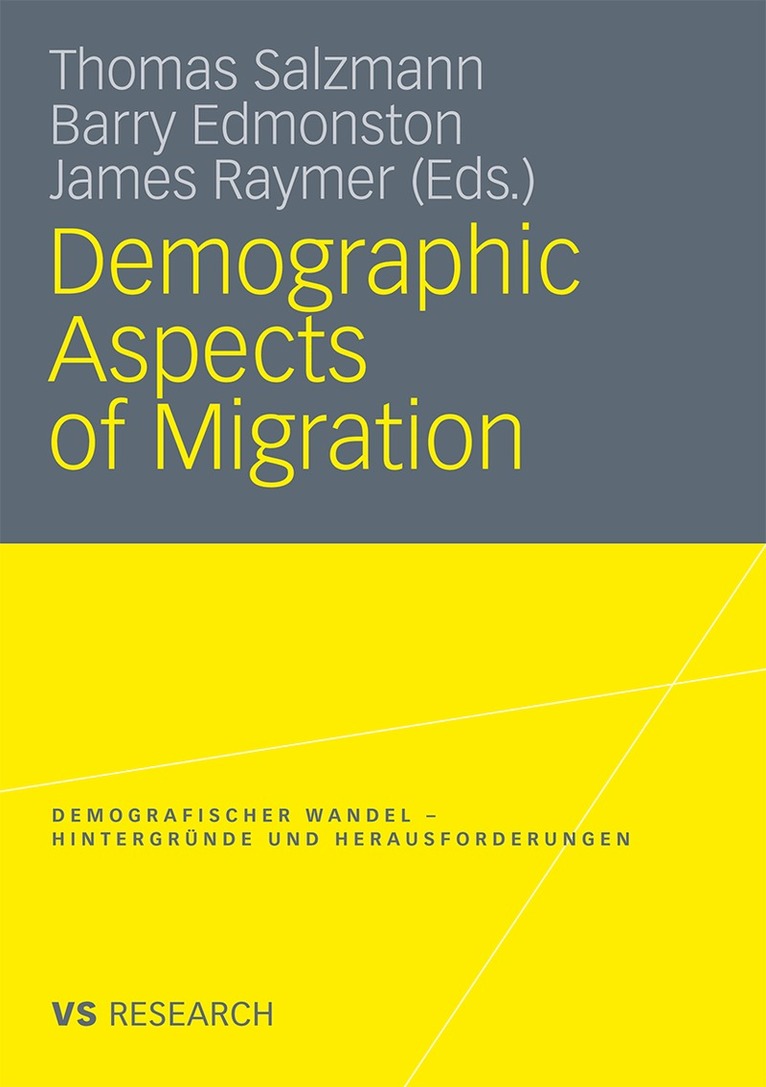
    Demographic Aspects of Migration

    AvThomas Salzmann,Barry Edmonston

    Häftad, Engelska, 2010

    Del i serien Demografischer Wandel - Hintergründe und Herausforderungen

    542 kr

    Beställningsvara. Skickas inom 10-15 vardagar. Fri frakt över 249 kr.

    Beskrivning

    Dr. Albert Schmid President of the Federal Office for Migration and Refugees According to the United Nations, about 200 million people of the estimated world population of 6.8 billion are international migrants – that corresponds to about three per cent of the total world population. The proportion of international migrants in the global population has increased only marginally in the last 40 years. But, as a result of global population growth, the absolute number of migrants has increased, and their structure and spatial distribution has changed considerably. A structural shift has taken place primarily in the industrialised countries, where less than 20 per cent of the global workers are now living, but where more than 60 per cent of all migrants worldwide reside. Since 1990, more than 16 million people have moved to Germany, while about 11 million have left the country in the same period. Altogether, 15 million people of international migration origin are living in Germany, comprising almost 19 per cent of Germany’s current population of 82 million. At the end of 2006, about 64 million people out of Europe’s population of 732 million, or nine per cent, lived in a European country they were not born in. But why does anybody migrate at all? People decide to leave because, in general, they expect to find better conditions and opportunities in other countries or regions.

    Produktinformation

    • Utgivningsdatum:2010-09-14
    • Mått:148 x 210 x 22 mm
    • Vikt:511 g
    • Format:Häftad
    • Språk:Engelska
    • Serie:Demografischer Wandel - Hintergründe und Herausforderungen
    • Antal sidor:350
    • Upplaga:2010
    • Förlag:Springer Fachmedien Wiesbaden
    • ISBN:9783531165417

    Utforska kategorier

    • Sociologi inom Samhälle och politik

    Mer om författaren

    Thomas Salzmann is Research Scientist, Department of Demography, at Rostock University, Germany. Barry Edmonston is Research Professor, Department of Sociology, and Associate Director, Population Research Group, at the University of Victoria, Canada. James Raymer is a Lecturer in Demography in the Division of Social Statistics located in the School of Social Sciences at the University of Southampton, United Kingdom.

    Innehållsförteckning

    • The Contribution of Immigration to Population Growth.- A General Framework for Estimating Population Movements.- The Impact of Migration on Birth Replacement - The Spanish Case.- Second Generation Mothers - Do the children of immigrants adjust their fertility to host country norms?.- Selection, Social Status or Data Artefact - What Determines the Mortality of Migrants in Germany?.- Fertility of Female Immigrants in Germany.- The dual demographic profile of migrants in Tuscany.- Immigrant Impact on Employment and Occupational Opportunities of Population in Britain.- Is Recent Immigrant Clustering in Montréal, Toronto and Vancouver Part of the Reason Behind Declining Immigrant Neighbourhood Quality?.- Return migration to East Germany - Motives and Potentials for Regional Development.- The Influence of Regional Factors on Individual Mobility Patterns.- Care-Giver Migration to Greying Japan.