• Fri frakt över 249 kr
  • •
  • Snabba leveranser
  • •
  • Billiga böcker
Kundservice

Du är på sajten för privatpersoner.

Företag, bibliotek eller offentlig verksamhet?

Du handlar på classic.bokus.com, där alla dina funktioner finns intakta.
Till classic.bokus.com
Bokus logotyp. Gå till startsidan.
  • Erbjudanden
  • Student
  • Topplistor
  • Barn & ungdom
  • Bokus Play
  • E-böcker
  • Ljudböcker
  • Pocketböcker
  • Spel och pussel

5% studentrabatt – använd koden KURSBOK27 →

Sidfot

Mina sidor

    Hjälp

    • Kundservice
    • Vanliga frågor och svar
    • Frakt och leverans
    • Retur vid ångerrätt
    • Reklamera vara
    • Betalning
    • Köpvillkor
    • Allmänna villkor
    • Information om webbplatsens tillgänglighet

    Om Bokus

    • Om oss
    • Pressrum
    • För studenter
    • För företag
    • För bibliotek och offentlig verksamhet
    • För leverantörer
    • Hållbarhet

    Populärt

    • Aktuella erbjudanden
    • Presentkort
    • Studentlitteratur
    • Nya böcker
    • Topplistor
    • Signerade böcker
    • Engelska böcker

    Inspiration

    • Boktips
    • BookTok
    • Barnbokskaraktärer
    • Populära författare
    Logotyp för Bokus
    Följ oss på Facebook (extern länk)Följ oss på Instagram (extern länk)Följ oss på YouTube (extern länk)Följ oss på TikTok (extern länk)
    bokus @ CookiesAnpassa cookiesIntegritetspolicyKöpvillkor
    Till Citymail hemsida (extern länk)Till Budbee hemsida (extern länk)Till Postnord hemsida (extern länk)Till Schenker hemsida (extern länk)Till Early Bird hemsida (extern länk)Till Walleys hemsida (extern länk)
    1. Naturvetenskap och teknik
    2. Matematik och naturvetenskap
    3. Kemi
    4. Analytisk kemi

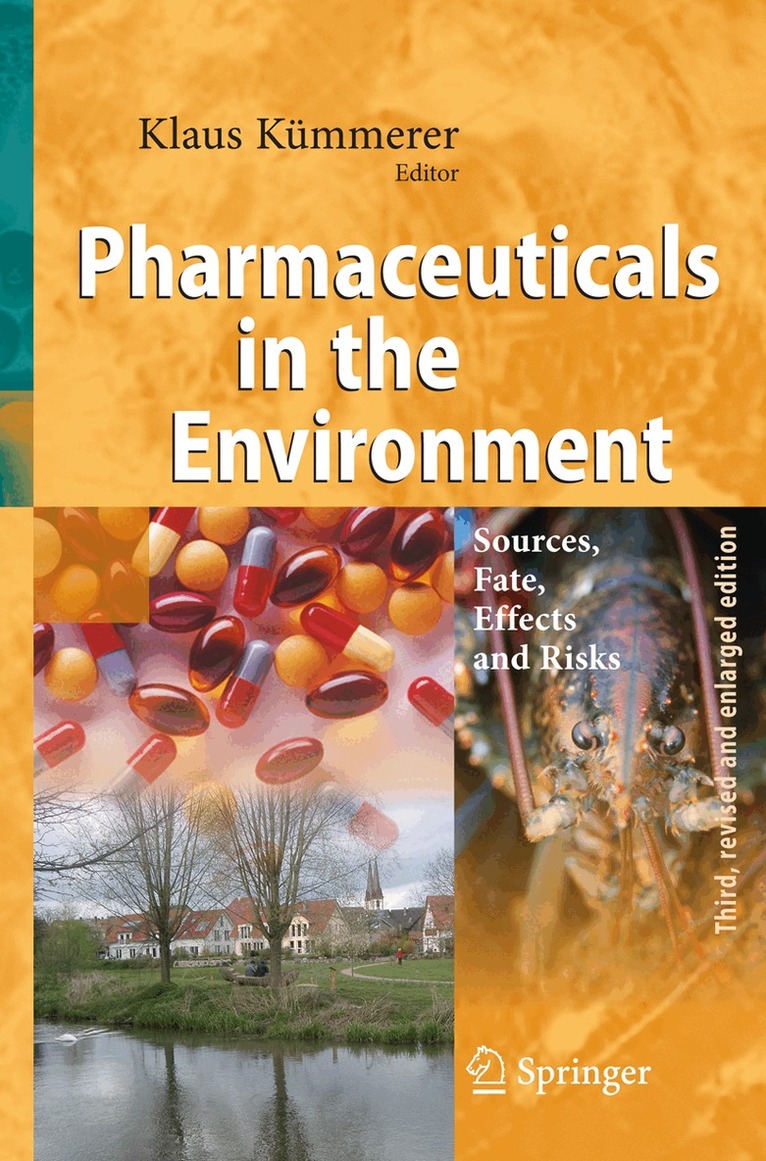
    Pharmaceuticals in the Environment

    Sources, Fate, Effects and Risks

    AvKlaus Kümmerer

    Inbunden, Engelska, 2008

    2 214 kr

    Beställningsvara. Skickas inom 10-15 vardagar. Fri frakt över 249 kr.

    Beskrivning

    When the first green wave appeared in the mid and late 1960s, it was considered a f- sible task to solve pollution problems. The visible problems were mostly limited to point sources, and a comprehensive “end of the pipe technology” (= environmental technology) was available. It was even seriously discussed in the US that what was called “zero d- charge” could be attained by 1985. It became clear in the early 1970s that zero discharge would be too expensive, and that we should also rely on the self purification ability of ecosystems. That called for the development of environmental and ecological models to assess the self purifi- tion capacity of ecosystems and to set up emission standards, considering the re- tionship between impacts and effects in the ecosystems. This idea is illustrated in Fig. 0.1. A model is used to relate an emission to its effect on the ecosystem and its components. The relationship is applied to select a good solution to environmental problems by application of environmental technology.

    Produktinformation

    • Utgivningsdatum:2008-08-14
    • Mått:155 x 235 x 39 mm
    • Vikt:1 094 g
    • Format:Inbunden
    • Språk:Engelska
    • Antal sidor:521
    • Upplaga:3
    • Förlag:Springer-Verlag Berlin and Heidelberg GmbH & Co. KG
    • ISBN:9783540746638

    Utforska kategorier

    • Analytisk kemi inom Naturvetenskap och teknik
    • Miljövetenskap och miljöpolitik inom Naturvetenskap och teknik
    • Farmakologi inom Medicin

    Recensioner i media

    From the reviews of the third edition: "This book gives a very good short, readable and impressive overview of the role and the fate of pharmaceuticals in the environment which was in the past totally neglected. It highlights the knowledge and the lack of knowledge of the today's fast growing research area. The book should be a standard-lecture not only for ecologists, chemists and pharmacists ... . Everybody whose work/interests stay in contact with the research ... or the application of drugs can find some suitable information in this book." (Moritz Schubler, Clean, Vol. 37 (7), 2009)

    Innehållsförteckning

    • General Aspects.- Pharmaceuticals in the Environment – A Brief Summary.- Special Characteristics of Pharmaceuticals Related to Environmental Fate.- Sources, Occurrence and Fate.- Drug Production Facilities – An Overlooked Discharge Source for Pharmaceuticals to the Environment.- Substance Flows Associated with Medical Care – Significance of Different Sources.- Pharmaceutical Residues in Northern European Environments: Consequences and Perspectives.- Antibiotics in the Environment.- Veterinary Antibiotics in Dust: Sources, Environmental Concentrations, and Possible Health Hazards.- Fate of Veterinary Medicines Applied to Soils.- Pharmaceuticals as Environmental Contaminants: Modeling Distribution and Fate.- Environmental Exposure Modeling: Application of PhATE™ and Great-ER to Human Pharmaceuticals in the Environment.- Exposure Assessment Methods for Veterinary and Human-Use Medicines in the Environment: PEC vs. MEC Comparisons.- Effects.- Effects of Pharmaceuticals on Aquatic Organisms.- Another Example of Effects of Pharmaceuticals on Aquatic Invertebrates: Fluoxetine and Ciprofloxacin.- Effects of Antibiotics and Virustatics in the Environment.- Realizing the Potential Benefits of Small Animal Models for the Aquatic Hazard Assessment of Human Pharmaceuticals: A Conceptual Approach.- On the Ecotoxicology of Pharmaceutical Mixtures.- Chronic Mixture Toxicity of Pharmaceuticals to Daphnia – The Example of Nonsteroidal Anti-Inflammatory Drugs.- The Ecotoxicological Effects of Pharmaceuticals (Antibiotics and Antiparasiticides) in the Terrestrial Environment – a Review.- Odorants – Potent Substances at Minor Concentrations: The Ecological Role of Infochemicals.- Risk Assessment.- European Developments in the Environmental Risk Assessment of Pharmaceuticals.-The State and the Future Development/Perspective of Environmental Risk Assessment of Medicinal Products for Human Use: Aspects of Its Regulations in Japan.- Deterministic and Probabilistic Environmental Risk Assessment for Diazepam.- Comparison of Prospective and Retrospective Environmental Risk Assessments of Human Pharmaceuticals.- Methodological Aspects Concerning the Environmental Risk Assessment for Medicinal Products; Research Challenges.- Risk Management.- Strategies for Reducing the Input of Pharmaceuticals into the Environment.- Cost Action 636 Xenobiotics in the Urban Water Cycle – A Network for Collaboration within Europe.- Removal of Pharmaceutical Residues from Contaminated Raw Water Sources by Membrane Filtration.- Photooxidation as Advanced Oxidation Treatment of Hospital Effluents.- Pharmaceuticals and Environment: Role of Community Pharmacies.- Mitigation of the Pharmaceutical Outlet into the Environment – Experiences from Sweden.- Pharmaceutical Waste.