• Fri frakt över 249 kr
  • •
  • Snabba leveranser
  • •
  • Billiga böcker
Kundservice

Du är på sajten för privatpersoner.

Företag, bibliotek eller offentlig verksamhet?

Du handlar på classic.bokus.com, där alla dina funktioner finns intakta.
Till classic.bokus.com
Bokus logotyp. Gå till startsidan.
  • Erbjudanden
  • Nyheter
  • Student
  • Topplistor
  • Barn & ungdom
  • Bokus Play
  • E-böcker
  • Pocketböcker
  • Spel & pussel

10% rabatt på allt med kod NYSTART10 →

Sidfot

Mina sidor

    Hjälp

    • Kundservice
    • Vanliga frågor och svar
    • Frakt och leverans
    • Retur vid ångerrätt
    • Reklamera vara
    • Betalning
    • Köpvillkor
    • Allmänna villkor
    • Information om webbplatsens tillgänglighet

    Om Bokus

    • Om oss
    • Pressrum
    • För studenter
    • För företag
    • För bibliotek och offentlig verksamhet
    • För leverantörer
    • Hållbarhet

    Populärt

    • Aktuella erbjudanden
    • Presentkort
    • Studentlitteratur
    • Nya böcker
    • Topplistor
    • Signerade böcker
    • Engelska böcker

    Inspiration

    • Boktips
    • BookTok
    • Populära bokserier
    • Barnbokskaraktärer
    • Populära författare
    Logotyp för Bokus
    Följ oss på Facebook (extern länk)Följ oss på Instagram (extern länk)Följ oss på YouTube (extern länk)Följ oss på TikTok (extern länk)
    bokus @ CookiesAnpassa cookiesIntegritetspolicyKöpvillkor
    Till Citymail hemsida (extern länk)Till Budbee hemsida (extern länk)Till Postnord hemsida (extern länk)Till Schenker hemsida (extern länk)Till Early Bird hemsida (extern länk)Till Walleys hemsida (extern länk)
    1. Data och IT
    2. Systemvetenskap och AI

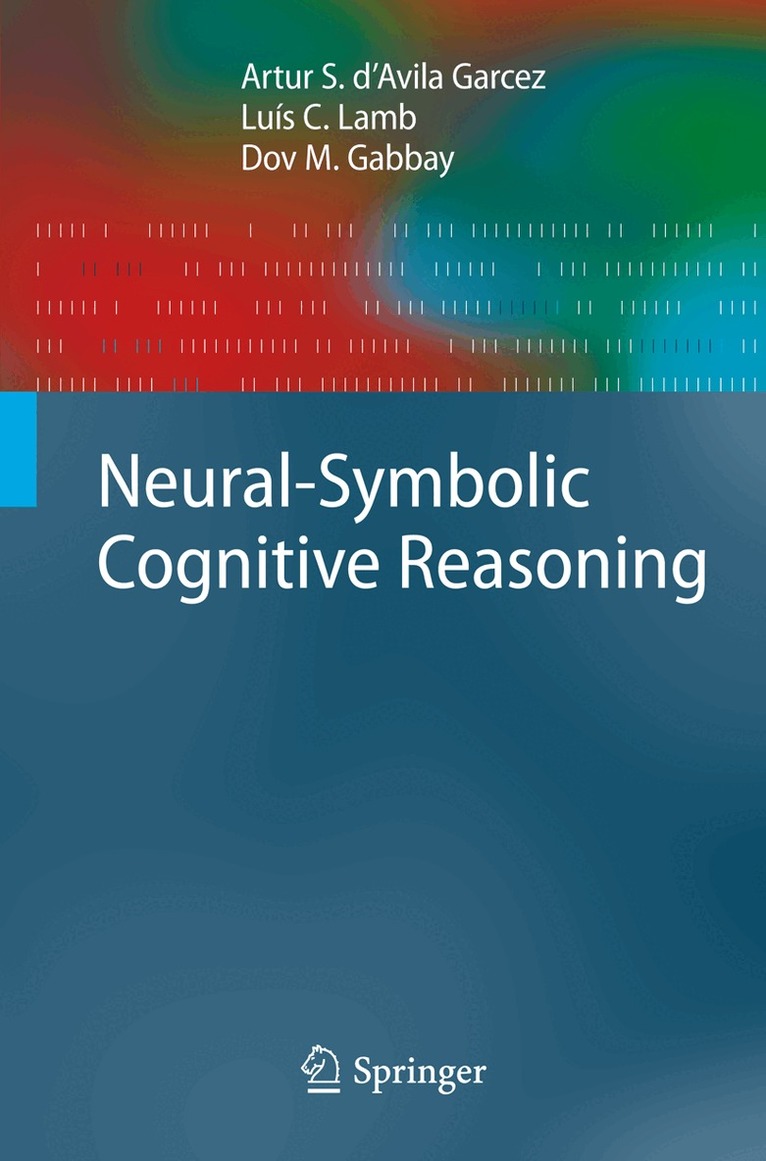
    Neural-Symbolic Cognitive Reasoning

    AvArtur S. D'Avila Garcez,Luís C. Lamb

    Häftad, Engelska, 2010

    Del i serien Cognitive Technologies

    762 kr

    Beställningsvara. Skickas inom 10-15 vardagar. Fri frakt över 249 kr.

    Fler format och utgåvor

    Inbunden

    896 kr

    Beskrivning

    Humans are often extraordinary at performing practical reasoning. There are cases where the human computer, slow as it is, is faster than any artificial intelligence system. Are we faster because of the way we perceive knowledge as opposed to the way we represent it? The authors address this question by presenting neural network models that integrate the two most fundamental phenomena of cognition: our ability to learn from experience, and our ability to reason from what has been learned. This book is the first to offer a self-contained presentation of neural network models for a number of computer science logics, including modal, temporal, and epistemic logics. By using a graphical presentation, it explains neural networks through a sound neural-symbolic integration methodology, and it focuses on the benefits of integrating effective robust learning with expressive reasoning capabilities. The book will be invaluable reading for academic researchers, graduate students, and senior undergraduates in computer science, artificial intelligence, machine learning, cognitive science and engineering. It will also be of interest to computational logicians, and professional specialists on applications of cognitive, hybrid and artificial intelligence systems.

    Produktinformation

    • Utgivningsdatum:2010-11-18
    • Mått:155 x 235 x 12 mm
    • Vikt:330 g
    • Format:Häftad
    • Språk:Engelska
    • Serie:Cognitive Technologies
    • Antal sidor:198
    • Förlag:Springer-Verlag Berlin and Heidelberg GmbH & Co. KG
    • ISBN:9783642092299

    Utforska kategorier

    • Systemvetenskap och AI inom Data och IT
    • Artificiell intelligens inom Data och IT
    • Filosofiska discipliner inom Filosofi och religion

    Innehållsförteckning

    • Logic and Knowledge Representation.- Artificial Neural Networks.- Neural-Symbolic Learning Systems.- Connectionist Modal Logic.- Connectionist Temporal Reasoning.- Connectionist Intuitionistic Reasoning.- Applications of Connectionist Nonclassical Reasoning.- Fibring Neural Networks.- Relational Learning in Neural Networks.- Argumentation Frameworks as Neural Networks.- Reasoning about Probabilities in Neural Networks.- Conclusions.