• Fri frakt över 249 kr
  • •
  • Snabba leveranser
  • •
  • Billiga böcker
Kundservice

Du är på sajten för privatpersoner.

Företag, bibliotek eller offentlig verksamhet?

Du handlar på classic.bokus.com, där alla dina funktioner finns intakta.
Till classic.bokus.com
Bokus logotyp. Gå till startsidan.
  • Erbjudanden
  • Nyheter
  • Student
  • Topplistor
  • Barn & ungdom
  • Bokus Play
  • E-böcker
  • Pocketböcker
  • Spel & pussel

10% rabatt på allt med kod NYSTART10 →

Sidfot

Mina sidor

    Hjälp

    • Kundservice
    • Vanliga frågor och svar
    • Frakt och leverans
    • Retur vid ångerrätt
    • Reklamera vara
    • Betalning
    • Köpvillkor
    • Allmänna villkor
    • Information om webbplatsens tillgänglighet

    Om Bokus

    • Om oss
    • Pressrum
    • För studenter
    • För företag
    • För bibliotek och offentlig verksamhet
    • För leverantörer
    • Hållbarhet

    Populärt

    • Aktuella erbjudanden
    • Presentkort
    • Studentlitteratur
    • Nya böcker
    • Topplistor
    • Signerade böcker
    • Engelska böcker

    Inspiration

    • Boktips
    • BookTok
    • Populära bokserier
    • Barnbokskaraktärer
    • Populära författare
    Logotyp för Bokus
    Följ oss på Facebook (extern länk)Följ oss på Instagram (extern länk)Följ oss på YouTube (extern länk)Följ oss på TikTok (extern länk)
    bokus @ CookiesAnpassa cookiesIntegritetspolicyKöpvillkor
    Till Citymail hemsida (extern länk)Till Budbee hemsida (extern länk)Till Postnord hemsida (extern länk)Till Schenker hemsida (extern länk)Till Early Bird hemsida (extern länk)Till Walleys hemsida (extern länk)
    1. Naturvetenskap och teknik
    2. Matematik och naturvetenskap
    3. Biologi
    4. Biokemi

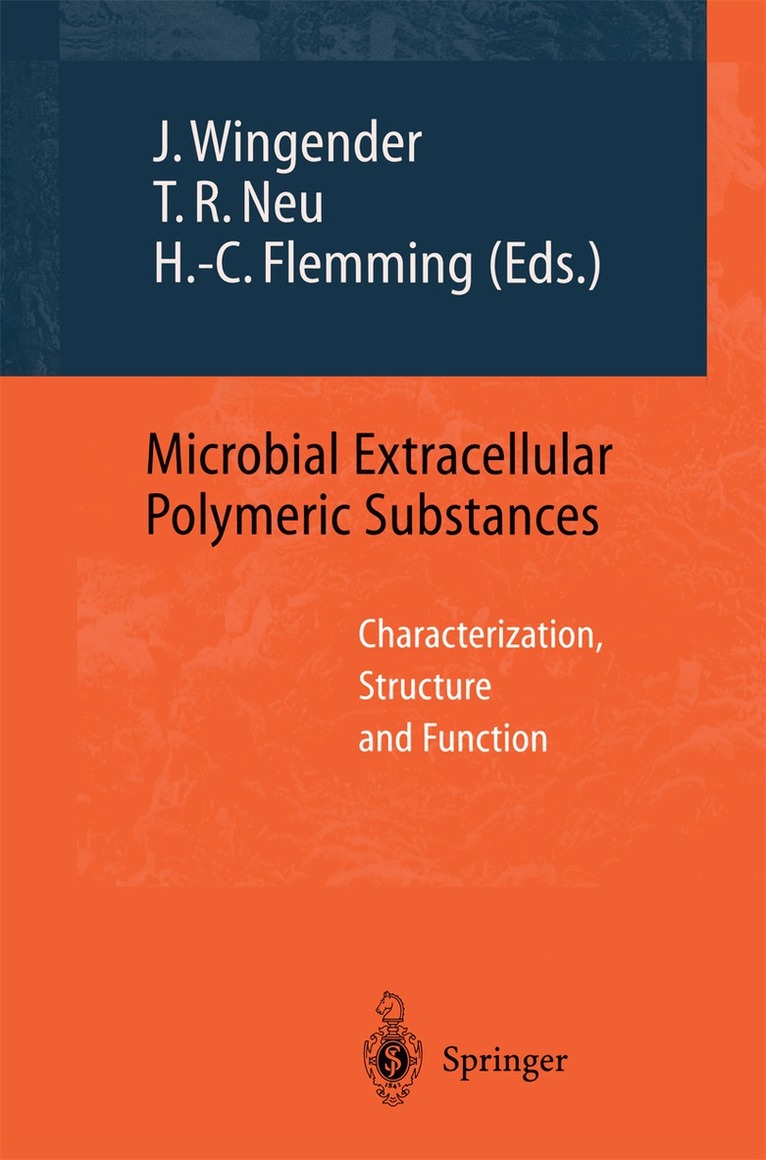
    Microbial Extracellular Polymeric Substances

    Characterization, Structure and Function

    AvJost Wingender,Thomas R. Neu

    Häftad, Engelska, 2011

    1 085 kr

    Beställningsvara. Skickas inom 10-15 vardagar. Fri frakt över 249 kr.

    Beskrivning

    Microbial extracellular polymeric substances (EPS) are the key components for the aggregation of microorganisms in biofilms, flocs and sludge. They are composed of polysaccharides, proteins, nucleic acids, lipids and other biological macromolecules. EPS provide a highly hydrated gel matrix in which microbial cells can establish stable synergistic consortia. Cohesion and adhesion as well as morphology, structure, biological function and other properties such as mechanical stability, diffusion, sorption and optical properties of microbial aggregates are determined by the EPS matrix. Also, the protection of biofilm organisms against biocides is attributed to the EPS. Their matrix allows phase separation in biofiltration and is also important for the degradation of particulate material which is of great importance for the self purification processes in surface waters and for waste water treatment.

    Produktinformation

    • Utgivningsdatum:2011-10-03
    • Mått:155 x 235 x 17 mm
    • Vikt:424 g
    • Format:Häftad
    • Språk:Engelska
    • Antal sidor:258
    • Förlag:Springer-Verlag Berlin and Heidelberg GmbH & Co. KG
    • ISBN:9783642642777

    Utforska kategorier

    • Biokemi inom Naturvetenskap och teknik
    • Biokemisk teknik inom Naturvetenskap och teknik
    • Biologi inom Naturvetenskap och teknik

    Innehållsförteckning

    • What are Bacterial Extracellular Polymeric Substances?.- 1 Introduction.- 2 Definitions of EPS.- 3 Composition, Secretion and Spatial Arrangement of EPS.- 4 Industrial and Clinical Importance of EPS.- 5 Bacterial Alginate — an Example of Bacterial EPS.- 6 Functions of EPS.- 7 Ecological Aspects of EPS.- References.- In Situ Characterization of Extracellular Polymeric Substances (EPS) in Biofilm Systems.- 1 Introduction.- 2 Destructive Analysis of EPS.- 3 Non-Destructive Analysis of EPS.- 4 CLSM Approach.- 5 Image Analyses and Three-Dimensional Data Presentation.- 6 Case Studies: In Situ Characterization of EPS.- 7 Limitations of Non-Destructive Analyses.- References.- Extraction of EPS.- 1 Introduction.- 2 Sampling and Pretreatment.- 3 Extraction of EPS.- 4 Contamination by Intracellular Macromolecules.- 5 Disruption of Macromolecules.- 6 Extraction Efficiency.- 7 Purification and Analysis.- 8 Conclusion.- References.- Biofilm Exopolysaccharides.- 1 Introduction.- 2 Polysaccharide Composition and Structure.- 3 Promotion of Order and Gelation.- 4 Ionic Interactions.- 5 Synergistic Effects.- 6 Other Functions of Biofilm Exopolysaccharides.- 7 Dissolution of Physical Structures.- 8 Conclusions.- References.- Regulation of Matrix Polymer in Biofilm Formation and Dispersion.- 1 Alginate Biosynthesis in Pseudomonas aeruginosa.- 2 Regulation of Alginate Biosynthetic Genes During Biofilm Development.- 3 Control of Biofilm Dispersion.- 4 Activation of Alginate Biosynthesis and Chemical Communication in Biofilms.- 5 P.aeruginosa Biofilm Life Cycle.- References.- Exopolymers of Sulphate-Reducing Bacteria.- Analysis and Function of the EPS from the Strong Acidophile Thiobacillus ferrooxidans.- 1 Introduction.- 2 Leaching Bacteria.- 3 Metal Sulfide Dissolution.- 4 EPS Analysis.- 5Function of EPS.- 6 Conclusions.- References.- Physical and Chemical Properties of Extracellular Polysaccharides Associated with Biofilms and Related Systems.- 1 Introduction.- 2 Biopolymer Gels.- 3 Physical Characterization of Biofilms.- 4 Chemical and Biochemical Characterization of Biofilms.- 5 Bacterial Alginates.- References.- Chemical Communication Within Microbial Biofilms: Chemotaxis and Quorum Sensing in Bacterial Cells.- 1 Introduction.- 2 Bacterial Chemotaxis and Initial Aggregations of Cells.- 3 Microspatial Patterns and Movement of Bacteria Within Biofilms.- 4 Bacterial Quorum Sensing: Induction and Regulation of Activities.- 5 Enhancement of Chemotaxis and Quorum Sensing Processes by the Biofilm Matrix.- 6 The Biofilm as a Microbial Organism.- References.- Function of EPS.- 1 Introduction.- 2 Role of EPS in Cellular Associations.- 3 Role of EPS in Nutrition.- 4 Role of EPS in the Interaction of Microorganisms with their Biological, Physical, and Chemical Environment.- 5 EPS and the Macro-Environment.- 6 Conclusions.- References.- Polysaccharases in Biofilms — Sources — Action — Consequences!.- 1 Polysaccharases in Biofilms.- 2 Nature of Polysaccharases.- 3 Sources of Polysaccharases.- 4 Effects of Enzymes on Biofilms.- 5 Application of Enzymes to Biofilms.- References.- Extracellular Enzymes Within Microbial Biofilms and the Role of the Extracellular Polymer Matrix.- 1 Introduction: Importance of Extracellular Enzymes to Bacterial Cells and Organic Matter Processing.- 2 The Microbial Biofilm and Extracellular Polymers.- 3 Extracellular Polymers as a “Sorptive Sponge” and “Colloidal Trap” for High-Molecular-Weight Organic Matter.- 4 Localization of Enzymes by Extracellular Polymers: the “Lectin-Localization Model”.- 5 “ExtracellularPolymer Microdomains” and the Stability of Extracellular Enzymes.- 6 Environmental Influences on Enzyme Activity.- 7 Biofilm Induction and Regulation of Extracellular Enzymes..- References.- Interaction Between Extracellular Polysaccharides and Enzymes.- 1 Extracellular Enzymes in Biofilms.- 2 Mechanisms of Enzyme and Polysaccharide Secretion.- 3 Interaction of Enzymes with Extracellular Polysaccharides.- 4 Consequences of Enzyme-Polysaccharide Interactions in Biofilms.- References.