• Fri frakt över 249 kr
  • •
  • Snabba leveranser
  • •
  • Billiga böcker
Kundservice

Du är på sajten för privatpersoner.

Företag, bibliotek eller offentlig verksamhet?

Du handlar på classic.bokus.com, där alla dina funktioner finns intakta.
Till classic.bokus.com
Bokus logotyp. Gå till startsidan.
  • Erbjudanden
  • Nyheter
  • Student
  • Topplistor
  • Barn & ungdom
  • Bokus Play
  • E-böcker
  • Pocketböcker
  • Spel & pussel

10% rabatt på allt med kod NYSTART10 →

Sidfot

Mina sidor

    Hjälp

    • Kundservice
    • Vanliga frågor och svar
    • Frakt och leverans
    • Retur vid ångerrätt
    • Reklamera vara
    • Betalning
    • Köpvillkor
    • Allmänna villkor
    • Information om webbplatsens tillgänglighet

    Om Bokus

    • Om oss
    • Pressrum
    • För studenter
    • För företag
    • För bibliotek och offentlig verksamhet
    • För leverantörer
    • Hållbarhet

    Populärt

    • Aktuella erbjudanden
    • Presentkort
    • Studentlitteratur
    • Nya böcker
    • Topplistor
    • Signerade böcker
    • Engelska böcker

    Inspiration

    • Boktips
    • BookTok
    • Populära bokserier
    • Barnbokskaraktärer
    • Populära författare
    Logotyp för Bokus
    Följ oss på Facebook (extern länk)Följ oss på Instagram (extern länk)Följ oss på YouTube (extern länk)Följ oss på TikTok (extern länk)
    bokus @ CookiesAnpassa cookiesIntegritetspolicyKöpvillkor
    Till Citymail hemsida (extern länk)Till Budbee hemsida (extern länk)Till Postnord hemsida (extern länk)Till Schenker hemsida (extern länk)Till Early Bird hemsida (extern länk)Till Walleys hemsida (extern länk)
    1. Data och IT
    2. Systemvetenskap och AI

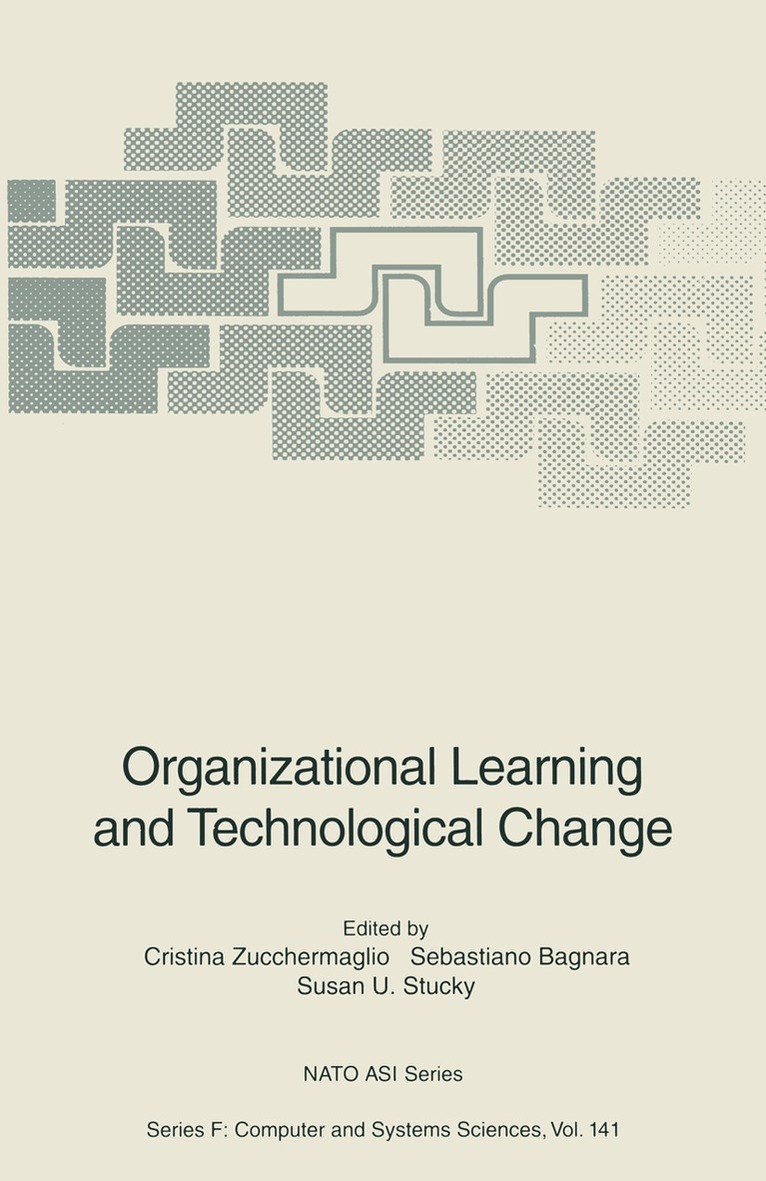
    Organizational Learning and Technological Change

    AvCristina Zucchermaglio,Sebastiano Bagnara

    Häftad, Engelska, 2011

    Del i serien NATO ASI Subseries F:

    1 117 kr

    Beställningsvara. Skickas inom 10-15 vardagar. Fri frakt över 249 kr.

    Beskrivning

    What the Book Is About This book is about the problem of organizational learning, that is the analysis of organizations conceived as learning systems. In order to survive in a period of a rapid change, organizations must innovate and than to develop and exploit their abilities to learn. The most innovative organizations are those that can respond with great efficiency to internal and external changes. They respond to and generate technological change by acting as effective learning systems. They maximize the learning potential of ongoing and "normal" work activities. The organizational structure and the technology allow members to learn while the organizations itself learns from its members. So organizations reach high levels of innovation when structured to take advantage of the social, distributed, participative, situated processes of learning developed by its members in interaction with the technological environment. Organizations should consider learning as an explicit "productive" objective. They must create integrated learning mechanisms, that encompass technological tools, reward and incentive systems, human resource practices, belief systems, access to information, communication and mobility patterns, performance appraisal systems, organizational practices and structures. The design of efficient learning organizations requires cognitive, technological and social analyses. All the computer-based technologies (e. g. office automation, communication and group decision support) not only those devoted to and used in training activities, have to be considered as tools for organizational learning and innovation.

    Produktinformation

    • Utgivningsdatum:2011-12-23
    • Mått:155 x 235 x 21 mm
    • Vikt:587 g
    • Format:Häftad
    • Språk:Engelska
    • Serie:NATO ASI Subseries F:
    • Antal sidor:368
    • Förlag:Springer-Verlag Berlin and Heidelberg GmbH & Co. KG
    • ISBN:9783642795527

    Utforska kategorier

    • Systemvetenskap och AI inom Data och IT
    • Artificiell intelligens inom Data och IT
    • Affärsförhandlingar inom Ekonomi och Ledarskap

    Innehållsförteckning

    • I. Organizations as Learning Bodies.- Technology in Support of Organizational Learning.- Practice Cannot be Reduced to Theory: Knowledge, Representations, and Change in the Workplace.- Ethnography and Organizational Learning: In Pursuit of Learning at Work.- Organization and Cognitive Design of (Technological) Learning Environment.- Learning is an Active and Personal Process.- II. Learning and Organizations.- Mental Models of Complex Systems: When Veridicality Decreases Functionality.- Error Management in Training: Conceptual and Empirical Results.- Decision Aiding in an Organizational Context.- User Interface Design from the Viewpoint of Human Learning.- Organizational Setting and Task Complexity: Interactions with Collective and Individual Cognitive Abilities. Elements for Elaborating a Framework.- Learning Strategies and Organizations.- III. Technology for Cooperative Learning and Working.- The School as a Workplace.- Intelligent Learning by Doing Tools for Technical and Dialectical Knowledge.- The Use of Computer-Mediated Role Play in Management Training.- Organizational Learning and Hypermedia: An Action Science Perspective.- Supporting Cooperative Work with Workflow Management Technology.- Computer Support for Cooperative Work: Computers Between Users and Social Complexity.- Communicating Through Pictures.- Complex Organizations, Knowledge-Intensive Applications, Software and Systems Development: A Case Study.