• Fri frakt över 249 kr
  • •
  • Snabba leveranser
  • •
  • Billiga böcker
Kundservice

Du är på sajten för privatpersoner.

Företag, bibliotek eller offentlig verksamhet?

Du handlar på classic.bokus.com, där alla dina funktioner finns intakta.
Till classic.bokus.com
Bokus logotyp. Gå till startsidan.
  • Erbjudanden
  • Nyheter
  • Student
  • Topplistor
  • Barn & ungdom
  • Bokus Play
  • E-böcker
  • Pocketböcker
  • Spel & pussel

10% studentrabatt med kod TERM26

Sidfot

Mina sidor

    Hjälp

    • Kundservice
    • Vanliga frågor och svar
    • Frakt och leverans
    • Retur vid ångerrätt
    • Reklamera vara
    • Betalning
    • Köpvillkor
    • Allmänna villkor
    • Information om webbplatsens tillgänglighet

    Om Bokus

    • Om oss
    • Pressrum
    • För studenter
    • För företag
    • För bibliotek och offentlig verksamhet
    • För leverantörer
    • Hållbarhet

    Populärt

    • Aktuella erbjudanden
    • Presentkort
    • Studentlitteratur
    • Nya böcker
    • Topplistor
    • Signerade böcker
    • Engelska böcker

    Inspiration

    • Boktips
    • BookTok
    • Populära bokserier
    • Barnbokskaraktärer
    • Populära författare
    Logotyp för Bokus
    Följ oss på Facebook (extern länk)Följ oss på Instagram (extern länk)Följ oss på YouTube (extern länk)Följ oss på TikTok (extern länk)
    bokus @ CookiesAnpassa cookiesIntegritetspolicyKöpvillkor
    Till Citymail hemsida (extern länk)Till Budbee hemsida (extern länk)Till Postnord hemsida (extern länk)Till Schenker hemsida (extern länk)Till Early Bird hemsida (extern länk)Till Walleys hemsida (extern länk)
    1. Samhälle och politik
    2. Samhälle och kultur
    3. Kultur och medier
    4. Referensverk och tvärvetenskap

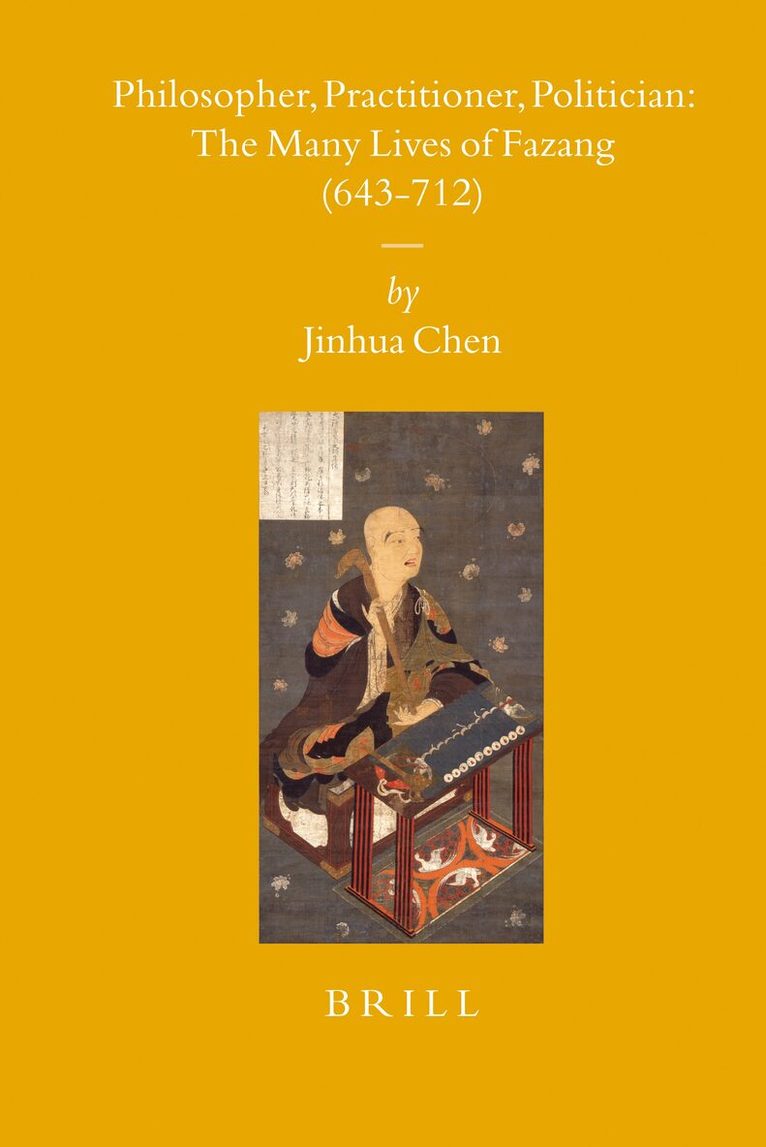
    Philosopher, Practitioner, Politician: the Many Lives of Fazang (643-712)

    AvJinhua Chen

    Inbunden, Engelska, 2007

    Del 75 i serien Sinica Leidensia

    3 650 kr

    Beställningsvara. Skickas inom 5-8 vardagar. Fri frakt över 249 kr.

    Beskrivning

    The Buddhist monk Fazang (643-712), regarded today mainly as a scholastic monk, was in fact one of the greatest metaphysicians in Asia. This biographical - and hagiographical - study of Fazang seeks to explore his other contributions and in so doing to correct some major mis-presentations and misinterpretations existing in modern scholarship. It highlights and uncovers aspects of Fazang’s complicated life which have been neglected or ignored until now. By experimenting with some methodological innovations in reading medieval Chinese monastic hagio-biography, this study reveals general features, structures and overall governing laws of medieval East Asian monastic hagio-biographic literature. In doing so it is a major contribution to the ongoing discussion among scholars of hagiography in other contexts as well.

    Produktinformation

    • Utgivningsdatum:2007-05-11
    • Mått:155 x 235 x 37 mm
    • Vikt:987 g
    • Format:Inbunden
    • Språk:Engelska
    • Serie:Sinica Leidensia
    • Antal sidor:540
    • Förlag:Brill
    • ISBN:9789004156135

    Utforska kategorier

    • Referensverk och tvärvetenskap inom Samhälle och politik
    • Religion: allmänt inom Filosofi och religion

    Mer om författaren

    Jinhua Chen, Ph.D. (1997), McMaster University, is Associate Professor at the University of British Columbia. He has published extensively on East Asian Buddhism, including Making and Remaking History (1999), Monks and Monarchs, Kinship and Kingship (2002), and Legend and Legitimation (2007).

    Recensioner i media

    "Nicht nur zum Verständnis der Entwicklung des chinesischen Buddhismus is diese vorzügliche Studie grundlegend, sondern sie vermittelt auch einen differenzierten Einblick in das China der Tang-Zeit über den Buddhismus hinaus, ja sie zeigt, wie sich die Verschmelzungen unterschiedlicher Traditionen und Interessenlage vollzogen. Hier wurden strukturelle Grundmuster eingeübt, die China bis heute prägen."Michael von Brück, München, Theologische Literaturzeitung, 2009:134/12.'Chen's book is an important contribution to the study of Chinese Buddhist historiography and Huayan studies in particular.'Imre Hamar

    Innehållsförteckning

    • CONTENTSIntroductionPart One  A Biographical ReconstructionChapter One  Primary Sources and Secondary Studies1 Epigraphic Sources2 Textual Sources3 Modern Studies: Contributions and Limitations4 Concluding Remarks: The Nature and Structure of the Primary Sources, and the Problems of Modern StudiesChapter Two  Ch’oe Ch’iwŏn’s Biography of Fazang: A Textual Study1  Format and Contents2  Sources of Pŏpjang Hwasang Chŏn3  Values and Limitations4  Concluding RemarksChapter Three  Fazang’s Basic Biographical Data: Names, Native Land, Familial and Dharma Backgrounds1  Names2  Places of Origin and Birth3  Family Background4  “Dharma Family”5  Concluding RemarksChapter Four  The Eminent Monk Who Wasn’t?: Stories about Fazang’s Full Ordination1  From Yan Chaoyin to Zuxiu: Why Fazang’s Ordination Became an Issue2  The Fictional Nature of the “Ordination Episode”3  Fazang and Śākyamitra: Further Evidence4  Concluding RemarksChapter Five  A Man of Many Faces: Fazang’s Life Reconstructed, I1  Becoming a Buddhist Monk: 643-6702  Emergence of a Buddhist Master: 670-6903  Fazang under Empress Wu’s Reign up to 699 Chapter Six  A Man of Many Faces: Fazang’s Life Reconstructed, II1  Fazang under the Last Five Years of Empress Wu’s Reign (700-705)2  Under the Reign of Zhongzong: 705-7103  Under the Reign of Ruizong: 710-7124  Concluding RemarksPart Two:  Thematic and Hagiographical Studies Chapter Seven  Fazang the Philosopher1  Legends Regarding the Composition of the “Treatise on the Golden Lion”2  The Mirror Hall3  Concluding RemarksChapter Eight  Fazang the Technical Innovator1  A Great Secret Wrapped in a Small Package2  The Provenance of the Printed Dhāraṇī Text: Korea or China?3  The Promise of Health and Long Life in the Dhāraṇī Text4  Empress Wu and Daoist Immortality5  Fazang’s Role in Printing and Spreading Wugou Jingguang Da Tuoluoni Jing6  Fazang’s Knowledge of Mulberry Paper7  Concluding RemarksChapter Nine  Fazang the Translator1  Collaboration with Divākara and Devendraprajña2  Collaboration with Śikṣānanda and Mitrasena3  Collaboration with Yijing and Bodhiruci4  Concluding RemarksChapter Ten  Fazang the Court Politician1  Fazang and Empress Wu: 670-6902  Fazang and Empress Wu: 690-7053  Fazang’s Role in the Transition of Power: 700-7054  Fazang under the Reigns of Zhongzong (705-710) and Ruizong (710-712)5  Concluding RemarksChapter ElevenFazang’s Religious Life1  Esoteric Practices2  Daoist Practices3  Self-immolation and Relic-veneration4  Concluding RemarksChapter TwelveFazang the Wonderworker1  Miracle Stories about Fazang’s Mastery of the Avataṃsaka Teachings2  Fazang the Rain-maker and Disciplinarian3  The Magician as Warrior?: Fazang and the Suppression of a Khitan Rebellion (696-697)4  Concluding RemarksConclusionPart Three:  AppendixesBibliographyIndex