• Fri frakt över 249 kr
  • •
  • Snabba leveranser
  • •
  • Billiga böcker
Kundservice

Du är på sajten för privatpersoner.

Företag, bibliotek eller offentlig verksamhet?

Du handlar på classic.bokus.com, där alla dina funktioner finns intakta.
Till classic.bokus.com
Bokus logotyp. Gå till startsidan.
  • Erbjudanden
  • Nyheter
  • Student
  • Topplistor
  • Barn & ungdom
  • Bokus Play
  • E-böcker
  • Pocketböcker
  • Spel & pussel

10% rabatt på allt med kod: NYSTART10 →

Sidfot

Mina sidor

    Hjälp

    • Kundservice
    • Vanliga frågor och svar
    • Frakt och leverans
    • Retur vid ångerrätt
    • Reklamera vara
    • Betalning
    • Köpvillkor
    • Allmänna villkor
    • Information om webbplatsens tillgänglighet

    Om Bokus

    • Om oss
    • Pressrum
    • För studenter
    • För företag
    • För bibliotek och offentlig verksamhet
    • För leverantörer
    • Hållbarhet

    Populärt

    • Aktuella erbjudanden
    • Presentkort
    • Studentlitteratur
    • Nya böcker
    • Topplistor
    • Signerade böcker
    • Engelska böcker

    Inspiration

    • Boktips
    • BookTok
    • Populära bokserier
    • Barnbokskaraktärer
    • Populära författare
    Logotyp för Bokus
    Följ oss på Facebook (extern länk)Följ oss på Instagram (extern länk)Följ oss på YouTube (extern länk)Följ oss på TikTok (extern länk)
    bokus @ CookiesAnpassa cookiesIntegritetspolicyKöpvillkor
    Till Citymail hemsida (extern länk)Till Budbee hemsida (extern länk)Till Postnord hemsida (extern länk)Till Schenker hemsida (extern länk)Till Early Bird hemsida (extern länk)Till Walleys hemsida (extern länk)
    1. Samhälle och politik
    2. Samhälle och kultur
    3. Kultur och medier
    4. Kulturvetenskap

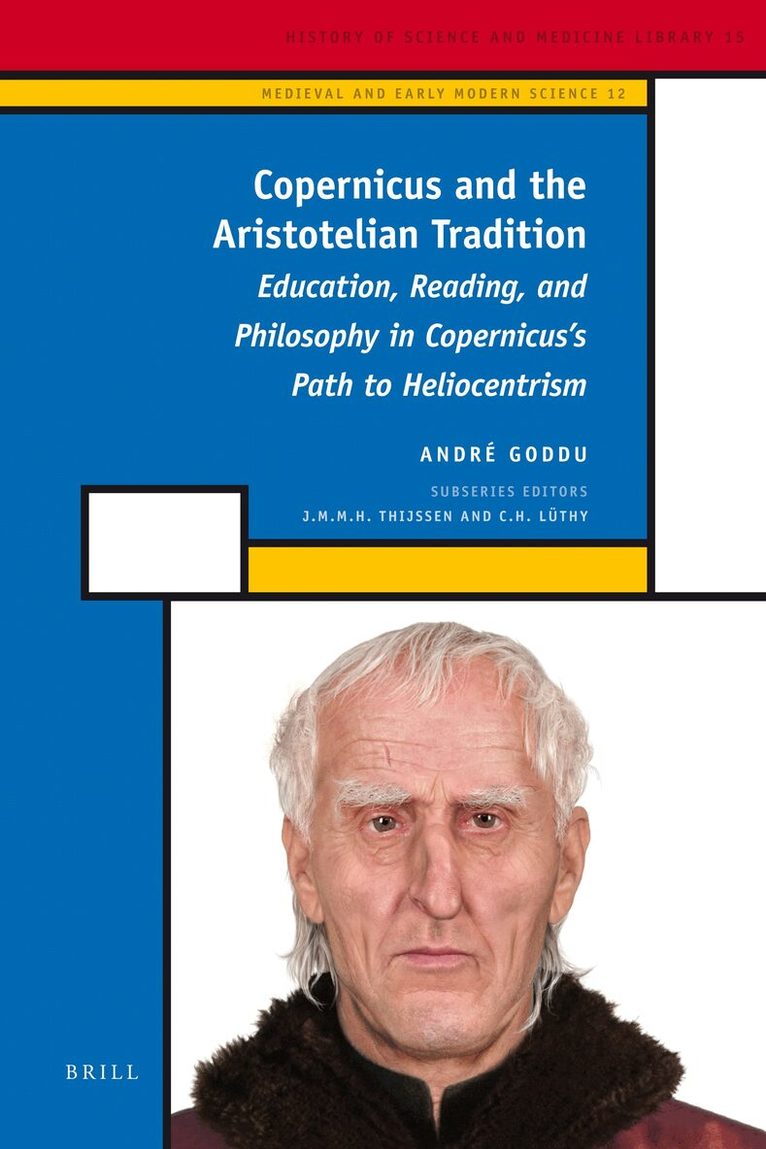
    Copernicus and the Aristotelian Tradition

    Education, Reading, and Philosophy in Copernicus's Path to Heliocentrism

    AvAndré Goddu

    Inbunden, Engelska, 2010

    Del 12 i serien Medieval and Early Modern Philosophy and Science

    3 135 kr

    Beställningsvara. Skickas inom 5-8 vardagar. Fri frakt över 249 kr.

    Beskrivning

    Taking into account the most important results of the scholarly literature since 1973 and the best Polish scholarship of the past century, this is the first comprehensive study of Copernicus's achievement in English that examines Copernicus's path to heliocentrism from the perspective of late medieval philosophy, the Renaissance recovery of ancient literature and science, and early-modern editions of books that Copernicus used. The principal goals are to explain his commitment to the existence of celestial spheres, and the logical foundations for his views about hypotheses. In doing so, the work elucidates the logical and philosophical background that contributed to his accomplishments, and explains the limitations of his achievement.Medieval and Early Modern Science, 12

    Produktinformation

    • Utgivningsdatum:2010-01-25
    • Mått:155 x 235 x 38 mm
    • Vikt:1 012 g
    • Format:Inbunden
    • Språk:Engelska
    • Serie:Medieval and Early Modern Philosophy and Science
    • Antal sidor:548
    • Förlag:Brill
    • ISBN:9789004181076

    Utforska kategorier

    • Kulturvetenskap inom Samhälle och politik
    • Europas historia inom Historia och arkeologi
    • Naturvetenskapens historia inom Naturvetenskap och teknik

    Mer om författaren

    André Goddu, Ph.D. (1979) in History, University of California at Los Angeles, is Professor of History and Philosophy of Science, Department of Physics and Astronomy, Stonehill College. He has published a monograph and several articles on late medieval philosophy and early modern astronomy, including The Physics of William of Ockham (Brill, 1984).

    Recensioner i media

    'Goddu manages to integrate a long tradition of approaching Copernicus from the history of ideas in a more recent ‘history-of-reading’ approach. [...] For reasons that may ultimately be unexplainable, Nicholas Copernicus has never failed to stimulate the patience, critical self-awareness and erudite efforts of historians of science. André Goddu’s book is probably the finest example of this to date.' Steven Vanden Broecke, Ghent UniversityBritish Journal for the History of Science, 2011, December, 587-588 pp.

    Innehållsförteckning

    • List of IllustrationsPrefaceAcknowledgementsIntroductionPART I: COPERNICUS'S EDUCATION IN POLAND1. Poland, Toruń, and Cracow in the Fifteenth Century 1. Early Education 2. Cracow University 3. Curriculum and Texts, 1475-15002. Masters and Students in the 1490s3. The Teaching of Logic 1. Aristotelian Logic 2. Introductory Orientation 3. The Teaching of Logic at Cracow4. Natural Philosophy 1. General Orientation 2. Markowski's Most Important and Relevant Conclusions— 3. Quaestiones cracovienses and John of Glogovia on the Physics of Aristotle 4. Aristotle's De caelo, De generatione, Meteorologica, and Metaphysics 5. Johannes Versoris 6. Albert of Saxony and John of Glogovia 5. Humanism and Astronomy 1. Introduction 2. The Curriculum at Cracow 3. The Criticisms of Ptolemaic Astronomy 4. Copernicus's Teachers at Cracow 5. Albert of Brudzewo’s CommentariolumPART II: COPERNICUS’S EDUCATION IN ITALY, 1496-1503, AND RETURN TO POLAND6. Copernicus in Italy 1. Introduction 2. Education in Canon and Civil Law 3. Novara 4. Study of Greek 5. Rome 6. Study of Medicine at Padua 7. Degree from Ferrara.7. Copernicus’s Reading and Progress towards his First Heliocentric Theory 1. Introduction 2. Regiomontanus 3. Bessarion 4. Ficino's Translation of Plato's Works 5. Plutarch, Pseudo-Plutarch, and Giorgio Valla 6. Pliny the Elder and other Ancient Authorities 7. Achillini 8. Commentariolus and the Transfer to FromborkPART III: COPERNICUS AS PHILOSOPHER8. Copernicus as Logician 1. Introduction 2. The Sources of Dialectical Topics, 1490-1550 3. Mereology—Logic and Ontology 4. Logic in the Commentariolus 5. The Use of Topics in the Preface to De revolutionibus 6. The Rhetorical Framework of Book I 7. The Use of Topics in Book I 8. Hypotheses in Copernicus's Method 9. The Logical Issues in the Relation between Mathematics and Natural Philosophy 10. The Logical Issues in his Discovery of the Heliocentric Theory 11. Concluding Remarks on Copernicus's Relation to the Aristotelian Logical Tradition9. Copernicus as Natural Philosopher 1. Introduction 2. Critique of Geocentrism 3. Motions of Celestial Bodies 4. Impetus and the Motions of Elemental Bodies 5. Infinity and the Finiteness of the Cosmos 6. Summary10. Copernicus as Mathematical Cosmologist 1. Introduction 2. Hypotheses 3. Spheres and the Nature of Celestial Matter 4. Equants 5. SummaryConclusion and Epilog 1. Summary 2. Copernicus's Interpretation of Aristotle 3. Epilog: Reception of Copernicus's InterpretationAppendicesBibliographyIndex