• Fri frakt över 249 kr
  • •
  • Snabba leveranser
  • •
  • Billiga böcker
Kundservice

Du är på sajten för privatpersoner.

Företag, bibliotek eller offentlig verksamhet?

Du handlar på classic.bokus.com, där alla dina funktioner finns intakta.
Till classic.bokus.com
Bokus logotyp. Gå till startsidan.
  • Erbjudanden
  • Nyheter
  • Student
  • Topplistor
  • Barn & ungdom
  • Bokus Play
  • E-böcker
  • Pocketböcker
  • Spel & pussel

10% rabatt på allt med kod NYSTART10 →

Sidfot

Mina sidor

    Hjälp

    • Kundservice
    • Vanliga frågor och svar
    • Frakt och leverans
    • Retur vid ångerrätt
    • Reklamera vara
    • Betalning
    • Köpvillkor
    • Allmänna villkor
    • Information om webbplatsens tillgänglighet

    Om Bokus

    • Om oss
    • Pressrum
    • För studenter
    • För företag
    • För bibliotek och offentlig verksamhet
    • För leverantörer
    • Hållbarhet

    Populärt

    • Aktuella erbjudanden
    • Presentkort
    • Studentlitteratur
    • Nya böcker
    • Topplistor
    • Signerade böcker
    • Engelska böcker

    Inspiration

    • Boktips
    • BookTok
    • Populära bokserier
    • Barnbokskaraktärer
    • Populära författare
    Logotyp för Bokus
    Följ oss på Facebook (extern länk)Följ oss på Instagram (extern länk)Följ oss på YouTube (extern länk)Följ oss på TikTok (extern länk)
    bokus @ CookiesAnpassa cookiesIntegritetspolicyKöpvillkor
    Till Citymail hemsida (extern länk)Till Budbee hemsida (extern länk)Till Postnord hemsida (extern länk)Till Schenker hemsida (extern länk)Till Early Bird hemsida (extern länk)Till Walleys hemsida (extern länk)
    1. Samhälle och politik
    2. Samhälle och kultur

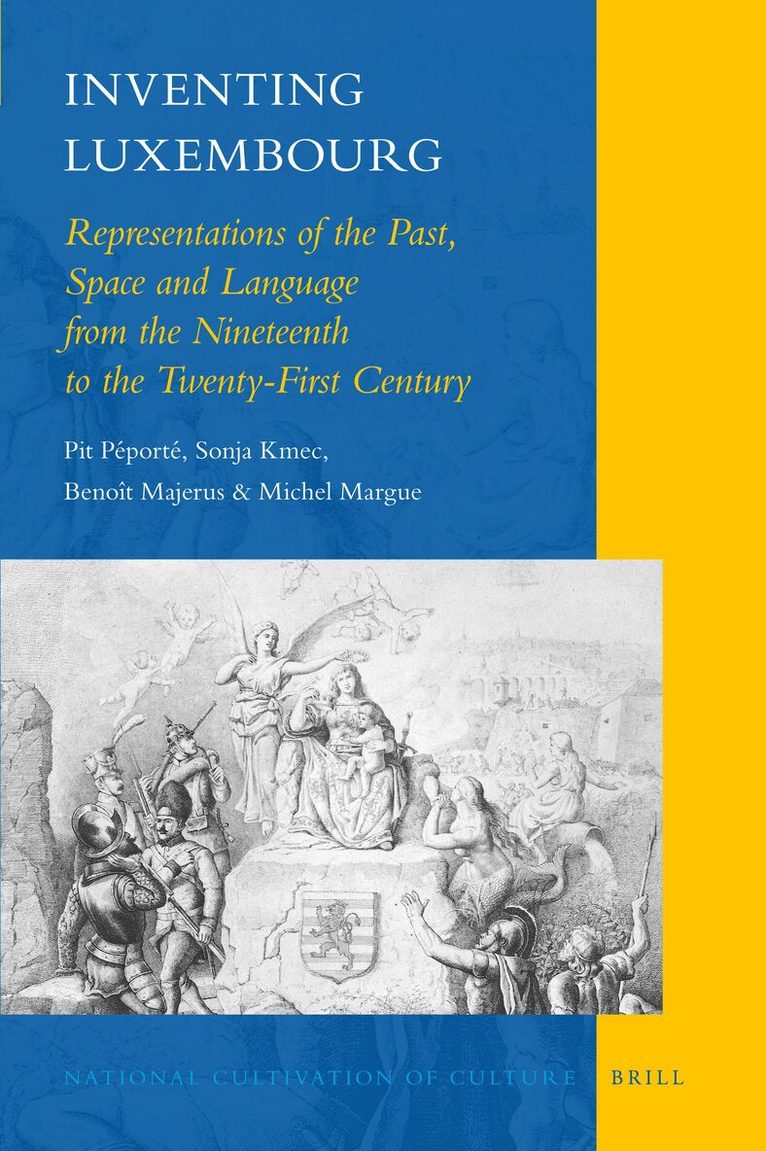
    Inventing Luxembourg

    Representations of the Past, Space and Language from the Nineteenth to the Twenty-First Century

    AvPit Péporté,Sonja Kmec

    Inbunden, Engelska, 2010

    Del 1 i serien National Cultivation of Culture

    977 kr

    Beställningsvara. Skickas inom 5-8 vardagar. Fri frakt över 249 kr.

    Beskrivning

    The grand duchy of Luxembourg was created after the Napoleonic Wars, but at the time there was no 'nation' that identified with the emergent state. This book analyses how politicians, scholars and artists have initiated and contributed to nation-building processes in Luxembourg since the nineteenth century, processes that – as this book argues – are still ongoing. The focus rests on three types of representations of nationhood: a shared past, a common homeland and a national language. History was written so as to justify the country's political independence. Territorial borders shifted meaning, constantly repositioning the national community. The local dialect – initially considered German variant – was gradually transformed into the 'national language', Luxembourgish.

    Produktinformation

    • Utgivningsdatum:2010-02-16
    • Mått:155 x 235 x 28 mm
    • Vikt:737 g
    • Format:Inbunden
    • Språk:Engelska
    • Serie:National Cultivation of Culture
    • Antal sidor:388
    • Förlag:Brill
    • ISBN:9789004181762

    Utforska kategorier

    • Samhälle och kultur inom Samhälle och politik
    • Kulturvetenskap inom Samhälle och politik
    • Europas historia inom Historia och arkeologi

    Mer om författaren

    Pit Péporté, PhD (2008) in History, University of Edinburgh, is a postdoctoral researcher at the University of Luxembourg. With a background in the medieval history of the Low Countries, he has also published in the fields of historiography and collective memory.Sonja Kmec, PhD (2004) in History, University of Oxford, is a postdoctoral researcher at the University of Luxembourg. Her latest book is Across the Channel, Noblewomen in Seventeenth-Century France and England (Trier: Kliomedia, 2009).Benoît Majerus, PhD (2004) in History, Free University of Brussels, is a postdoctoral researcher (FNRS) at that same university. He has published extensively on the German occupation of Belgium and Luxembourg in the two world wars and the history of psychiatry.Michel Margue, PhD (1999) in History, Free University of Brussels, is Professor of History at the University of Luxembourg and currently also its Dean of the Faculty of Lettres, Humanities, Arts and Education. He has published extensively on medieval history.

    Recensioner i media

    "Even without looking at the impact of the nationalising discourses it analyses, this book remains an important contribution to the wider field of nationalism studies. Indeed, it has already opened new venues for research on topics such as the development of national museums in Belgium and increased our awareness of how examining the nation-building process as a continuing development requires keeping one eye on the past and the other on the future." – Madalina Valeria Veres, in: European Review of History – Revue européenne d’histoire 19/3, p. 463-464"Vor allem aber ist die konsequente Analyse der Konstruktion der luxemburgischen Nation auf den drei ausgewählten Untersuchungsebenen eine imponierende Leistung. Die historische Luxemburgforschung beteiligt sich seit zwei Jahrzehnten im Bereich der mittelalterlichen und der Städtegeschichte, in der Geschichte der ländlichen Gesellschaft und der europäischen Integration an den internationalen Forschungsdebatten. Mit Inventing Luxemburg gilt dies auch für die Erforschung von Nationsbildungen." – Norbert Franz, in: SEHEPUNKTE – Rezensionsjournal für die Geschichtswissenschaften 10/11 (2010)

    Innehållsförteckning

    • List of Tables and IllustrationsAcknowledgementsIntroductionPart I. Narrating the PastIntroduction: Making Sense, Producing Meaning: Time, Memory and Historical Narratives1. The Master Narrative of Luxembourg’s History2. The Dissemination, Reception and Public Use of the Master Narrative3. Different Narratives?ConclusionsPart II. Drawing the BoundariesIntroduction: From Border Patrol to Border Petrol Stations?4. The ‘Centripetal’ Discursive Strategy: Nationalising the Territory5. The ‘Centrifugal’ Discursive Strategy: De/Renationalising the TerritoryConclusionsPart III. Constructing the LanguageIntroduction6. “Our German” (1820-1918)7. Making Luxembourgish a LanguageConclusionsConclusionsBibliographyIndex