• Fri frakt över 249 kr
  • •
  • Snabba leveranser
  • •
  • Billiga böcker
Kundservice

Du är på sajten för privatpersoner.

Företag, bibliotek eller offentlig verksamhet?

Du handlar på classic.bokus.com, där alla dina funktioner finns intakta.
Till classic.bokus.com
Bokus logotyp. Gå till startsidan.
  • Erbjudanden
  • Nyheter
  • Student
  • Topplistor
  • Barn & ungdom
  • Bokus Play
  • E-böcker
  • Pocketböcker
  • Spel & pussel

10% studentrabatt med kod TERM26

Sidfot

Mina sidor

    Hjälp

    • Kundservice
    • Vanliga frågor och svar
    • Frakt och leverans
    • Retur vid ångerrätt
    • Reklamera vara
    • Betalning
    • Köpvillkor
    • Allmänna villkor
    • Information om webbplatsens tillgänglighet

    Om Bokus

    • Om oss
    • Pressrum
    • För studenter
    • För företag
    • För bibliotek och offentlig verksamhet
    • För leverantörer
    • Hållbarhet

    Populärt

    • Aktuella erbjudanden
    • Presentkort
    • Studentlitteratur
    • Nya böcker
    • Topplistor
    • Signerade böcker
    • Engelska böcker

    Inspiration

    • Boktips
    • BookTok
    • Populära bokserier
    • Barnbokskaraktärer
    • Populära författare
    Logotyp för Bokus
    Följ oss på Facebook (extern länk)Följ oss på Instagram (extern länk)Följ oss på YouTube (extern länk)Följ oss på TikTok (extern länk)
    bokus @ CookiesAnpassa cookiesIntegritetspolicyKöpvillkor
    Till Citymail hemsida (extern länk)Till Budbee hemsida (extern länk)Till Postnord hemsida (extern länk)Till Schenker hemsida (extern länk)Till Early Bird hemsida (extern länk)Till Walleys hemsida (extern länk)
    1. Samhälle och politik
    2. Samhälle och kultur
    3. Kultur och medier
    4. Kulturvetenskap

    Alexander of Aphrodisias and his Doctrine of the Soul

    1400 Years of Lasting Significance

    AvEckhard Keßler

    Inbunden, Engelska, 2011

    Del i serien Brill

    1 593 kr

    Beställningsvara. Skickas inom 5-8 vardagar. Fri frakt över 249 kr.

    Beskrivning

    This book describes the doctrine and impact of Alexander of Aphrodisias, the second-century commentator on Aristotle, through the centuries and up to his sixteenth-century role as the clandestine prompter of a new philosophy of nature. In the millennium after his death, Alexander first served the Neo-Platonic schools as their authority on Aristotle, and in the Arabic centuries subsequently served as Averroes’ exemplary exponent of the doctrine of the mortality of the soul. For this reason, the Latin Scholastics deemed his work unworthy of being translated. This changed only in the late Middle Ages, when Alexander emerged as the only Aristotelian alternative to Averroes. When in 1495 his account of Aristotle’s psychology was translated and published, his principles of a natural philosophy, which were exempt from metaphysics and based on sense perception, eventually became accessible. The prompt reception and widespread endorsement of Alexander’s teaching testify to his impact throughout the sixteenth century.Originally published as Volume XVI, No. 1 (2011) of Brill's journal Early Science and Medicine.

    Produktinformation

    • Utgivningsdatum:2011-06-22
    • Mått:155 x 235 x 12 mm
    • Vikt:310 g
    • Format:Inbunden
    • Språk:Engelska
    • Serie:Brill
    • Antal sidor:102
    • Förlag:Brill
    • ISBN:9789004207028

    Utforska kategorier

    • Kulturvetenskap inom Samhälle och politik
    • Naturvetenskapens historia inom Naturvetenskap och teknik

    Mer om författaren

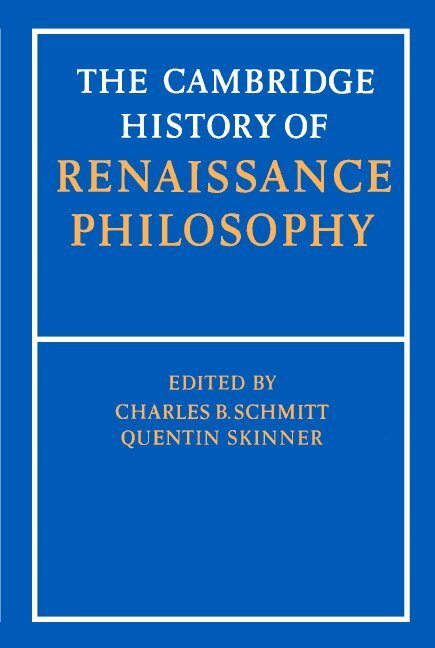
    Eckhard Kessler, Ph. D. (1968) and Habilitation (1974) in Philosophy, is Professor emeritus of Renaissance Philosophy of the Ludwig-Maximilians Universität, München. He has published widely on Humanistic and Aristotelian Philosophy, among others as coeditor of The Cambridge History of Renaissance Philosophy (Cambridge U.P. 1988).

    Innehållsförteckning

    • 1. Alexander of Aphrodisias in the History of Ancient Philosophy 1.1.Alexander, the ‘Exegete’ of Aristotle 3 1.2. Alexander’s Extant and Lost Writings 5 1.3. Alexander’s Position in the Neoplatonic School 8 2. The Reception of Alexander from the End of the Fifth to the End of the Fifteenth Century 2.1. Alexander among the Arabs: Averroes and the Predominance of the Doctrine of the Soul 10 2.2. Alexander in Scholasticism: Immortality and Theory of Cognition—Buridan and Argyropulus 18 3. The Transition at the Turn from the Fifteenth to the Sixteenth Century 3.1. Girolamo Donato and his Translation of the “Enarratio de anima ex Aristotelis institutione” 25 3.2. The Use of Donato’s Translation by Nicoletto Vernia 30 3.3. Philology and Philosophy: Two Modes of Reception of Donato’s Alexander in Agostino Nifo 36 3.4. Nifo’s ‘Saving’ of Alexander 43 4. Alexander in the Sixteenth Century 4.1. Alexander and the Problem of Immortality: Cardano, Zabarella 49 4.2. From Alexander’s Doctrine of the Soul to the New Philosophy of Nature: Pietro Pomponazzi 58 4.3. Manifestations of Natural Philosophy in the Tradition of Alexander in the Sixteenth Century: Porzio, Fracastoro, Cardano 67 4.4. Bernardino Telesio: the Krypto-Alexandrist as ‘First of the Moderns’ 74 5. Bibliography5.1. Sources 82 5.1.1. Alexander of Aphrodisias 82 5.1.2. Other Sources 845.2. Secondary Literature 86