• Fri frakt över 249 kr
  • •
  • Snabba leveranser
  • •
  • Billiga böcker
Kundservice

Du är på sajten för privatpersoner.

Företag, bibliotek eller offentlig verksamhet?

Du handlar på classic.bokus.com, där alla dina funktioner finns intakta.
Till classic.bokus.com
Bokus logotyp. Gå till startsidan.
  • Erbjudanden
  • Nyheter
  • Student
  • Topplistor
  • Barn & ungdom
  • Bokus Play
  • E-böcker
  • Pocketböcker
  • Spel & pussel

10% rabatt på allt med kod: NYSTART10 →

Sidfot

Mina sidor

    Hjälp

    • Kundservice
    • Vanliga frågor och svar
    • Frakt och leverans
    • Retur vid ångerrätt
    • Reklamera vara
    • Betalning
    • Köpvillkor
    • Allmänna villkor
    • Information om webbplatsens tillgänglighet

    Om Bokus

    • Om oss
    • Pressrum
    • För studenter
    • För företag
    • För bibliotek och offentlig verksamhet
    • För leverantörer
    • Hållbarhet

    Populärt

    • Aktuella erbjudanden
    • Presentkort
    • Studentlitteratur
    • Nya böcker
    • Topplistor
    • Signerade böcker
    • Engelska böcker

    Inspiration

    • Boktips
    • BookTok
    • Populära bokserier
    • Barnbokskaraktärer
    • Populära författare
    Logotyp för Bokus
    Följ oss på Facebook (extern länk)Följ oss på Instagram (extern länk)Följ oss på YouTube (extern länk)Följ oss på TikTok (extern länk)
    bokus @ CookiesAnpassa cookiesIntegritetspolicyKöpvillkor
    Till Citymail hemsida (extern länk)Till Budbee hemsida (extern länk)Till Postnord hemsida (extern länk)Till Schenker hemsida (extern länk)Till Early Bird hemsida (extern länk)Till Walleys hemsida (extern länk)
    1. Samhälle och politik
    2. Sociologi och antropologi
    3. Sociologi

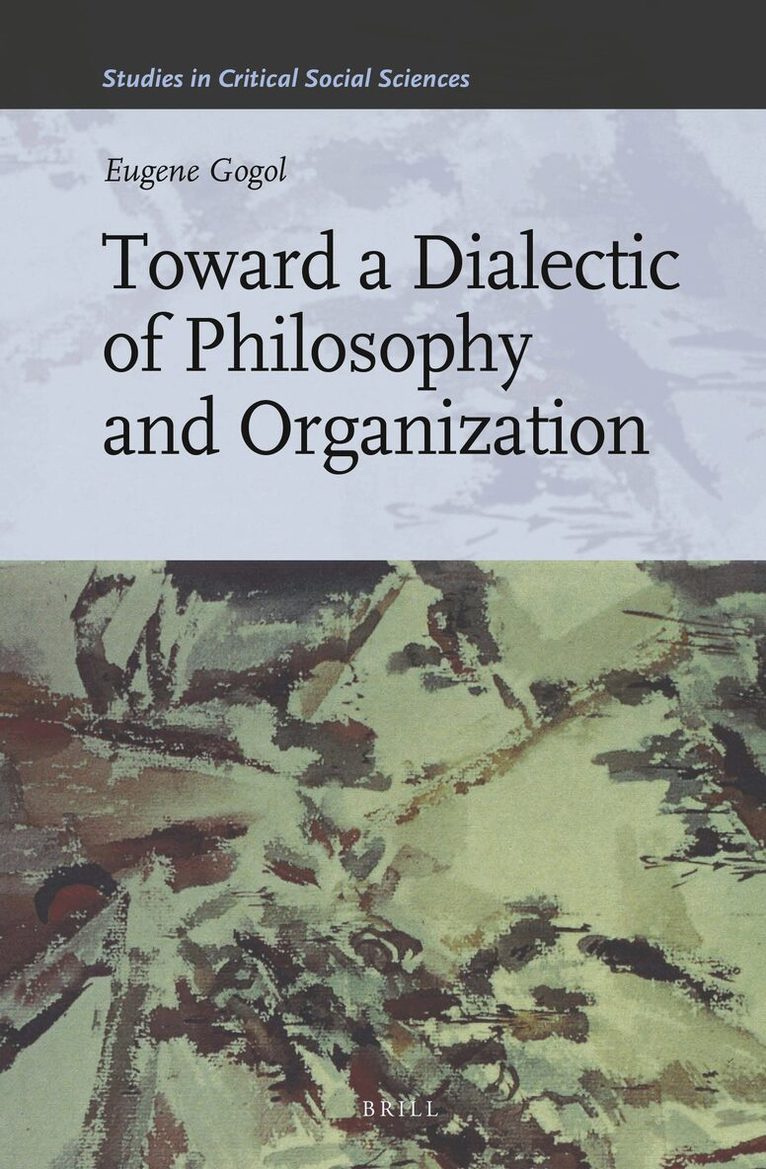
    Toward a Dialectic of Philosophy and Organization

    AvEugene Gogol

    Inbunden, Engelska, 2012

    Del 45 i serien Studies in Critical Social Sciences

    2 905 kr

    Beställningsvara. Skickas inom 5-8 vardagar. Fri frakt över 249 kr.

    Fler format och utgåvor

    Häftad

    395 kr

    Beskrivning

    Toward a Dialectic of Philosophy and Organization is an exploration of Hegel’s dialectic and its radical re-creation in Marx’s thought within the context of revolutions and revolutionary organizations in the nineteenth and twentieth centuries. Does a dialectic in philosophy itself bring forth a dialectic in revolutionary organization? This question is explored via organizational practices in the Paris Commune, the 2nd International, the Russian Revolutions of 1905 and 1917, the Spanish Revolution of 1936-37 and the Hungarian Revolution of 1956, as well as the theoretical-organizational concepts of such thinkers as Lassalle, Lenin, Luxemburg, Trotsky and Pannekoek.“What Philosophic-Organizational Vantage Point Is Needed for Revolutionary Transformation Today?” is examined by engaging the theoretical arguments of a number of thinkers. Among them: Adorno, Dunayevskaya, Hardt and Negri, Holloway, Lebowitz, Lukcás, Mészáros and Postone.

    Produktinformation

    • Utgivningsdatum:2012-08-22
    • Mått:155 x 235 x 28 mm
    • Vikt:1 680 g
    • Format:Inbunden
    • Språk:Engelska
    • Serie:Studies in Critical Social Sciences
    • Antal sidor:394
    • Förlag:Brill
    • ISBN:9789004224681

    Utforska kategorier

    • Sociologi inom Samhälle och politik
    • Marxism och kommunism inom Samhälle och politik
    • Politisk aktivism inom Samhälle och politik

    Mer om författaren

    Eugene Gogol is a Marxist-Humanist activist-writer. His books include The Concept of Other in Latin American Liberation and Raya Dunayevskaya: Philosopher of Marxist-Humanism.

    Recensioner i media

    "Gogol’s argument is urgent and single-minded, and his materials refreshingly original. [A] wonderful book." – Ben Watson, in: Radical Philosophy 182 (Nov/Dec 2013)"Toward a Dialectic ought to be taken as an important contribution to an on-going project to reveal the logic of the development of emancipatory organization." – Andy Blunden, in: Marx & Philosophy (31 January 2013)

    Innehållsförteckning

    • Introduction: Philosophy, Organization, and the Work of Raya DunayevskayaI. The Contradictory Reality of the Present Moment and Its Relation to a Dialectic of Philosophy and OrganizationII. The Project of Dunayevskaya: Dialectics of Organization and PhilosophyIII. The Form for the Present StudyPrologue: The Dialectic in Philosophy ItselfI. What Is Hegel’s Journey of Absolute Spirit?II. Why a Negation of the Negation?III. Can We See Hegel’s Absolutes, Not as a Closed Totality, but As New Beginning?PART I: ON SPONTANEOUS FORMS OF ORGANIZATION VS. VANGUARD PARTIES1: Marx’s Concept of Organization: From the Silesian Weavers’ Uprising to the First Years of the International Workingmen’s AssociationI. A Preliminary Note—Marx: Revolutionary Organization and the Organization of ThoughtII. 1843-52, Critique of Ideas/Tendencies—and the Movement of the WorkersIII. From the Early 1850s to the Early 1860s: A Brief Note on Marx’s Organization of Thought and the “Party” IV. A New Organizational Form: Marx and the International Working Men’s Association2: The Commune of Paris, 1871: Mass Spontaneity in Action and Thought; Responsibility of the Revolutionary Intellectual: The Two-War Road Between Marx and the CommuneI. A Non-State State: The Paris Commune as a Form of Workers’ Rule II. The Civil War in France— Drafts and Address, and the French Edition of CapitalIII. The Commune Deepens Marx’s Concept of Organization-- The First International After 1871Appendix: Marx excerpts from first and second drafts of The Civil War in France3: The Second International, The German Social Democracy, and Engels after Marx—Organization without Marx’s Organization of ThoughtI. A Preliminary Note on LassalleII. Fetishism of Organization: The Second International and the Germany Social DemocracyIII. Engels’ Relation to German Social Democracy and to Marx’s Marxism: What Tactics? What Theory? What Philosophy?Appendix: “The Interlude that Never Ended Organizationally”Forms of Organization and Struggle in Revolutionary Russia4: The 1905 Russian Revolution: Mass Proletarian Self-Activity and Its Relation to the Organizational Thought of Marxist RevolutionariesI. 1905 in Life and in Books: New Forms of Struggle; New Forms of OrganizationII. Lenin, Trotsky, Luxemburg: Attitudes Toward and Theoretical Ramifications of 1905, Particularly with Regard to Revolutionary Organization5: The Russian Revolution of 1917 and BeyondI. February-October, 1917: Forms of Organization From Below; Developments and Struggles Within BolshevismII. Russia post-October: Workers, Bolsheviks and the State—New Beginnings and Grave Contradictions in the Revolution6: Out of the Russia Revolution: Legacy and Critique—Luxemburg, Pannekoek, TrotskyI. Luxemburg and Two Revolutions—Russia, 1917-18; Germany, 1918-19II. Pannekoek’s Council CommunismIII. In Exile: A Brief Note on Trotsky’s Concept of Revolutionary Organization and View of Proletarian Subjectivity7: Organizational Forms from the Spanish RevolutionI. The Revolution Begins and DevelopsII. The Communist Party Works to Dismantle the Revolution8: The Hungarian Workers’ Councils in the Revolution: A Movement from Practice that Is a Form of Theory Prelude: East Germany, 1953 I. The First DaysII. The Turning PointIII. The Counter-Revolution and the Proletarian ResponseIV. Postscript: East Europe post-Hungary 1956—Resistance-in-Permanence; Contradictions WithinPART II: HEGEL AND MARX9: Can “Absolute Knowing” in Hegel’s Phenomenology Speak to a Dialectic of Organization and Philosophy?I. A Note on Hegel’s Method in Absolute KnowledgeII. Marx’s “Critique of the Hegelian Dialectic”III. Spirit’s Journey in Absolute Knowledge: Externalization (Entäusserung) and Recollection/Inwardization (Erinnerung)IV. The Dialectic in Philosophy Itself: Does It Bring Forth a Dialectic of Organization?—A Reading of Absolute Knowing from Dunayevskaya10: Rereading Marx’s Critique of the Gotha Program TodayAppendix: Marx on Necessity, Freedom, Time and LaborPART III: HEGEL AND LENIN11: Lenin and Hegel—The Profound Philosophic Breakthrough that Failed to Encompass Revolutionary OrganizationI. IntroductionII. A Preliminary Note on Lenin’s Philosophic Exploration of HegelIII. A Brief Survey of Dunayevskaya’s Explorations of Lenin’s Hegelian Vantage Point Prior to 1985-87.IV. Dunayevskaya’s ‘Changed Perception of Lenin Philosophic Ambivalence’: Fusing a mid-1980s Vantage Point with a 1953 Philosophic BreakthroughV. Organizational Ramifications12: Hegel’s Critique of the Third Attitude to Objectivity—Its Relation to OrganizationI. Introduction: The Three Attitudes to Objectivity II. Dunayevskaya’s 1961 Reading of the Third Attitude to ObjectivityIII. Dunayevskaya’s New 1986 Reading of the Third Attitude to ObjectivityPART IV: DIALECTICS OF ORGANIZATION AND PHILOSOPHY IN POST-WORLD WAR II WORLD: THE WORK OF RAYA DUNAYEVSKAYA13: Moments in the Development of Dunayevskaya's Marxist-HumanismI. A Preliminary Note on War and Revolution as Turning Points for Radical Thought: The Moment of the Theory of State-Capitalism as Needed Ground for Marxist-HumanismII. Dunayevskaya's Letters on Hegel's Absolutes, May 12 and 20 1953: “The Philosophic Moment of Marxist-Humanism”III. The Organization of Thought which Determines Organizational Life: Developing Marxist-Humanism and News and Letters CommitteesIV. Dunayevskaya’s Presentation on Dialectics of Organization and Philosophy, June 1, 1987—A New Philosophic Category and a Challenge for News and Letters PraxisAppendices: 1) Dunayevskaya Letter on Meeting a Cameroonian Revolutionary; 2) Andy Philips on Dunayevskaya's Participation in 1949-50 Miners' General Strike; 3. Preamble to the Original Constitution of News and Letters Committees, 1956PART V: CONCLUSION14: What Philosophic-Organizational Vantage Point Is Needed?I. Recent Challenges to Hegel’s Dialectics of NegativityII. What Is the Dialectic of Marx’s Capital?III. Once Again Hegel’s Dialectic of Negativity—Its Concretization/Praxis as Organizational Expression; Its Meaning for TodayBibliograhyIndex