• Fri frakt över 249 kr
  • •
  • Snabba leveranser
  • •
  • Billiga böcker
Kundservice

Du är på sajten för privatpersoner.

Företag, bibliotek eller offentlig verksamhet?

Du handlar på classic.bokus.com, där alla dina funktioner finns intakta.
Till classic.bokus.com
Bokus logotyp. Gå till startsidan.
  • Erbjudanden
  • Nyheter
  • Student
  • Topplistor
  • Barn & ungdom
  • Bokus Play
  • E-böcker
  • Pocketböcker
  • Spel & pussel

10% studentrabatt med kod TERM26

Sidfot

Mina sidor

    Hjälp

    • Kundservice
    • Vanliga frågor och svar
    • Frakt och leverans
    • Retur vid ångerrätt
    • Reklamera vara
    • Betalning
    • Köpvillkor
    • Allmänna villkor
    • Information om webbplatsens tillgänglighet

    Om Bokus

    • Om oss
    • Pressrum
    • För studenter
    • För företag
    • För bibliotek och offentlig verksamhet
    • För leverantörer
    • Hållbarhet

    Populärt

    • Aktuella erbjudanden
    • Presentkort
    • Studentlitteratur
    • Nya böcker
    • Topplistor
    • Signerade böcker
    • Engelska böcker

    Inspiration

    • Boktips
    • BookTok
    • Populära bokserier
    • Barnbokskaraktärer
    • Populära författare
    Logotyp för Bokus
    Följ oss på Facebook (extern länk)Följ oss på Instagram (extern länk)Följ oss på YouTube (extern länk)Följ oss på TikTok (extern länk)
    bokus @ CookiesAnpassa cookiesIntegritetspolicyKöpvillkor
    Till Citymail hemsida (extern länk)Till Budbee hemsida (extern länk)Till Postnord hemsida (extern länk)Till Schenker hemsida (extern länk)Till Early Bird hemsida (extern länk)Till Walleys hemsida (extern länk)
    1. Samhälle och politik
    2. Samhälle och kultur
    3. Sociala grupper och identitet
    4. Etnicitet

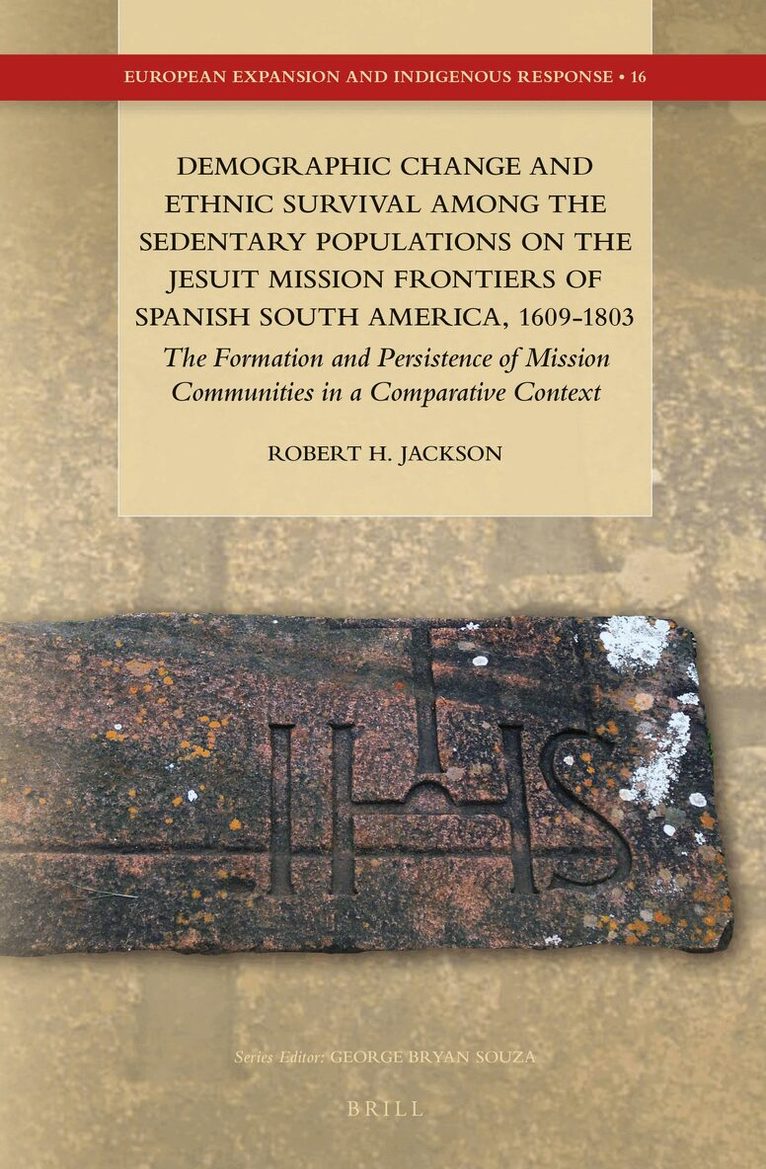
    Demographic Change and Ethnic Survival among the Sedentary Populations on the Jesuit Mission Frontiers of Spanish South America, 1609-1803

    The Formation and Persistence of Mission Communities in a Comparative Context

    AvRobert H. Jackson

    Inbunden, Engelska, 2015

    Del 16 i serien European Expansion and Indigenous Response

    2 186 kr

    Beställningsvara. Skickas inom 5-8 vardagar. Fri frakt över 249 kr.

    Beskrivning

    Beginning in 1609, Jesuit missionaries established missions (reductions) among sedentary and non-sedentary native populations in the larger region defined as the Province of Paraguay (Rio de la Plata region, eastern Bolivia). One consequence of resettlement on the missions was exposure to highly contagious old world crowd diseases such as smallpox and measles. Epidemics that occurred about once a generation killed thousands. Despite severe mortality crises such as epidemics, warfare, and famine, the native populations living on the missions recovered. An analysis of the effects of epidemics and demographic patterns shows that the native populations living on the Paraguay and Chiquitos missions survived and retained a unique ethnic identity. A comparative approach that considers demographic patterns among other mission populations place the case study of the Paraguay and Chiquitos missions into context, and show how patterns on the Paraguay and Chiquitos missions differed from other mission populations. The findings challenge generally held assumptions about Native American historical demography.

    Produktinformation

    • Utgivningsdatum:2015-03-27
    • Mått:155 x 235 x 23 mm
    • Vikt:605 g
    • Format:Inbunden
    • Språk:Engelska
    • Serie:European Expansion and Indigenous Response
    • Antal sidor:290
    • Förlag:Brill
    • ISBN:9789004284999

    Utforska kategorier

    • Etnicitet inom Samhälle och politik
    • Sociologi inom Samhälle och politik
    • Europas historia inom Historia och arkeologi

    Mer om författaren

    Robert H. Jackson received his doctorate in 1988 from the University of California, Berkeley, with a specialization in Latin American history. He has published more than ten books and 60 journal articles. Brill published his book Conflict and Conversion in Sixteenth Century Mexico in 2013. He currently resides in Mexico City.

    Recensioner i media

    "The text will be of great use to scholars of not only the Jesuit missions but also other orders who worked among the native populations throughout the Americas. As a result of Jackson’s meticulous study of Jesuit records, those interested in the history of medicine, environment, and social conditions in the missions will find in this book a great deal to enjoy." - Bridget María Chesterton, in: Hispanic American Historical Review, 91:1 (2017), pp. 157-158 [doi 10.1215/00182168-3727599]"Es una contribución al debate desarrollado en el marco de la Nueva Historia Misional. Desde hace varias décadas diversos autores norteamericanos, entre los cuales está el propio Robert Jackson, han se˜nalado la importancia de analizar las consecuencias de las misiones para la población indígena y han subrayado, en particular, la importancia de estudiar el cambio demográfico. Algunos investigadores han concedido un peso determinante a elementos ligados al medio ambiente: sequías, cambio climático, presencia de ganado, entre otros. El autor de este libro considera relevantes estos factores, para se˜nalar que la principal razón de la caída de la población indígena fueron las epidemias, en su opinión la gravedad de sus efectos no se reduce al siglo XVI, siguió teniendo incidencia significativa durante los siglos XVII y XVIII, como lo demuestra en este estudio." - María Teresa Álvarez Icaza Longoria, Universidad Nacional Autónoma de México, in: Estudios de Historia Novohispana, 54 (2016), pp. 103–105"...it is a tour de force of demographic history and helps revise the “Indians are coming to an end” myth. It will be of interest to Río de la Plata specialists, historical demographers, and historians of New Spain’s northern frontiers." - Shawn Michael Austin, in: Journal of Jesuit Studies, 3:1 (2016), pp. 102-104 [DOI: 10.1163/22141332-00301005-05]"By selecting such a late terminus ad quem (almost half a century after suppression of the Jesuits within the Spanish empire by order of King Charles III in 1767), the author is able to demonstrate the degree to which the mission settlements of the Guaranì in particular, and the Chiquitos Indians to a lesser extent, survived, despite significant out-migration, so that, to this day, their descendants still inhabit many of the sites of the ex-mission towns.[...] a significant contribution to the ongoing debate over the long-term implications of 1492 for the indigenous population of the Americas." - Simon Ditchfield, in: The English Historical Review, 132:559 (2017), pp. 1601–1602 [https://doi.org/10.1093/ehr/cew358]

    Innehållsförteckning

    • General Editor’s ForewordList of IllustrationsList of MapsList of FiguresList of TablesChapter 1: IntroductionChapter 2: Managing the Missions and Social-Cultural ChangeChapter 3: Smallpox Epidemics and Smallpox Treatment Chapter 4: Demographic Patterns on the Paraguay and Chiquitos Mission FrontiersChapter 5: Mission Demographic Patterns among Sedentary and Non-Sedentary Natives on the Frontiers of Spanish America: A Comparative DiscussionChapter 6: Post Jesuit Expulsion Population Trends Chapter 7: ConclusionsAppendicesAppendix 1: Population of the Paraguay MissionsAppendix 2: Females as a Percentage of the Total Population of the Paraguay Missions Appendix 3: Marriages Recorded in the Paraguay Missions, in selected yearsAppendix4: Vital Rates of the Paraguay MissionsAppendix5: Population of the Chiquitos MissionsAppendix 6: Females as a percentage of the total population of the Chiquitos MissionsAppendix 7: Marriages Recorded in the Chiquitos Missions in selected yearsAppendix 8: Vital Rates of the Chiquitos MissionsAppendix 9: Castillian Weights and Measures Mentioned in the TextAppendix 10: A Note on colonial Spanish American Silver CoinsAppendix 11: Area Measurements of Agricultural Land in Spanish AmericaSelected Bibliography